You saw something.
A spot of pink. A smear of brown. Something that was not there yesterday.
And your heart dropped.
Because after everything, the injections, the monitoring, the retrieval, the transfer, even the smallest amount of bleeding can feel like the worst possible news.
You rushed to Google.
You are here now.
And you need someone to tell you calmly and honestly what this might mean.
So let’s do that.
This blog will walk you through what implantation bleeding after frozen embryo transfer may look like, when implantation usually happens, what symptoms are considered normal, and just as importantly, when you should actually call your fertility clinic.
Let’s get started!
What is implantation bleeding after frozen embryo transfer?
Let’s start at the beginning.
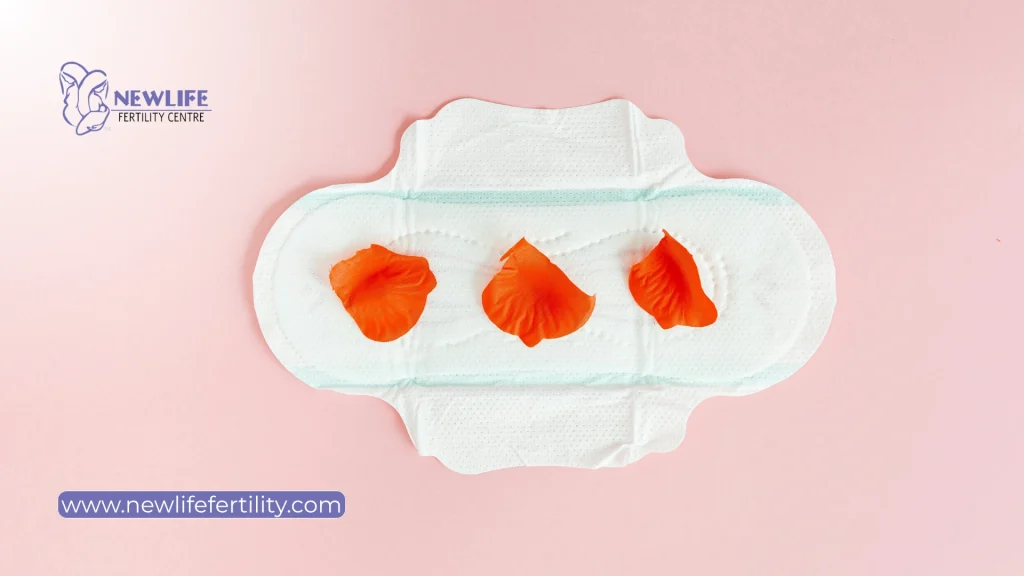
After a frozen embryo transfer, if the embryo successfully attaches to the uterine lining, that process is called implantation.
During implantation, the embryo burrows into the endometrium, which is the inner lining of the uterus. As this happens, tiny blood vessels in the lining can sometimes become disrupted.
That disruption may cause a small amount of light bleeding or spotting.
This is what people refer to as implantation bleeding after frozen embryo transfer.
It is usually:
- Light in flow
- Pink, brown, or rust-colored
- Short-lived
- Much lighter than a menstrual period
So if you noticed spotting after your FET, could it be implantation bleeding?
Yes, it could be.
But there is something equally important to understand here: implantation is not the only reason spotting can happen after frozen embryo transfer.
Spotting after FET can also happen because of:
- Progesterone suppositories or gel irritating the cervix
- Hormonal fluctuations caused by IVF medications
- Increased cervical sensitivity after the transfer procedure
In other words, spotting can have more than one explanation.
Implantation is one possibility. Medication-related irritation is another. Neither one automatically means something bad is happening.
And what if you have no spotting at all?
That is also completely normal.
Many women never experience implantation bleeding after frozen embryo transfer and still go on to have healthy pregnancies.
No spotting does not mean implantation failed. It does not mean the embryo did not attach.
Implantation can happen very quietly.
Some embryos implant with light spotting. Others implant without causing any noticeable bleeding whatsoever.
When does implantation happen after frozen embryo transfer?

This is one of the most searched questions during the two-week wait.
And honestly, it makes sense why.
If you are expecting implantation bleeding on Day 2 and nothing happens, anxiety starts building fast. And if spotting appears later than expected, many women immediately worry that the timing feels “wrong.”
But implantation after frozen embryo transfer does not happen on one exact universal day.
The timeline depends largely on the age and development stage of the embryo transferred.
For example, a Day 5 blastocyst, which is the most commonly transferred embryo in FET cycles, is already more developed at the time of transfer. Because of that, it usually begins the implantation process sooner.
A Day 3 embryo typically needs additional time to continue developing before implantation can happen.
Here is a general idea of what may be happening after frozen embryo transfer:
| Days After FET | What May Be Happening |
| Days 1–3 | Embryo hatches from its shell and begins orienting toward the uterine lining |
| Days 4–5 | Common implantation window as the embryo starts attaching |
| Days 6–10 | If implantation occurred, hCG begins rising and possible spotting, cramping, or hormonal symptoms may appear |
| Days 10–14 | Early pregnancy symptoms may begin for some women |
And notice the wording throughout that timeline:
- “May”
- “Possible”
- “Can happen”
That wording matters.
Because implantation after frozen embryo transfer is not perfectly predictable.
Some women implant earlier.
Some implants later.
Some notice spotting or cramps.
Some feel absolutely nothing at all.
All of those experiences can still fall within the range of normal.
This is one of the hardest parts of IVF emotionally. You naturally want your body to follow a clear timeline with obvious signs.
But implantation is often much quieter and less dramatic than people expect.
What implantation bleeding and symptoms after FET may feel like
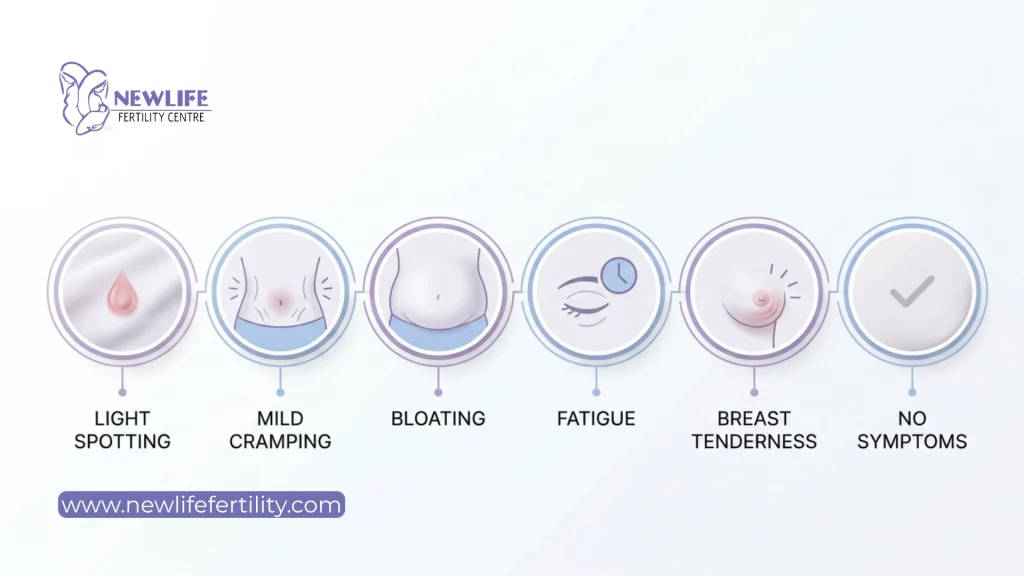
Let’s go through the most common symptoms women notice after frozen embryo transfer, what they may mean, and what they cannot reliably tell you.
Light spotting
If implantation bleeding happens after frozen embryo transfer, this is what it typically looks like:
→ Light pink, pale brown, or rust-colored
→ Much lighter than a menstrual period
→ A few spots on toilet paper or very light discharge
→ Usually lasts a few hours to around two days
→ Most commonly noticed around Days 6–10 after transfer
Implantation bleeding is usually not:
- Heavy
- Bright red
- Flowing like a period
- Accompanied by large clots
So if the spotting you are seeing is light, brief, and brownish or pale pink, it is generally not considered an immediate cause for panic.
Mild cramping or pulling sensations
Cramping after frozen embryo transfer is incredibly common.
And unfortunately, it is also one of the symptoms that causes the most anxiety.
Mild cramping or a gentle pulling sensation in the lower abdomen can happen during implantation as the embryo attaches to the uterine lining.
But progesterone can also cause the exact same feeling.
That is the difficult part about the two-week wait. Implantation symptoms and medication side effects overlap heavily.
So period-like cramps after frozen embryo transfer are not automatically a bad sign.
Short, mild, on-and-off cramping is usually considered normal after FET.
And if your cramps feel exactly like menstrual cramps, you are not imagining that either.
Implantation cramping and pre-period cramping can feel extremely similar. There is no specific sensation that reliably tells you which one it is.
That uncertainty is frustrating, but it is also very normal during IVF.
The only thing that can confirm whether implantation happened is your beta hCG blood test, not the cramps themselves.
Bloating and abdominal heaviness
Feeling bloated, full, or heavy in the lower abdomen after frozen embryo transfer is also very common.
Progesterone slows digestion. IVF medications increase fluid retention. The retrieval and transfer process can also leave the abdomen feeling sensitive for several days.
Most bloating after FET is related to medications and hormonal changes rather than pregnancy itself.
Many women search:
“Is bloating after frozen embryo transfer a good sign?”
And the honest answer is: It can happen in successful cycles. It can also happen in unsuccessful ones.
Bloating alone cannot predict the outcome of your cycle.
What matters more is how severe the bloating becomes.
Mild, manageable bloating is usually normal. Staying hydrated, eating lighter meals, and avoiding foods that worsen bloating can help.
But if you develop:
- Significant swelling
- Rapid weight gain
- Difficulty breathing
- Reduced urination
- Severe discomfort
contact your fertility clinic immediately. Those symptoms can sometimes point to OHSS and should not be ignored.
Fatigue and body changes
Feeling unusually tired after FET is extremely common.
Progesterone affects the body in multiple ways and can cause:
- Fatigue
- Breast tenderness
- Increased vaginal discharge
- Mood shifts
- Low energy
Early pregnancy can cause these same symptoms too.
Which means during the two-week wait, there is often no reliable way to know whether the symptoms are coming from medications, implantation, or both.
That uncertainty is emotionally difficult, but it is also part of the IVF process.
What does implantation actually feel like?
This may surprise you, but for many women, implantation does not feel like much at all.
Some women notice:
- Mild pulling
- Gentle pressure
- Light cramping
- A brief sensation in the lower abdomen
And some women feel absolutely nothing.
Implantation is not usually a dramatic event inside the body. At this stage, the embryo is microscopic.
A lot of the expectation that implantation should feel “big” comes from online forums and symptom comparison stories.
In reality, many women who later receive positive beta results report feeling nothing noticeable during the implantation window.
Quiet does not mean failure.
Are cramps and bloating after FET good signs?

This is the question most women are actually trying to answer during the two-week wait.
And the honest answer is this:
Mild cramps and bloating can absolutely happen in successful frozen embryo transfer cycles.
But they can also happen in cycles that do not result in pregnancy.
That is why symptom intensity is not considered a reliable predictor of success after FET.
Some women experience:
- Cramping
- Spotting
- Fatigue
- Breast tenderness
- Bloating
- Pulling sensations
Meanwhile, some women feel absolutely nothing during the entire two-week wait and later receive a positive pregnancy test.
That uncertainty is what makes this stage of IVF so emotionally exhausting.
The symptoms are real.
The anxiety is real.
The hope is real.
But symptoms alone cannot tell you the outcome of your cycle.
So what actually counts as a good sign after frozen embryo transfer?
The things that are within your control:
- Taking your medications exactly as prescribed
- Attending your beta hCG appointment
- Staying hydrated and rested
- Following your clinic’s instructions
- Supporting your body through the wait
Those are the things that genuinely matter right now.
Not whether your cramps appeared on the “right” day or whether your bloating feels stronger than someone else’s online story.
When bleeding after frozen embryo transfer is not normal
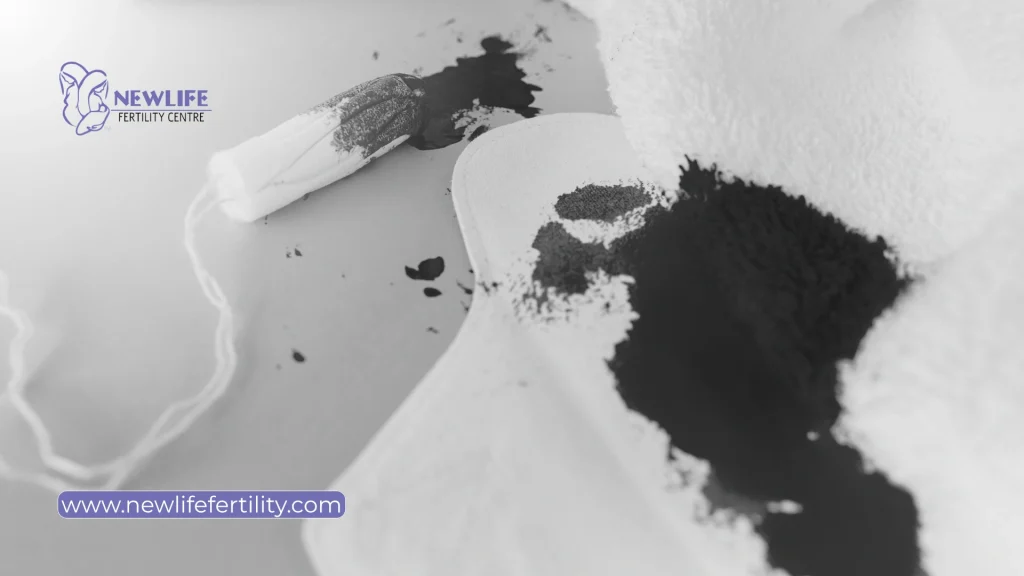
Most spotting after frozen embryo transfer is light, brief, and not considered an emergency.
But there are situations where bleeding or symptoms should prompt a call to your fertility clinic.
Contact your clinic if you experience:
→ Heavy bleeding that soaks a pad or feels heavier than a light period
→ Bright red bleeding with clots
→ Severe or worsening abdominal pain
→ Sharp pain on one side of the abdomen
→ Fever above 38°C / 100.4°F
→ Dizziness, lightheadedness, or fainting
→ Difficulty breathing or chest tightness
→ Severe bloating with rapid swelling, nausea, vomiting, or very little urination
Some of these symptoms may point to complications like OHSS or other medical concerns that need attention.
This section is not here to scare you.
It is here to help you understand the difference between:
“This is probably normal, I’ll monitor it.”
and:
“I should contact my clinic today.”
If something genuinely feels medically wrong or suddenly worsens, calling your clinic is always the right decision.
Why comparing symptoms during IVF makes everything worse

You have probably been on a forum.
Read dozens of stories. Some from women who spotted exactly like you and got a positive beta. Some who had the same spotting and got a negative. Some who felt nothing and are now pregnant. Some who felt everything and are not.
And then you try to figure out which story is yours.
It does not work that way.
IVF forum stories are real experiences. But they are individual experiences. Every woman’s body, protocol, embryo, and hormonal response is different.
Reading other people’s symptom stories does not give you data. It gives you noise.
The woman who spotted on Day 7 and got a positive is not telling you that your Day 7 spotting means the same thing. The woman who felt nothing and got a negative is not predicting your result either.
What forums do, especially during the two-week wait, is create anxiety benchmarks that do not apply to your specific situation.
Implantation can happen quietly.
Symptoms can appear or not appear regardless of outcome.
Timing varies.
The only thing that does not vary is this: your beta result is the only answer.
Still wondering whether implantation bleeding after frozen embryo transfer is normal for you?
Seeing spotting, cramping, or changes in your body after a frozen embryo transfer can feel emotionally overwhelming, especially during the two-week wait when every symptom suddenly feels important.
But the reality is that implantation bleeding after frozen embryo transfer can look different for every woman. Some women notice light pink or brown spotting. Some experience mild cramps or bloating. Some feel completely normal and symptom-free throughout the entire wait.
And all of those experiences can still fall within the range of normal.
The hardest part about IVF is that symptoms rarely give clear answers. Spotting can happen because of implantation, medications, hormonal changes, or cervical irritation. Mild cramps and bloating can happen in both successful and unsuccessful cycles. And sometimes, implantation happens quietly with no noticeable symptoms at all.
Your body does not need dramatic signs to prove that your transfer worked.
Right now, the most important thing you can do is continue supporting yourself through the process. Take your medications as prescribed, follow your clinic’s guidance, rest when you need to, and let beta day come one step at a time.
At NewLife Fertility, we understand how emotionally difficult the IVF journey can feel, especially during the uncertainty after frozen embryo transfer. Our team is here to provide compassionate fertility care, honest guidance, and personalized support throughout every stage of treatment.
If you have questions about implantation symptoms, bleeding after FET, IVF treatment options, or your fertility journey, you can book a free consultation with NewLife Fertility and speak with a team that truly understands what you are going through.