At 40, I thought having a baby would be straightforward. My partner and I had built our careers, settled into our life, and finally felt ready to start a family. But after months of trying, we realized that getting pregnant after 40 is not quite the same as it was in our 20s or 30s.
That realization led to a lot of questions. What actually changes in your body after 40. What can you still do to support your fertility. And at what point should you stop waiting and talk to a specialist instead of hoping the next cycle works out.
It is worth saying early on that this is not just a woman’s question. Age affects fertility for both partners, and understanding that changes how you approach the whole journey. This is exactly where NewLife Fertility help us, by giving us a real answers instead of more guessing.
Why is getting pregnant after 40 more difficult for you

The first thing I wanted to know was why this had suddenly become so hard, when everything else in our life felt like it was finally in place.
A big part of the answer comes down to your eggs. Women are born with all the eggs they will ever have, and both the number and quality decline gradually over time, with a noticeable drop after age 35 that continues into your 40s. Ovulation can also become less predictable as you get closer to menopause, even if your periods still feel fairly regular.
Male fertility changes with age too, though usually more gradually. Sperm quality, movement, and DNA integrity can decline over time, which can affect both how easily conception happens and the health of the pregnancy. Pregnancies after 40 also carry a somewhat higher risk of miscarriage and certain complications, mainly linked to egg quality.
None of this means pregnancy after 40 is unlikely. It means your fertility journey may look different from someone in their 20s, and every person’s timeline and situation is genuinely unique.
What can you do to enhance your fertility after 40
There is no single fix here, but there is a lot within your control. These are the habits and choices that can genuinely support your fertility.
Track your ovulation and fertile window
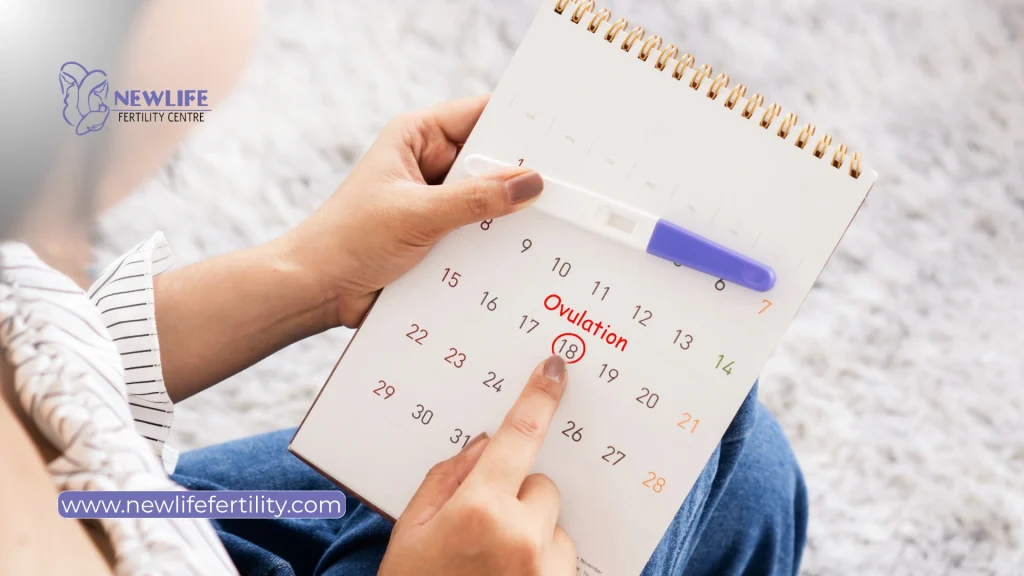
I started paying much closer attention to when ovulation was actually happening instead of assuming it followed the same pattern it always had.
Ovulation predictor kits, cycle tracking apps, and changes in cervical mucus can all help you pinpoint your fertile window. This window usually includes the five days before ovulation and the day itself. Timing intercourse around this window, rather than leaving it to chance, gives you a more focused shot each cycle.
Maintain a healthy weight
I also realized that fertility is not just about reproductive organs. Your overall health matters just as much.
Being significantly underweight or overweight can disrupt ovulation and hormone balance. The goal is not a specific number, it is reaching a weight range that supports regular ovulation for your body. Sustainable changes to nutrition and activity work better here than anything drastic or extreme.
Eat a balanced, nutrient rich diet
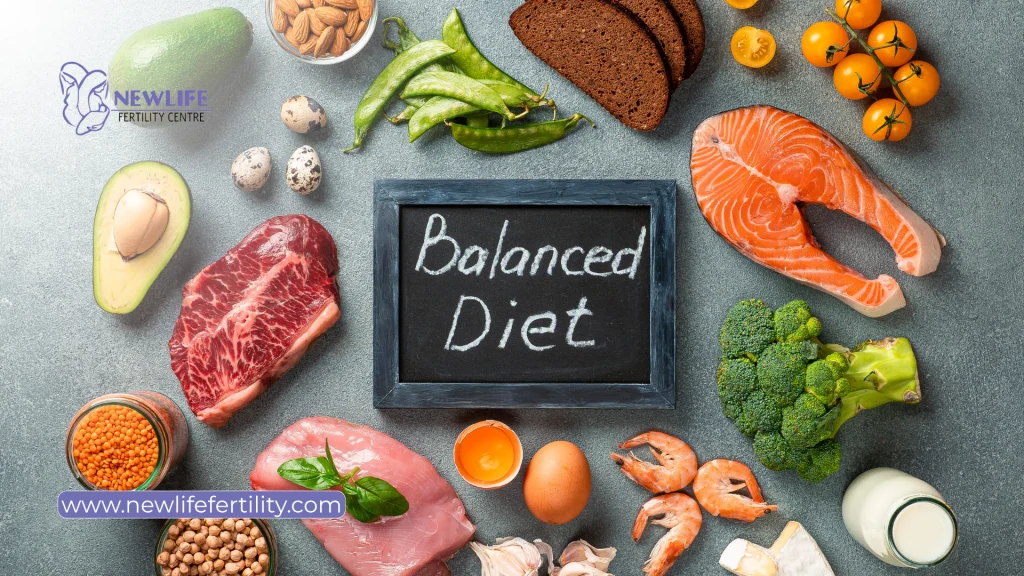
We stopped looking for one magic fertility food and focused instead on eating better every single day.
A diet built around vegetables, fruits, whole grains, lean proteins, and healthy fats supports hormone regulation and overall reproductive health. This applies to both partners, since nutrition affects sperm health as much as it affects egg health. Consistency over time matters far more than any single meal.
Take prenatal vitamins and recommended nutrients
I asked my doctor which supplements actually made sense instead of taking everything I saw recommended online.
Folic acid remains one of the most important nutrients before and during early pregnancy, and a good prenatal vitamin usually covers this along with iron and vitamin D. Supplements can fill real gaps, but they are not a way to reverse age related fertility decline, and it is worth being cautious of anything that claims otherwise.
Exercise regularly

Exercise became part of our routine, but we learned that more is not always better.
Moderate, regular activity like walking, swimming, or strength training supports healthy hormone levels, better sleep, and a healthy weight. Very intense or excessive training can sometimes work against you by disrupting your cycle, so balance matters more than intensity here.
Quit smoking and limit alcohol

One of the changes we could control completely was our lifestyle.
Smoking is linked to lower egg quality and a faster decline in ovarian reserve, and it can affect sperm quality as well. Limiting or avoiding alcohol while trying to conceive is generally recommended for the same reasons. These are changes that benefit both partners, not just one.
Manage stress and get enough sleep

The process was stressful, and ignoring that stress was not making anything easier.
Chronic stress can affect the hormones involved in ovulation, and poor sleep disrupts that same balance. Simple habits like a daily walk, a wind down routine before bed, or a few minutes of deep breathing can genuinely help. This will not single handedly cause or prevent conception, but supporting your mental wellbeing during this time matters.
Manage existing health conditions
At this point, I realized fertility was not something I could look at separately from my overall health.
Conditions like thyroid disorders, diabetes, PCOS, and endometriosis can all influence fertility, and some medications can too. Reviewing your health history with a doctor, rather than assuming everything is unrelated, is an important part of preparing your body for conception.
Get fertility testing

This was probably the biggest lesson. Instead of guessing what might be wrong, we needed actual answers.
For women, this usually means assessing ovarian reserve, hormone levels, and ovulation, with a look at the uterus and fallopian tubes where relevant. For men, a semen analysis checks sperm count, movement, and shape. Testing both partners together gives a much clearer picture than testing only one.
Should you see a fertility specialist after 40

The question I kept coming back to was how long we should keep trying on our own before getting help.
After 40, most specialists recommend seeking evaluation sooner rather than later, often after just a few months of trying rather than waiting a full year. This is because time has a bigger impact on your options after 40 than it does at a younger age. Waiting too long does not close every door, but it can reduce the number of paths available to you.
This was where speaking with a fertility specialist at NewLife Fertility helped us move from guessing to actually understanding our options, based on our own individual situation rather than general assumptions.
What fertility treatments are available after 40
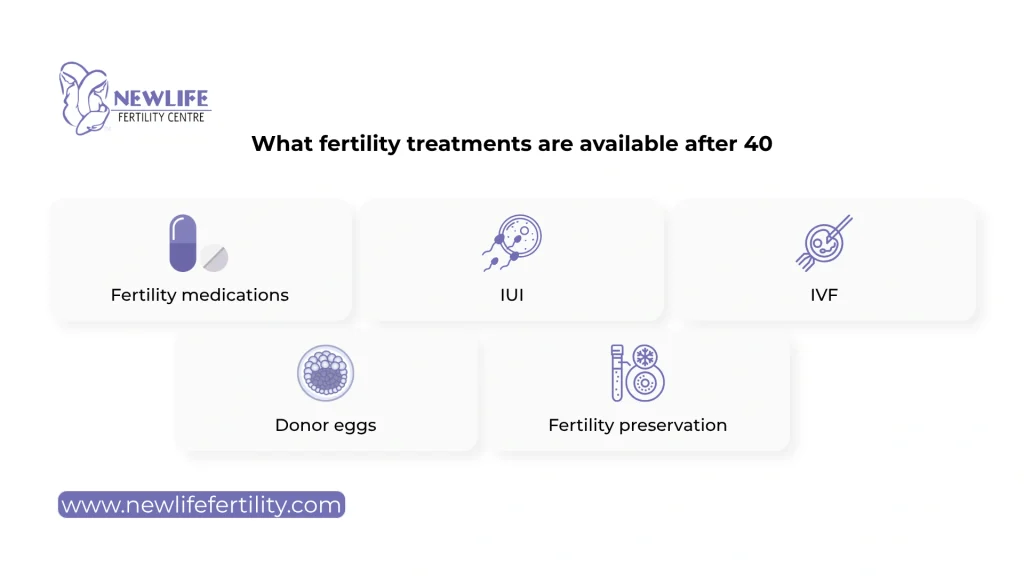
If lifestyle changes and timing are not enough on their own, there are established treatment options worth understanding.
Fertility medications
These are often used first when ovulation itself is irregular or unpredictable, helping stimulate the release of eggs in a more controlled way.
IUI
Intrauterine insemination places prepared sperm directly into the uterus around the time of ovulation. It is sometimes considered for mild fertility issues, though its success rates tend to be lower after 40 compared to younger age groups.
IVF
In vitro fertilisation involves retrieving eggs, fertilising them in a lab, and transferring an embryo back into the uterus. It is commonly considered after 40, since it allows more control over the process, though individual success expectations should always be discussed with your doctor rather than assumed from general statistics.
Donor eggs
When egg quantity or quality is significantly reduced, using donor eggs is sometimes discussed as an option. This is a deeply personal decision, and one worth exploring only with full information and support.
Fertility preservation and other options
For some people, especially those planning ahead, egg or embryo freezing may have been relevant earlier on. Depending on your situation, your specialist may also mention other paths worth considering alongside these main options.
Can you improve egg or sperm quality after 40
This is one of the questions people ask the most, and it deserves an honest answer.
Lifestyle changes such as better nutrition, not smoking, limiting alcohol, managing stress, and maintaining a healthy weight can support the environment your eggs and sperm develop in. What they cannot do is reverse the natural aging process itself.
Egg quantity and quality decline with age regardless of how healthy your habits are, and male fertility changes gradually too. This is exactly why medical evaluation matters. It tells you where you actually stand, rather than leaving you to guess based on how healthy you feel.
What should you do if you are over 40 and trying to conceive
Looking back, I wish we had started by getting the right information instead of assuming we simply needed more time.
If you are in this position, here is a realistic way to move forward. Track your fertile window instead of guessing at it. Focus on the lifestyle habits that are genuinely within your control. Review any medications or existing health conditions with your doctor.
Take prenatal nutrients that are actually recommended for you. Get both partners evaluated rather than just one. And do not delay speaking with a fertility specialist if months are passing without success.
NewLife Fertility can help you understand exactly where you stand and what options may make sense for your individual fertility journey, based on real information rather than general assumptions.
Are you ready to understand what fertility after 40 really looks like for you
There is no single answer that applies to everyone in this situation, and that is exactly why guessing rarely helps. The most useful thing you can do is combine the lifestyle habits within your control with real, personalized information about where you and your partner actually stand.
NewLife Fertility specializes in helping people navigate exactly this stage of the journey. Our team of reproductive specialists offers advanced fertility testing, individualized guidance, and compassionate support for both partners, whether you are just starting to explore your options or you already suspect something needs closer attention. You do not have to piece this together on your own.
Book your free consultation with NewLife Fertility today, and get clarity on the path that makes the most sense for you.
Frequently asked questions about fertility after 40
Yes, many women conceive naturally after 40, though it generally takes longer and the chances are lower than in your 20s and 30s due to changes in egg quantity and quality.
Tracking your fertile window, maintaining a healthy weight, eating a balanced diet, avoiding smoking, limiting alcohol, and getting timely fertility testing can all support your chances.
Certain lifestyle factors can support your overall reproductive health, but they cannot reverse age related decline in egg or sperm quality. Medical evaluation helps clarify your specific situation.
Healthy habits can support the environment your eggs develop in, but egg quality naturally declines with age and cannot be reversed through diet or supplements alone.
Yes, sperm quality, movement, and DNA integrity can decline with age, though usually more gradually than female fertility.
Most specialists recommend seeking evaluation after just a few months of trying, rather than waiting a full year, since time affects your options more significantly after 40.
Yes, IVF is commonly considered after 40 and offers more control over the fertilisation process, though individual success expectations should be discussed with your specialist.