Have you ever typed “what to eat to get pregnant faster” into Google at 11pm?
If you have, you’re not the only one. Thousands of people across Canada search for exactly that every single month, usually with a mix of hope and frustration.
And honestly, most of what comes up doesn’t help much. Either it’s some article claiming one magic fruit will fix everything, or it’s a twenty-page meal plan with so many rules that you’d need a spreadsheet just to eat breakfast.
So let’s start with the truth, because you deserve that more than another list of “superfoods.”
No single food is going to get you pregnant.
There’s no fruit, seed, or green smoothie out there that guarantees a positive test. If anyone tells you otherwise, they’re selling you something.
What the research actually supports is a lot less exciting to put in a headline, but a lot more useful in real life: eating a consistent, nutrient rich diet that supports the things your body is actually working with when you’re trying to conceive, ovulation, egg quality, sperm health, and hormone balance.
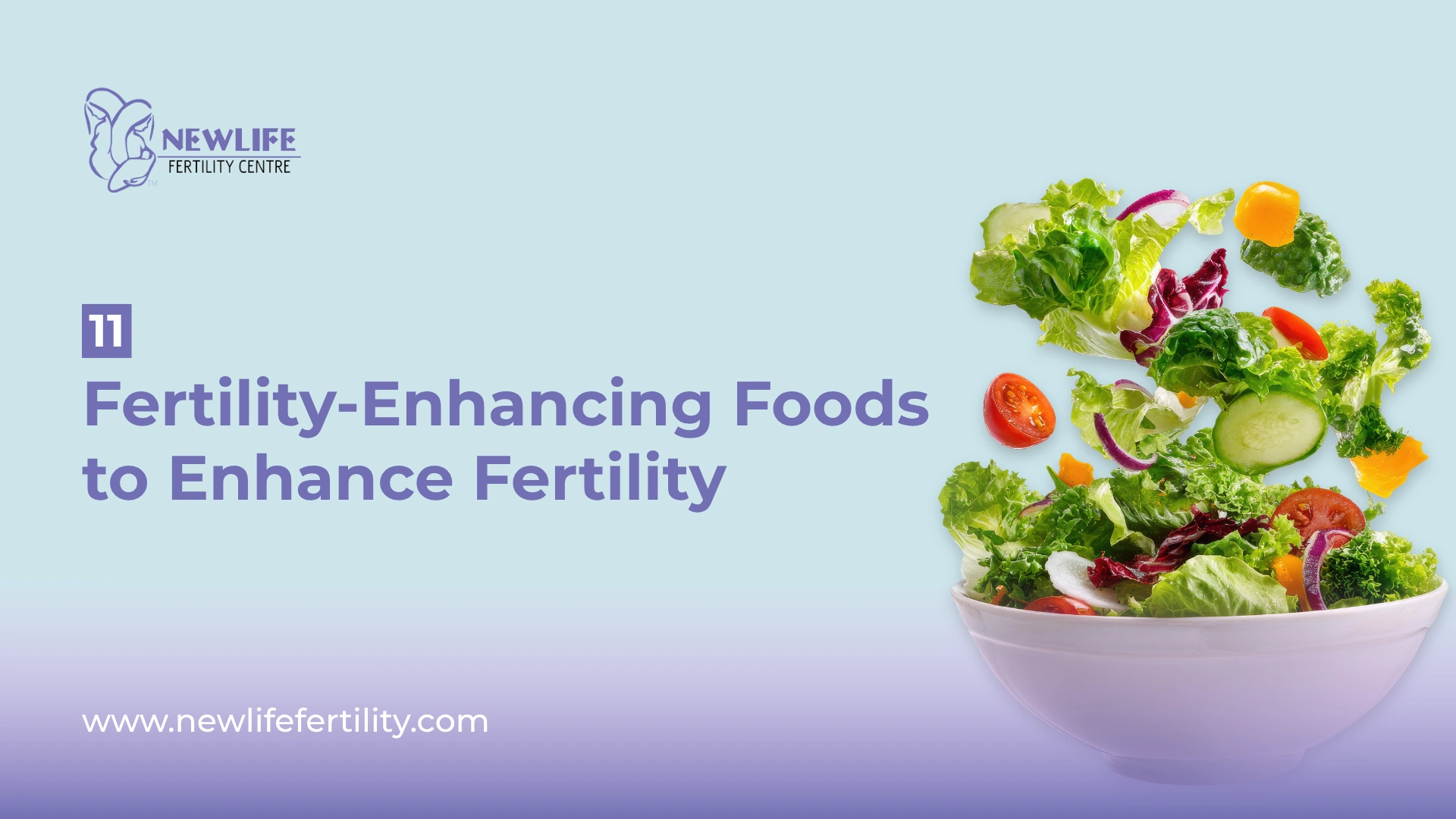
That’s what I’ve written this article about. Eleven foods that genuinely have something to offer your fertility, why they matter, and simple ways to actually fit them into your week without turning your kitchen into a science lab.
What are fertility-enhancing foods?
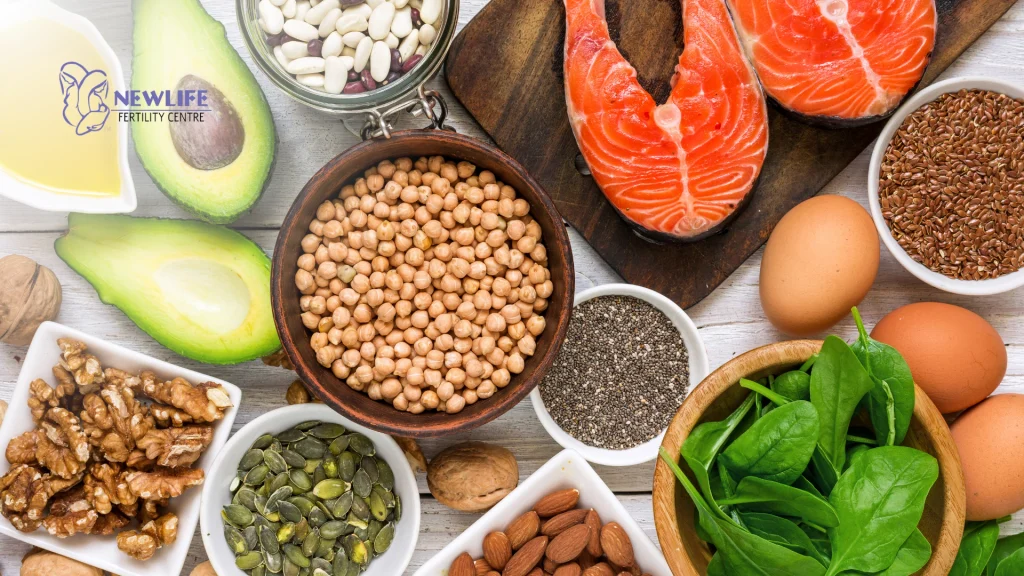
Let’s clear something up first, because the phrase “fertility enhancing foods” gets thrown around a lot, and not always accurately.
These are foods rich in nutrients that play a real role in reproductive health. They are not a cure for infertility, and they were never meant to be one.
The nutrients that matter most here are:
- Folate
- Omega-3 fatty acids
- Iron
- Zinc
- Vitamin D
- Antioxidants
- Protein
- Fibre
Each one does something specific. Folate helps cells divide properly, which matters both before and right after conception. Omega-3s support hormone balance and healthy blood flow. Antioxidants help protect your eggs and your partner’s sperm from everyday cellular wear and tear.
Here’s the distinction worth holding onto as you keep reading: supporting your reproductive health is not the same as treating infertility.
If ovulation is irregular because of something like PCOS, or if there’s a structural or male factor issue involved, no amount of kale is going to fix that on its own. What a nutrient rich diet can do is give your body the best possible foundation to work with, whether you’re trying naturally or going through fertility treatment.
And here’s something that gets lost in a lot of fertility content: it’s really the overall pattern of how you eat that matters most, not any one ingredient. A well known Harvard study, part of the Nurses’ Health Study II, found that women who followed a broader “fertility diet” pattern, more plant protein, healthier fats, whole grains, and full fat dairy instead of low fat, had noticeably lower rates of ovulatory infertility than women who didn’t.
It wasn’t one food that worked. It was the whole pattern, day after day.
So, with that in mind, here are 11 foods worth building your plate around.
11 fertility-enhancing foods that you must add to your diet
Below is the list of 11 very good fertility-enhancing foods that can help your body improve its fertility rate. So let’s get started.
Leafy green vegetables
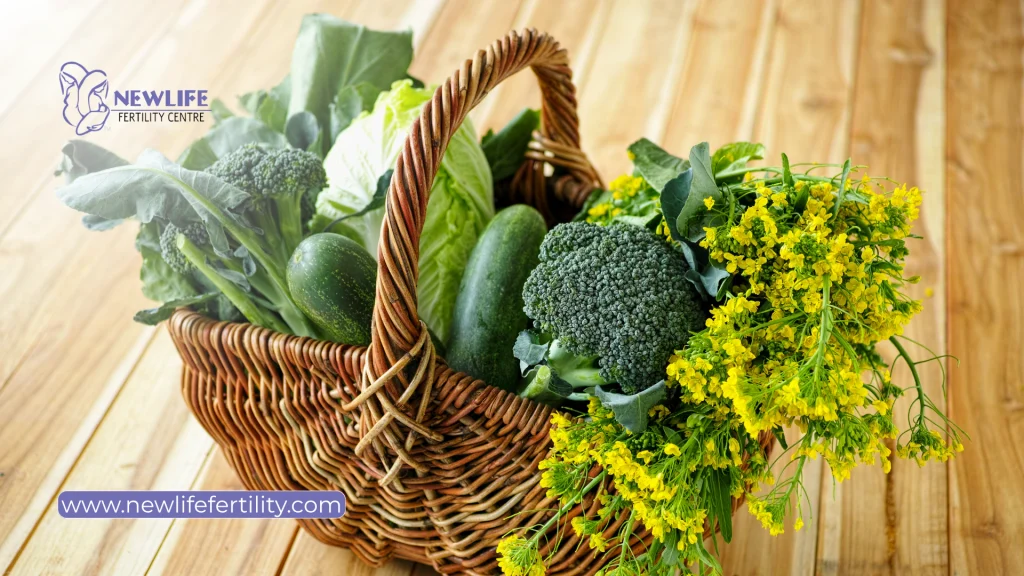
Spinach, kale, broccoli, you know the ones your mom probably told you to eat more of.
Turns out she had a point. Leafy greens are one of the richest food sources of folate you can get, and folate is central to healthy cell division, which matters for both egg development and early pregnancy.
They also bring iron and calcium along with them, two nutrients that showed up again and again in that Harvard fertility diet research.
Easiest way to eat more of them? Toss spinach into your morning eggs, blend kale into a smoothie where you won’t even taste it, or just throw a big handful into whatever soup or stir fry you’re already making for dinner.
Berries
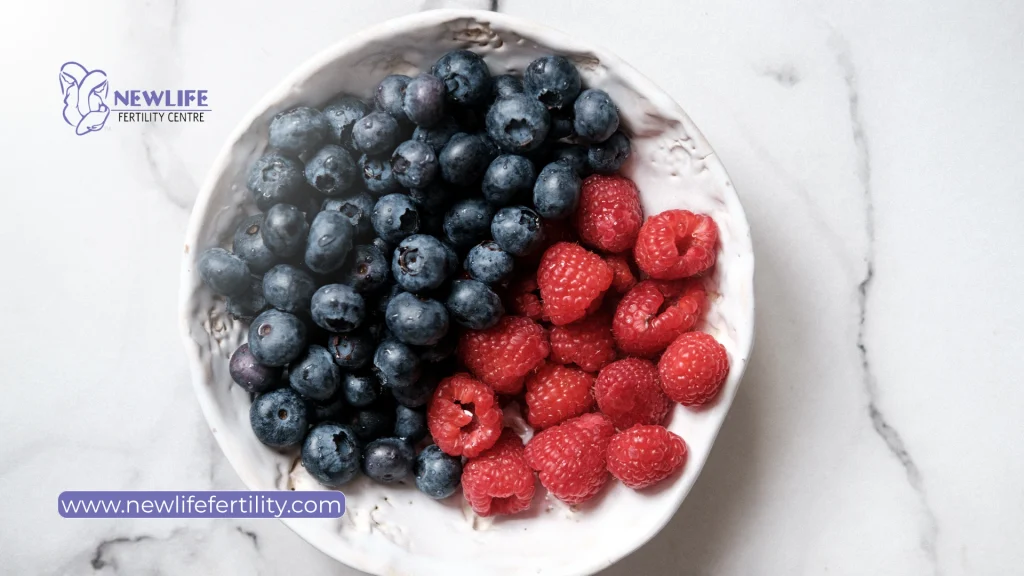
Blueberries, strawberries, raspberries, basically nature’s candy that’s actually good for you.
Berries are packed with antioxidants, and antioxidants matter here because both egg cells and sperm cells can get damaged by everyday oxidative stress. A diet rich in antioxidants has been linked to better reproductive outcomes in several studies, though researchers are still figuring out exactly how big that effect is compared to things like age.
They also give you vitamin C, which helps your body absorb iron and supports healthy hormone function.
Add a handful to your yogurt, stir them into oatmeal, or just eat them by the fistful while standing at the fridge. No judgment.
Citrus fruits
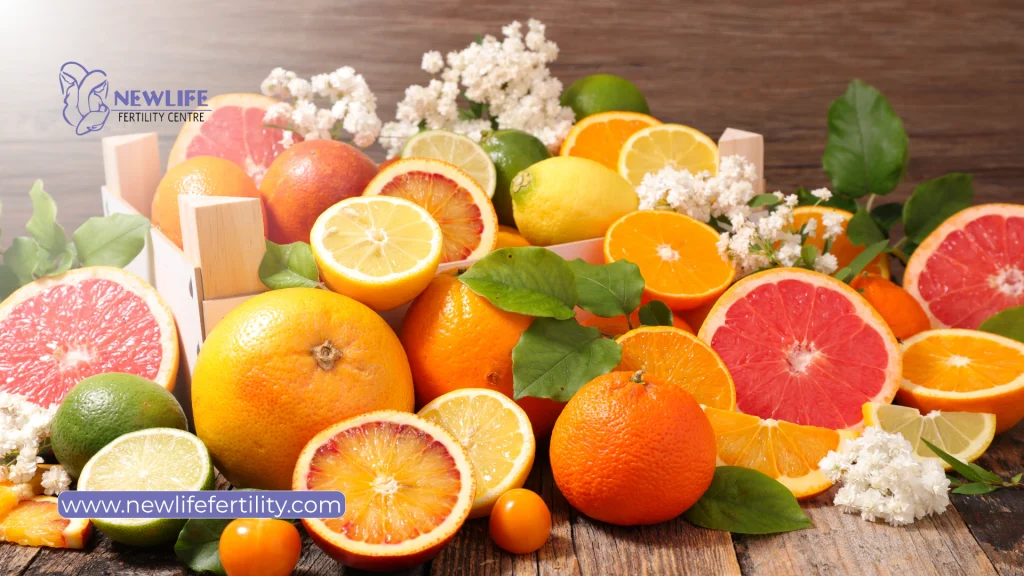
Oranges, grapefruit, lemons, they’re an easy win because they give you both vitamin C and folate in one bite.
Citrus is a good reminder that the whole fruit deserves a spot on your plate without needing to be treated as some kind of superfood. The fibre and water content in whole fruit help keep your blood sugar and hormones steady in a way that juice just doesn’t.
Grab an orange as a snack, throw some segments into a salad, or squeeze lemon over your roasted vegetables.
Fatty fish
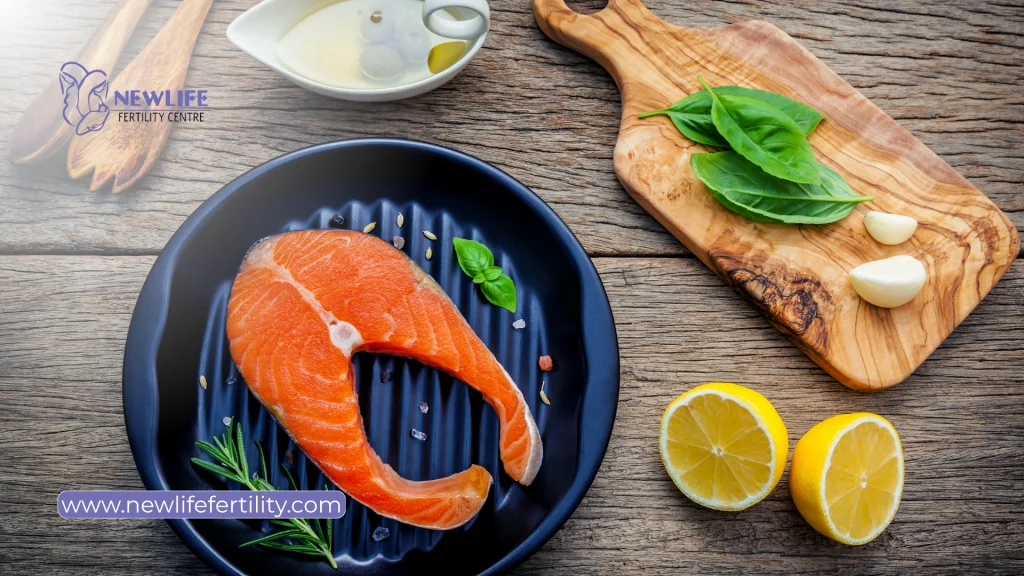
Salmon, sardines, trout, these are some of the best sources of omega-3 fatty acids you’ll find, plus vitamin D and quality protein.
Omega-3s support healthy hormone production, and research has linked them to better egg quality and more regular cycles. Vitamin D, which fatty fish also gives you, plays a role in hormone regulation too, and low vitamin D levels have shown up in research on less favourable fertility outcomes, though this is still an area scientists are actively studying.
One important thing if you’re trying to conceive in Canada: stick to lower mercury fish and follow Health Canada’s fish guidance, since some larger fish carry mercury levels that are best avoided during preconception and pregnancy. Salmon, trout, and sardines are generally safe, lower mercury choices.
Try to get fatty fish onto your plate a couple times a week. Canned salmon on toast, grilled trout for dinner, or sardines on crackers when you need something quick.
Eggs
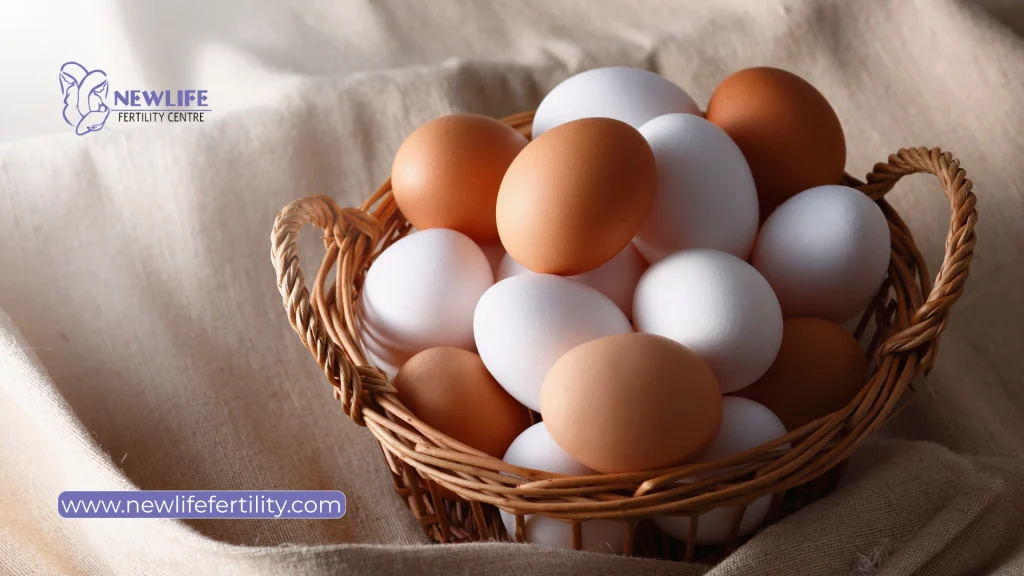
Small, mighty, and honestly underrated.
Eggs pack in protein, choline, and B vitamins, all of which come up again and again in preconception nutrition research.
Choline deserves more attention than it usually gets. It plays a big role in your baby’s brain development, and it’s one of those nutrients that a lot of people fall short on, even with an otherwise healthy diet.
Eggs work at any meal. Scrambled for breakfast, hard boiled for a snack, tossed into a grain bowl for extra protein at lunch.
Nuts and seeds
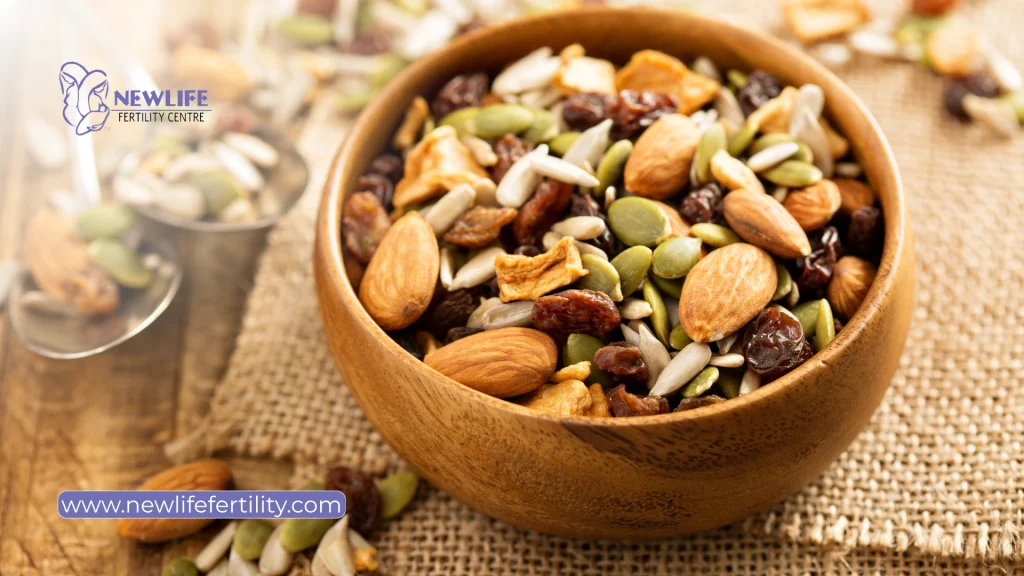
Walnuts, almonds, chia seeds, flaxseeds, these little guys punch above their weight.
They bring healthy unsaturated fats, plant based omega-3s, and minerals like zinc and magnesium, plus a good amount of fibre. Zinc is worth calling out specifically here, since research links it to both female hormone regulation and sperm health, which makes nuts and seeds a genuinely great “both partners” food.
Grab a small handful of walnuts or almonds as a snack, stir chia seeds into your yogurt or overnight oats, or add ground flaxseed to your morning smoothie.
Beans and lentils
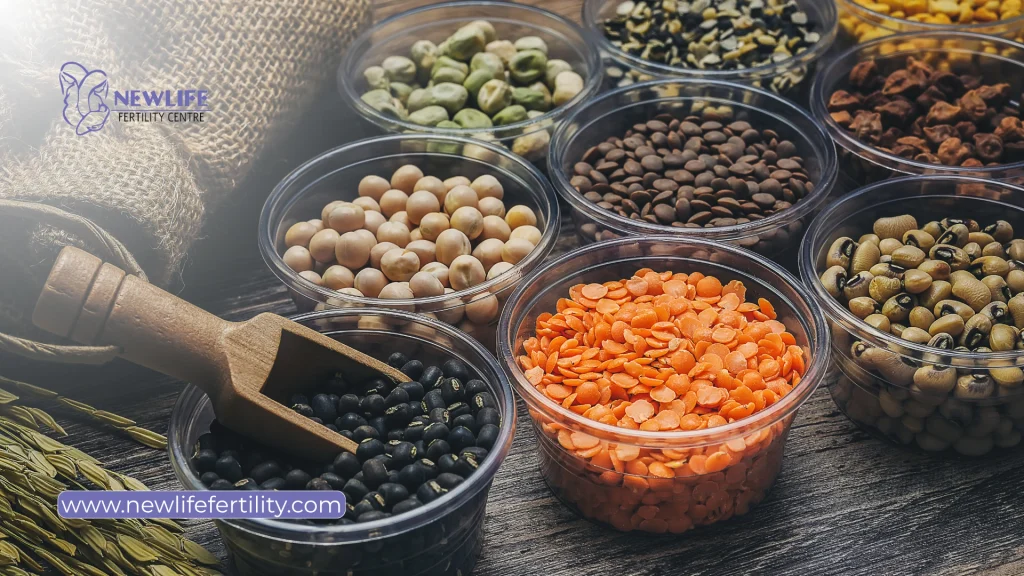
If you’re looking for one food that does a lot at once, this is it.
Beans and lentils give you plant protein, folate, iron, and fiber all in one package, which is part of why the Harvard research specifically called out plant protein as beneficial when it replaces some of the animal protein in your diet.
They’re also just practical. If you’re eating more plant forward meals while trying to conceive, beans and lentils make it easy without needing a long list of other ingredients.
Lentil soup, a hearty bean chili, or a scoop of chickpeas tossed into your salad, all solid options.
Whole grains
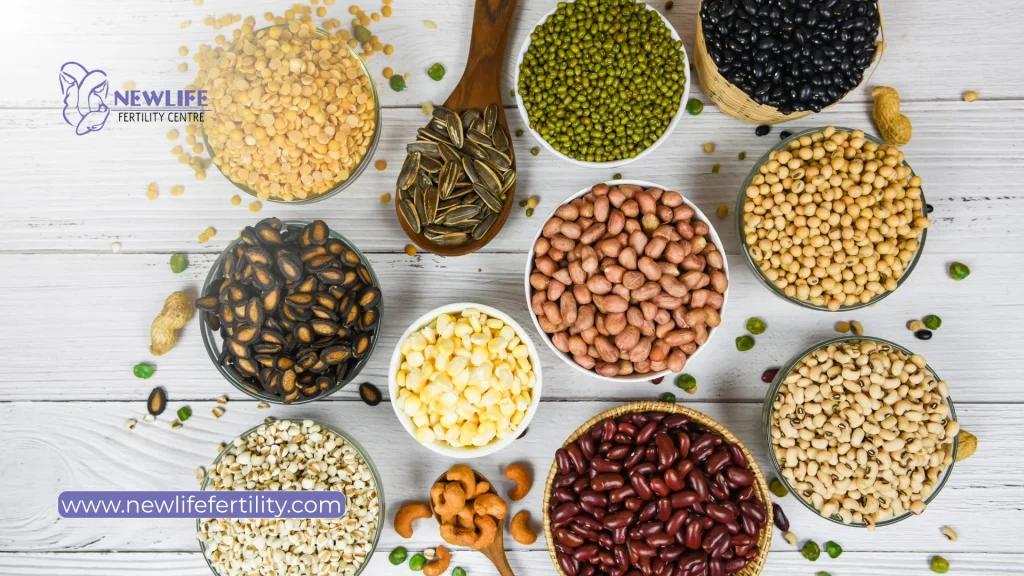
Oats, quinoa, brown rice, whole grain bread, these give you fiber and slower digesting carbs compared to their refined cousins.
Here’s why that matters for fertility: there’s a real connection between blood sugar and hormone balance. Diets heavy in refined carbs have been linked to a higher risk of ovulatory infertility, while whole grains help keep your blood sugar and insulin levels more stable, which supports healthier ovulation.
Small swaps go a long way. Brown rice or quinoa instead of white rice, whole grain bread instead of white, oats instead of a sugary cereal in the morning.
Avocados
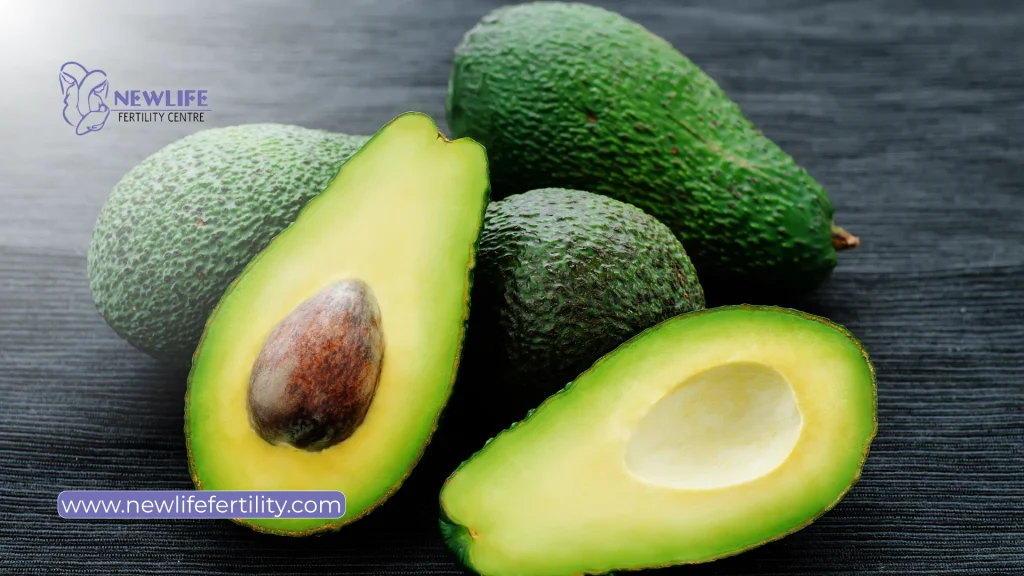
Avocados give you monounsaturated fats, folate, and fibre, and yes, they deserve a spot on this list without needing to be called a miracle food.
The healthy fat content matters because your reproductive hormones are literally built from fat. Avocados are just an easy, satisfying way to get more of the right kind into your day.
Sliced on toast, mashed into a dressing, or added to a salad instead of a less nutritious fat source.
Greek yogurt and other nutrient-rich dairy
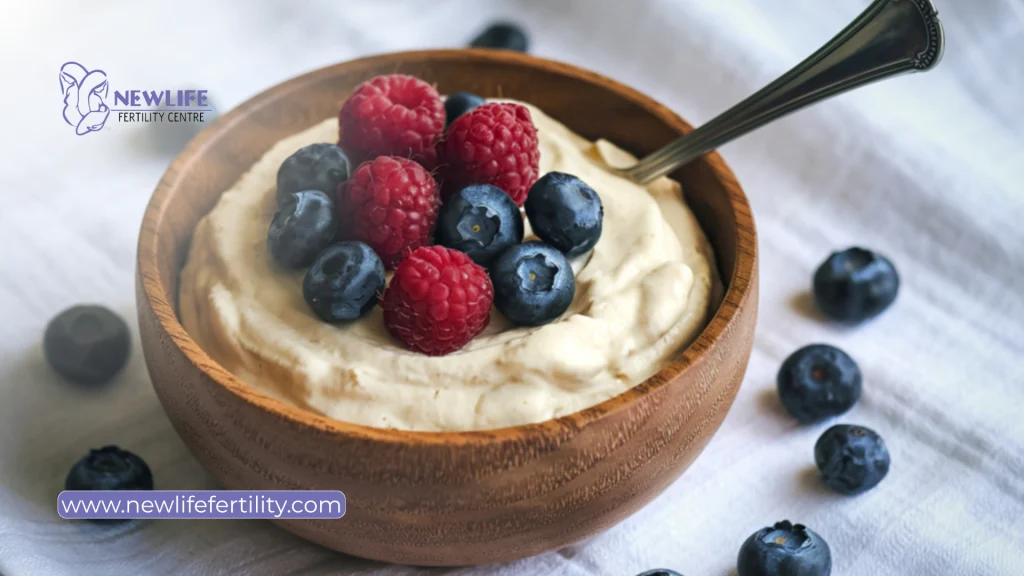
Greek yogurt gives you protein, calcium, and depending on the product, vitamin D too.
Here’s a detail that surprises a lot of people: in that same Harvard fertility diet study, full fat dairy was linked to lower rates of ovulatory infertility compared to low fat dairy. That’s one study, not a rule to follow blindly, but it’s worth knowing rather than automatically reaching for the low fat option out of habit.
Greek yogurt with berries makes a great snack or breakfast, or use it as the base for a smoothie instead of something with less protein.
Sweet potatoes and other orange vegetables
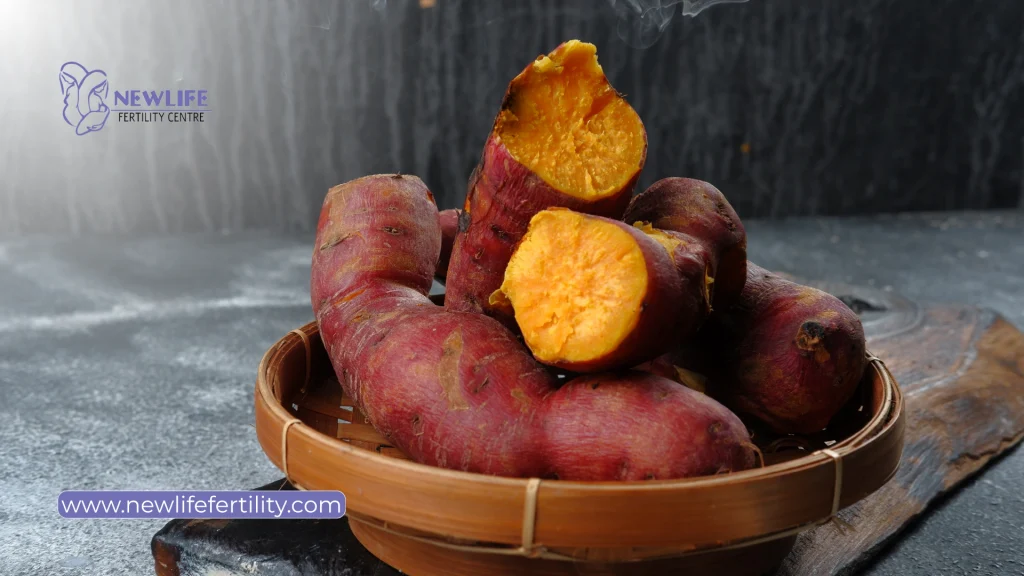
Sweet potatoes, carrots, squash, these are rich in beta-carotene, fibre, and a handful of other nutrients that support your overall hormonal and reproductive health.
Your body converts beta-carotene into vitamin A, which plays a role in cell growth and reproductive tissue health. Like a lot of the nutrients on this list, the evidence here is stronger for general health than for a direct fertility boosting effect, but that doesn’t make it less worth eating.
Roast some sweet potato as a side, snack on carrots, or blend squash into a soup.
Why these 11 and not some other list?
Because each one brings something meaningful to the table in areas the research keeps coming back to, folate, omega-3s, antioxidants, protein, and fibre. It’s not a list built off what shows up most often in fertility blogs. It also lines up with Health Canada’s own preconception guidance, which recommends a varied diet full of vegetables, fruits, whole grains, and protein foods while you’re trying to conceive.
What nutrients actually matter most for fertility?
If you’d rather think in terms of nutrients than a food list, let me share how it breaks down.
| Nutrient | Where to find it | Why it matters |
| Folate | Leafy greens, beans, citrus fruits | Supports cell division, crucial before and during early pregnancy |
| Omega-3 fatty acids | Fatty fish, walnuts, chia and flax seeds | Supports hormone balance and may help with egg quality and cycle regularity |
| Iron | Beans, lentils, leafy greens, meat | Linked to lower rates of ovulatory infertility |
| Zinc | Seafood, meat, beans, nuts | Supports healthy reproductive hormone function in both women and men |
| Vitamin D | Fatty fish, fortified foods, dairy | Plays a role in hormone regulation, low levels linked to poorer outcomes in some studies |
| Choline | Eggs, fish, soy, dairy | Important for your baby’s brain development, and often under consumed |
| Fibre | Whole grains, vegetables, fruits, legumes | Helps balance blood sugar, which is closely tied to ovulation |
One thing worth being honest about: importance doesn’t mean a proven miracle worker. Every nutrient on this table has real research behind its role in reproductive health. None of them alone has been shown to reliably increase your chances of getting pregnant. The value comes from eating them consistently, week after week, not from treating any single one as your answer.
What about fruit specifically?
Since a lot of people search specifically for fruit related fertility advice, let’s give it its own quick moment.
- The fruits worth focusing on are:
- Berries, for the antioxidants
- Citrus fruits, for vitamin C and folate
- Avocados, technically a fruit, and a great source of healthy fat and fibre
- Whole fruit in general, for fibre, hydration, and steady blood sugar
One thing worth saying plainly: whole fruit beats fruit juice here. Juicing strips out most of the fibre that helps keep your blood sugar steady, and diets higher in sugary drinks, including juice, have been linked to less favourable fertility outcomes in research. An orange is simply a better choice than a glass of orange juice, even if the nutrition label looks similar at first glance.
So what does a fertility-friendly diet actually look like?
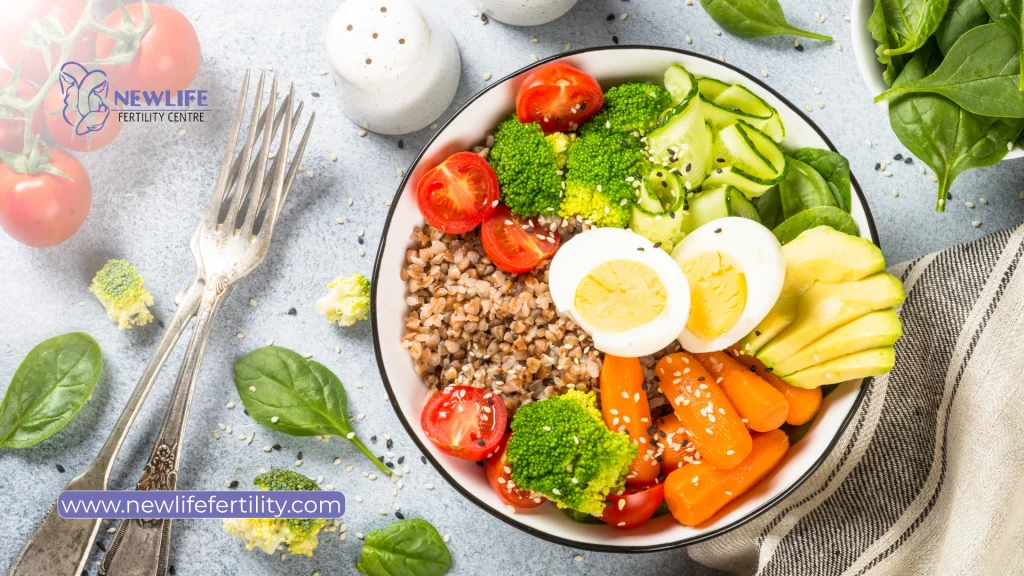
Individual foods matter less than the overall pattern they add up to over time.
Based on the research, and on Canadian preconception guidance, a fertility supportive way of eating generally looks like:
- A variety of vegetables and fruits, most days
- Whole grains more often than refined ones
- A mix of plant and animal protein
- Healthy unsaturated fats from fish, nuts, seeds, and avocado
- Fish included regularly, with an eye on mercury guidance
- Less highly processed food, added sugar, sodium, and saturated or trans fat
- No extreme restriction
That last one matters more than people realize. If you cut out entire food groups without a real medical reason, or you’re chronically under eating, you can actually throw off the hormonal signals that regulate ovulation. Your body needs to feel like it has enough energy and nutrients to prioritize reproduction, and restriction sends the opposite message.
Health Canada’s own preconception guidance reflects this. Nothing exotic, just a varied diet with vegetables, fruits, whole grains, protein sources, dairy, fish, and healthy oils, while going easy on salt, sugar, and processed foods. It’s not glamorous advice, but consistency beats perfection every time.
Can eating better improve your IVF outcomes?
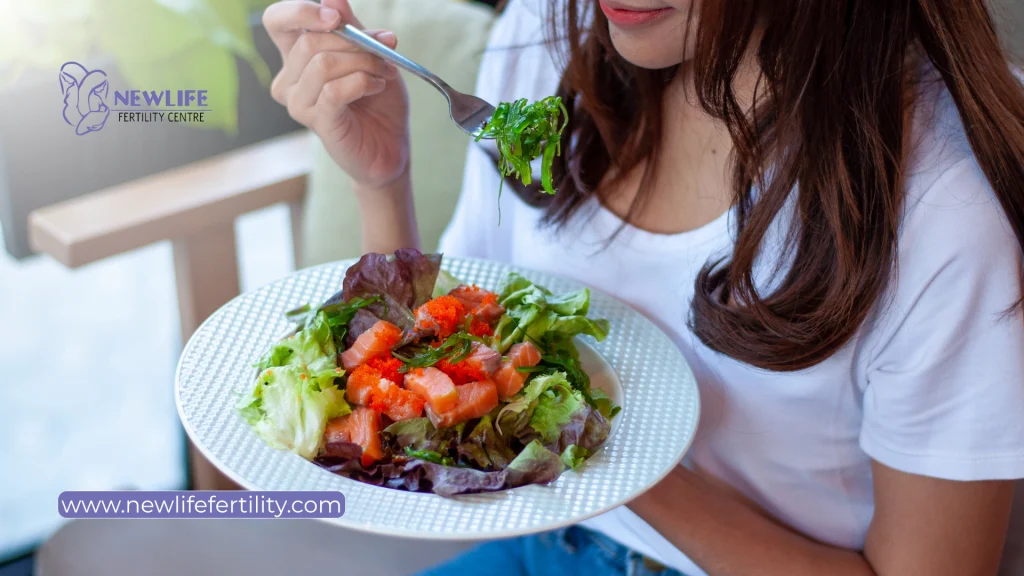
If you’re currently going through fertility treatment, it’s completely natural to wonder if changing what you eat could tip the odds in your favour.
Let’s be honest with you here rather than just hopeful.
Eating well supports your overall health during treatment, and your general health matters for how your body responds to medication and handles everything treatment asks of it physically. Some studies have looked at links between diet and outcomes in assisted reproductive technology, but the results are mixed across studies, and no specific “IVF diet” has been proven to reliably improve your chances.
The American Society for Reproductive Medicine has noted that while certain dietary factors show some association with fertility and treatment outcomes in observational research, the overall evidence is still limited, and stronger studies are needed before doctors can confidently recommend specific diet changes to improve IVF success.
If you’re in treatment right now, the most helpful thing you can do is follow the individualized nutrition and medication guidance from your fertility team rather than layering a general internet diet on top of your protocol. Your care team can walk you through exactly what matters for your specific cycle and medications.
What about foods to cut back on?
Just as important as what to add is knowing what to go easier on, without turning this into a list of things to fear. SO below are the things worth limiting while you’re trying to conceive:
- Highly processed food, which tends to be low in the nutrients we’ve talked about
- Foods high in trans fat, linked to a higher risk of ovulatory infertility
- Too much added sugar, which can throw off blood sugar and hormone balance
- Too much alcohol
- Too much caffeine
- High mercury fish, following Health Canada’s guidance
- Very restrictive diets that cut out entire food groups without a medical reason
The research here shows associations, not guarantees, and the strength of the evidence varies. This isn’t about cutting these things out completely. It’s about being aware of how often they show up in your week.
Do these foods mean you can skip prenatal vitamins?
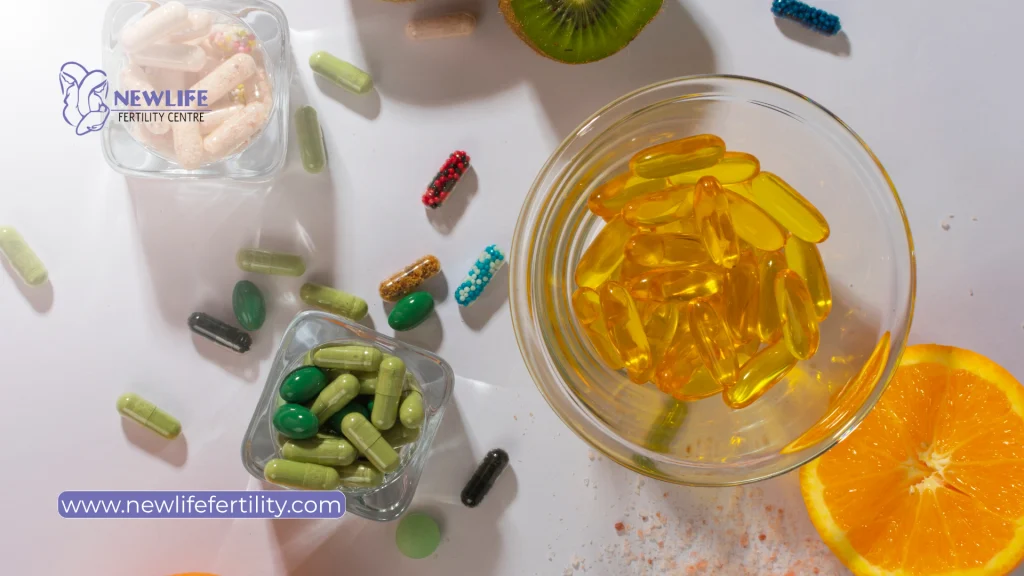
Food should be the foundation of how you eat, but food alone usually can’t give you everything you need before and during pregnancy, especially folate at the levels recommended for pregnancy prep.
Health Canada recommends that anyone who could become pregnant take a daily multivitamin with 400 mcg of folic acid, starting at least two to three months before trying to conceive. Some people need more than that, depending on personal or family history, certain medical conditions, or medications, and that’s something worth talking through directly with your doctor.
So no, these foods don’t replace your prenatal vitamins. They work together. If you’re not sure what your own folic acid or supplement needs should look like, that’s a conversation to have with your doctor or fertility team, not something to guess at.
A simple way to build your plate
All of this is a lot easier to actually use if you can picture it.
Here’s a simple structure to work from:
- Half your plate: a mix of vegetables and fruit
- A quarter of your plate: whole grains or another high fibre carb
- A quarter of your plate: a protein source
- A little healthy fat, drizzled or added on top
A few real meal ideas built this way:
- Grilled salmon, quinoa, and a big pile of leafy greens
- A lentil bowl with roasted vegetables and sliced avocado
- Greek yogurt topped with berries and a handful of walnuts
Nothing here needs a special grocery trip or a complicated recipe. That’s the whole point. A fertility friendly diet works because you can actually keep doing it, not because any single meal is flawless.
So, what should you actually eat to enhance fertility?
There’s no single food that’s going to get you pregnant, and anyone promising otherwise isn’t being straight with you.
What actually helps is a way of eating built around leafy greens, berries, citrus, fatty fish, eggs, nuts and seeds, beans and lentils, whole grains, avocados, nutrient rich dairy, and orange vegetables like sweet potatoes, alongside a prenatal multivitamin with folic acid and, when it makes sense, guidance from a fertility specialist.
Small, steady choices at each meal will do more for you than any dramatic overhaul ever could, and definitely more than chasing whatever “superfood” is trending this month.
NewLife Fertility supports patients across Ontario, including our Toronto, and Mississauga locations, with care that goes well beyond generic nutrition advice. Our fertility specialists sit down with patients to look at diet, lifestyle, and medical history as part of a full fertility evaluation, and we keep our guidance aligned with Health Canada’s preconception recommendations and current reproductive medicine research.
Whether you’re just starting to explore your options or you’re ready for the next step, our team is here to build a plan around you, not a generic checklist.
Book your free consultation with NewLife Fertility today, and let’s talk about what your next step could look like.
Frequently asked questions about foods that enhance fertility
Leafy greens, berries, citrus fruits, fatty fish, eggs, nuts and seeds, beans and lentils, whole grains, avocados, Greek yogurt, and orange vegetables like sweet potatoes all bring nutrients tied to reproductive health, think folate, omega-3s, zinc, and antioxidants. None of them work alone, but together they support ovulation, egg quality, and overall hormone balance.
Aim for a consistent, varied diet rather than chasing one perfect food. Fill half your plate with vegetables and fruit, add whole grains, a protein source, and some healthy fat, and try to include fatty fish a couple times a week. It’s the pattern over weeks and months that matters, not any single meal.
Berries, citrus fruits, and avocados stand out the most, thanks to their antioxidants, vitamin C, folate, and healthy fat. Whole fruit is the better choice over fruit juice, since juicing strips out the fibre that helps keep your blood sugar, and your hormones, steady.
It can support your reproductive health, but it can’t guarantee pregnancy or fix every cause of infertility. A nutrient rich diet creates a better internal environment for conception, especially around ovulation and egg or sperm quality, but conditions like PCOS or male factor infertility need medical evaluation, not just dietary changes.
Eating well supports your overall health during treatment, which matters for how your body handles medication and the physical demands of a cycle. That said, no specific diet has been proven to reliably boost IVF success rates, and the research so far is mixed. Your fertility team’s individualized guidance should always come first.
Try to go easier on highly processed foods, trans fats, excess added sugar, alcohol, caffeine, and high mercury fish. You don’t need to cut these out entirely, just be mindful of how often they show up in your week. Very restrictive diets that eliminate whole food groups are also worth avoiding unless there’s a medical reason.
No. Food is the foundation, but it usually can’t provide everything you need, especially folate at pregnancy prep levels. Health Canada recommends a daily multivitamin with 400 mcg of folic acid starting two to three months before trying to conceive, alongside a nutrient rich diet, not instead of one.