“Will this work for me?”
That’s the question, isn’t it?
Not the clinical one. Not the textbook one.
The real one. The one you think about at 2 AM. The one that follows you into every doctor’s appointment.
And you deserve a real answer.
Not a sugar-coated one. Not a scary one. Just an honest, clear one, so you can walk into this with both eyes open and your head held high.
That’s what this blog is going to give you.
Let’s go.
What is the success rate of frozen embryo transfer?

On average, the success rate of a frozen embryo transfer (FET) ranges between 30% to 50% per transfer cycle.
Some fertility clinics in Canada report higher. Some lower. It all depends on several factors specific to you.
That’s the part most articles skip. They throw a number at you and call it a day.
But a number without context is just noise.
Because a 35-year-old transferring a Day 5 blastocyst has a very different success story than a 41-year-old transferring a Day 3 embryo. Same procedure. A very different picture.
So let’s break it down properly.
What affects FET success rate?
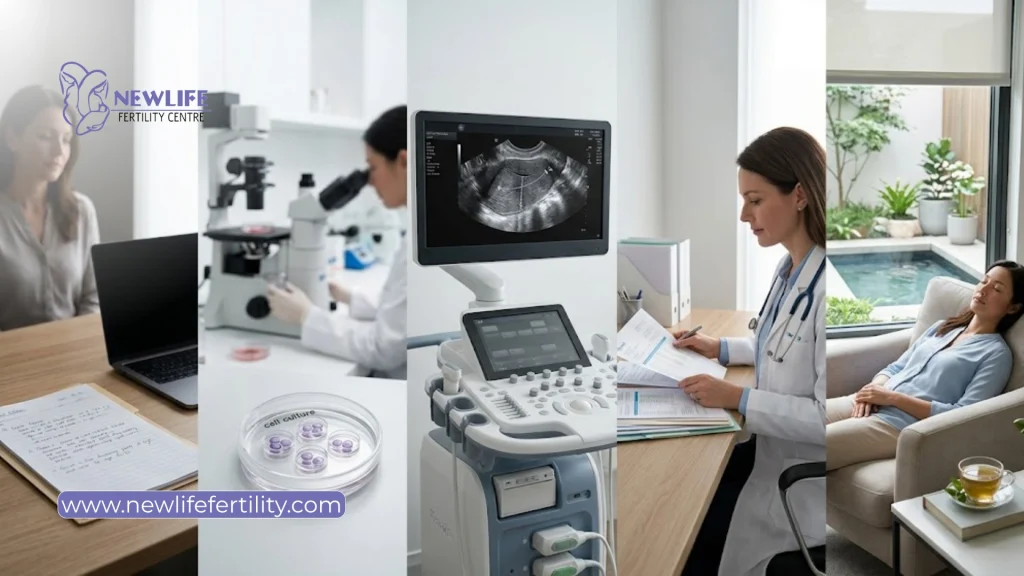
A lot of things go into whether a frozen embryo transfer works. Let me share some of the big ones you should know about.
Your age: This is one of the biggest factors. Younger age is generally linked to better egg quality, which directly affects success.
Embryo quality: Not all embryos are the same. Higher-grade embryos usually have better chances. Your embryologist can guide you on this.
Uterine lining: Your uterus needs to be ready to receive the embryo. Doctors usually look for a lining of around 7 to 8 mm before transfer.
Medical history: Conditions like PCOS, endometriosis, or fibroids can influence outcomes. These are not deal breakers, but they are important factors your doctor will monitor.
Lifestyle: Sleep, stress, smoking, alcohol, and weight can all impact results more than people expect.
This is not meant to overwhelm you. It is to remind you that success is not random. It is influenced by real and manageable factors.
Frozen embryo transfer (FET) success rate by age
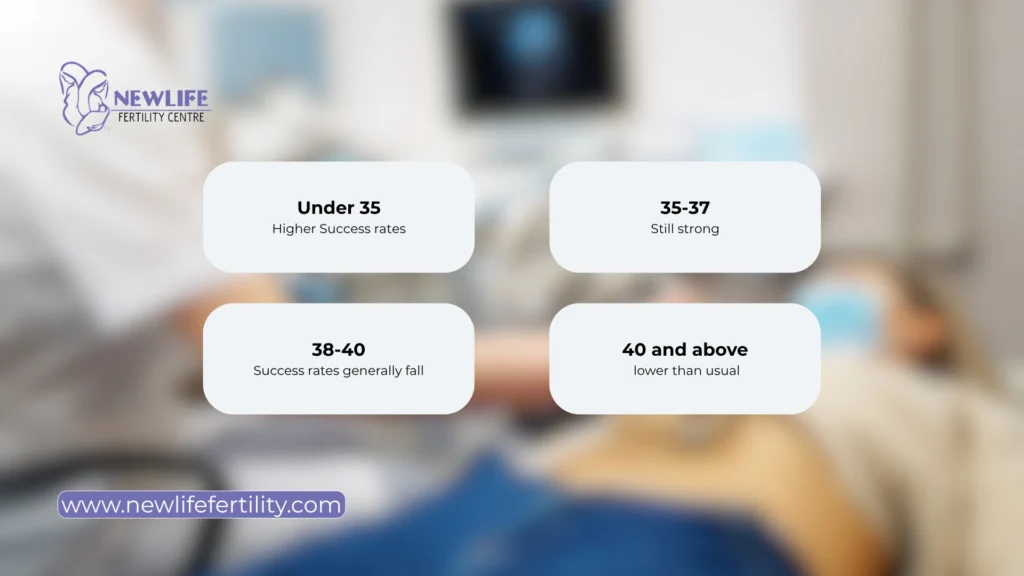
As I mentioned above, a 35-year-old has a totally different story from a 41-year-old. So let’s see, age matters and also a simple breakdown so you know where you stand.
Under 35
Success rates are generally the highest here, often ranging between 40-50% per cycle. The embryos tend to be healthier, and the uterine environment is more receptive.
Between 35-37
Still strong. Rates typically sit in the 35–45% range. Totally workable odds.
Between 38-40
Things start to shift a little. Success rates generally fall to around 25–35%. But plenty of successful transfers happen in this range every single day.
Equal to 40 and above
Rates drop further, typically to 15–20% or lower with their own eggs. But here’s what’s important, lower doesn’t mean impossible. It just means your journey may take more patience.
And if you’re using donor embryos, age becomes far less of a factor. Donor embryo success rates are often much higher, sometimes 50% or above, because embryo quality is controlled more precisely.
One more thing: These are averages. Your clinic’s specific data, your embryo grade, and your individual health history can shift these numbers in your favour.
Day 3 vs Day 5 embryo transfer success rates
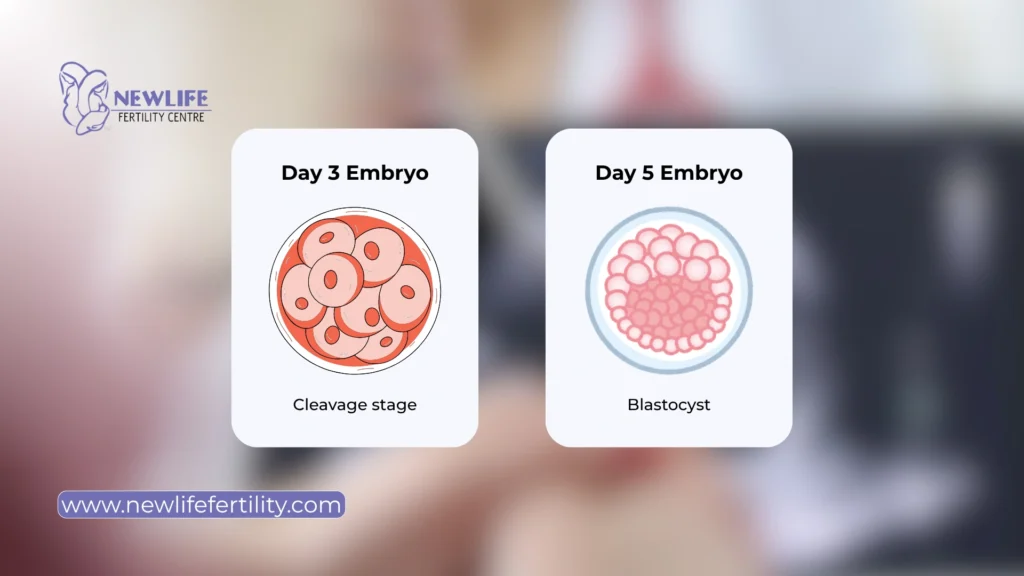
This one comes up a lot. And for good reason.
A Day 3 embryo (also called a cleavage stage embryo) is transferred earlier in its development. It’s still a viable option, but it’s a little earlier in the growth journey.
A Day 5 embryo, also called a blastocyst, has developed further. It’s had more time to grow, which means it’s already shown it has the strength to keep developing. That’s why blastocysts generally have higher implantation rates.
Day 5 transfers typically show success rates 5–10% higher than Day 3 in most studies.
But the catch is not all embryos make it to Day 5. Some are better transferred on Day 3 before they risk deteriorating in the lab. Your embryologist makes that call based on what’s best for your specific embryos.
So if your doctor recommends a Day 3 transfer, that’s not a bad sign. It might actually be the smarter move for your situation.
First vs. second frozen embryo transfer: Does it get better?

If you’re on your second (or third) attempt, this section is for you.
First, hear this: a failed first transfer does not predict a failed second one.
Not even close.
Many people have their first FET not work and then go on to have a successful second or third transfer. It happens more often than you’d think.
In fact, some research suggests that the cumulative success rate after multiple FET cycles can be significantly higher than a single attempt. So the odds can stack in your favour over time.
A failed cycle often teaches your medical team something valuable about how your body responded, what to adjust, and what to try differently. That information isn’t wasted. It’s used.
So if your first transfer didn’t work, it is not the end. Please don’t let it feel like the end.
Chances of twins with frozen embryo transfer

Well, it totally depends on how many embryos are transferred.
If one embryo is transferred (called Single Embryo Transfer, or SET), the chance of twins is very low, around 1–2%, mostly from the embryo naturally splitting.
If two embryos are transferred, the chance of twins rises to roughly 20–30%.
Most modern clinics now recommend transferring a single embryo at a time, especially for younger patients with high-quality embryos. The goal is a healthy singleton pregnancy. Twins might sound exciting, but they do carry more risks for both the mother and the babies.
Having said that, your doctor will guide this decision based on your specific case.
Frozen vs. fresh embryo transfer success rate: Which works better?
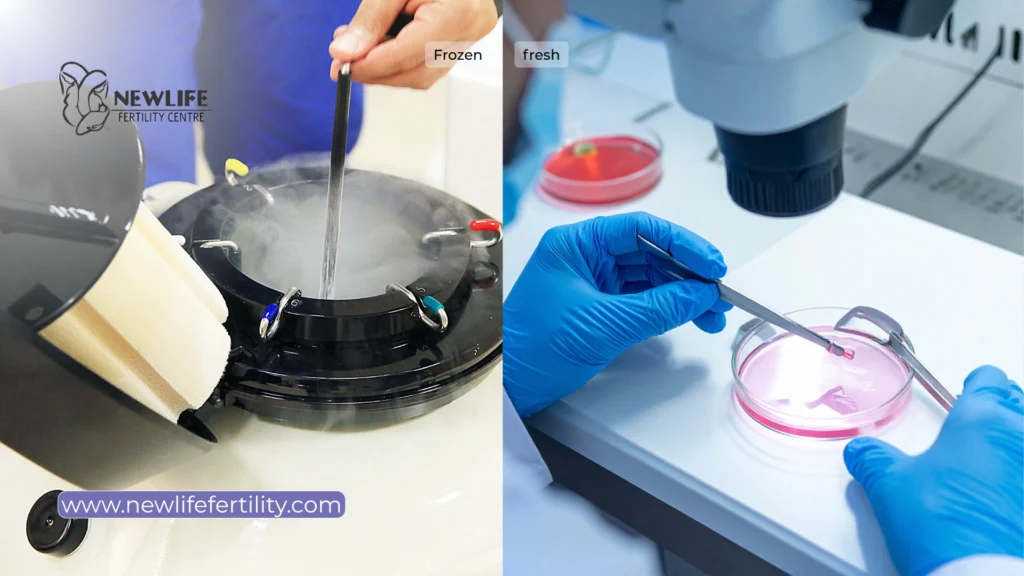
This is one of the most common questions couples ask, and honestly, the answer surprises a lot of people.
In many cases today, frozen embryo transfers (FET) match or even slightly outperform fresh transfers. One big reason is timing. In a fresh cycle, your body has just gone through hormone stimulation for egg retrieval. That can sometimes affect how receptive the uterus is.
With a frozen transfer, your body gets time to recover. Your uterine lining can develop in a more natural, controlled way, which may improve implantation chances.
That’s why many clinics now lean toward FET as a preferred approach.
If you’re still wondering which option might be right for you, it really depends on your specific situation.
Signs of a successful frozen embryo transfer

That two-week wait after your transfer can feel endless. Every small change in your body suddenly feels important, and it is completely normal to wonder, “Is this a sign?”
Some early signs that may indicate implantation include light spotting, mild cramping, breast tenderness, bloating, or feeling more tired than usual.
But the honest part is most people don’t say it clearly. Many of these symptoms are also caused by progesterone medication. So even if you feel something, it is very hard to know what it actually means.
The only way to confirm a successful transfer is your beta hCG blood test, usually done 10 to 14 days after the transfer.
If you can, try not to overanalyze every symptom during this time. It is tough, we know. But your test result is what truly gives you the answer.
How to improve your chances of frozen embryo transfer success
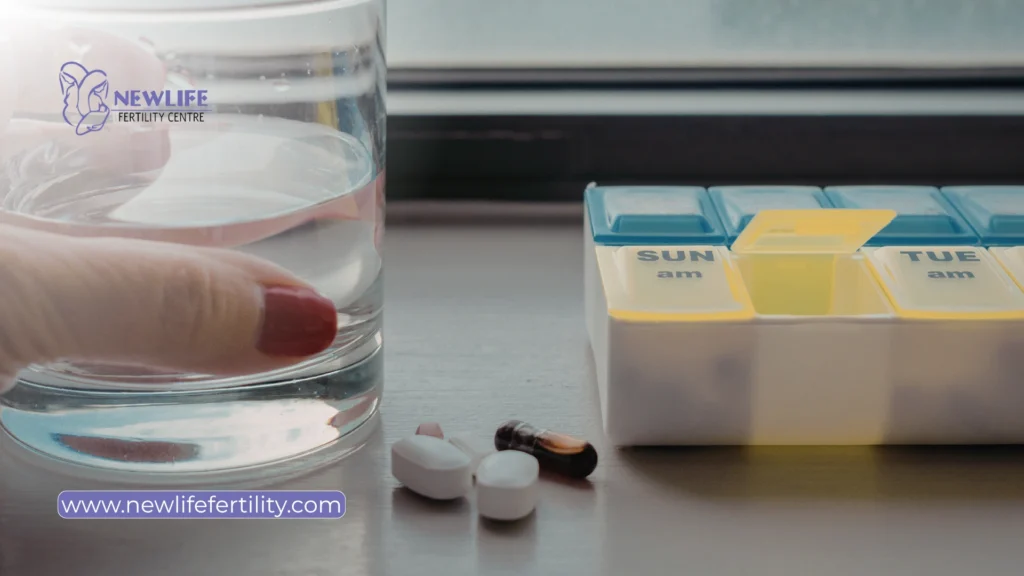
It might feel like a lot is out of your control right now. But the truth is, there are a few simple things you can do that actually make a difference.
Follow your medication exactly as prescribed
This one is critical. Progesterone support helps prepare your uterine lining for implantation. Even missing a dose can affect timing, so try to stay consistent.
Keep stress in check (as much as possible)
Easier said than done, right? But even small things help.
• Short walks
• Deep breathing
• Getting proper sleep
You do not need to be “perfectly calm.” Just aim for a little balance.
Eat simple, nourishing food
Think home-style meals. More whole foods, fruits, vegetables, and healthy fats. Less processed food. This helps support a healthier environment for implantation.
Avoid alcohol and smoking completely
This is one area where there is no grey zone. Both can impact success rates, so it is best to avoid them entirely during this phase.
Stay active, but don’t overdo it
Light movement is helpful. Walking or gentle stretching is fine. But intense workouts right around transfer time? Better to check with your doctor.
At the end of the day, it is not about doing everything perfectly. It is about staying consistent with small, simple habits that support your body during this phase.
Okay, I get everything! But what about negatives? What if a frozen embryo transfer doesn’t work?
Good question; let me answer that. 👇
What if frozen embryo transfer doesn’t work?

This part matters. So let’s talk about it honestly.
If your FET doesn’t work, it does not mean your body failed you.
It does not mean something is fundamentally wrong.
And it absolutely does not mean you will never get pregnant.
Failed FET cycles are more common than most people talk about. Even when everything looks right, good embryos, a healthy lining, and perfect timing, sometimes it still doesn’t implant. And the reality is, science doesn’t always have a clear answer why.
What matters is what happens next. Your doctor will review your cycle, understand what may have worked or not, and adjust your treatment plan for the next step.
One failed transfer can feel heavy. But it is not the end of your journey.
So, what does frozen embryo transfer success rate really mean for you?
If you’ve read this far, you already know one thing: success rate is not just a number. It’s your age, your embryos, your body, and your journey combined.
It’s okay if you still have questions. It’s okay if you feel hopeful and unsure at the same time.
What matters is that you now understand what shapes your chances and what your next step could look like.
At NewLife Fertility, we focus on giving you clarity, not confusion. Every case is different, and your plan should reflect that.
If you want to understand your real chances based on your reports and history, talking to the right specialist can make all the difference.
👉 Book a free consultation with us and get a clear, personalized understanding of your next step.
FAQs about frozen embryo transfer success rate
On average, frozen embryo transfer success rates range between 30% to 50% per cycle. This can vary based on age, embryo quality, and overall health.
FET is considered a highly effective part of IVF. Many patients achieve pregnancy, especially when good quality embryos and proper uterine preparation are involved.
The chances of frozen embryo transfer working depend on multiple factors, but for many patients, the probability falls within the 30% to 50% range per attempt.
In many cases, yes. FET can match or slightly outperform fresh transfers because the body has time to recover before implantation.
Age and embryo quality are the biggest factors, followed by uterine lining, medical history, and lifestyle.
Success rates are higher under 35 and gradually decrease with age. However, many women still have successful outcomes in their late 30s and early 40s.
Generally yes. Day 5 embryos (blastocysts) tend to have slightly higher implantation rates, but Day 3 transfers can still be the right choice depending on embryo development.
Single embryo transfer success rates depend on embryo quality and age, but they are often high enough that most clinics recommend transferring one embryo to reduce risks.
Twin chances are low with a single embryo, around 1 to 2%, and higher if multiple embryos are transferred.
Yes. Many patients succeed on their second or third attempt. A failed first cycle does not mean future attempts will fail.
Second cycle success rates can be similar or sometimes better, especially when doctors adjust the protocol based on the first attempt.
Pregnancy chances vary, but many patients do conceive after one or more FET cycles depending on their individual factors.
The chance is very low, usually around 1 to 2%, and happens only if the embryo splits naturally.
If two embryos are transferred, the chance of twins increases significantly, often around 20 to 30%.
Yes, donor embryo transfers often have higher success rates because the embryos typically come from younger, healthy donors.
Yes, many women with PCOS have successful FET outcomes with proper medical management and monitoring.
Some people notice mild cramping, spotting, or fatigue, but symptoms are not reliable. A blood test is the only way to confirm success.
Online calculators can give general estimates, but they cannot replace personalized advice from your doctor based on your reports.
FET is a part of IVF, so the success rates are usually discussed within IVF treatment outcomes.