When couples think about fertility, most of the attention goes to the woman.
But there’s an important piece often left out of the conversation:
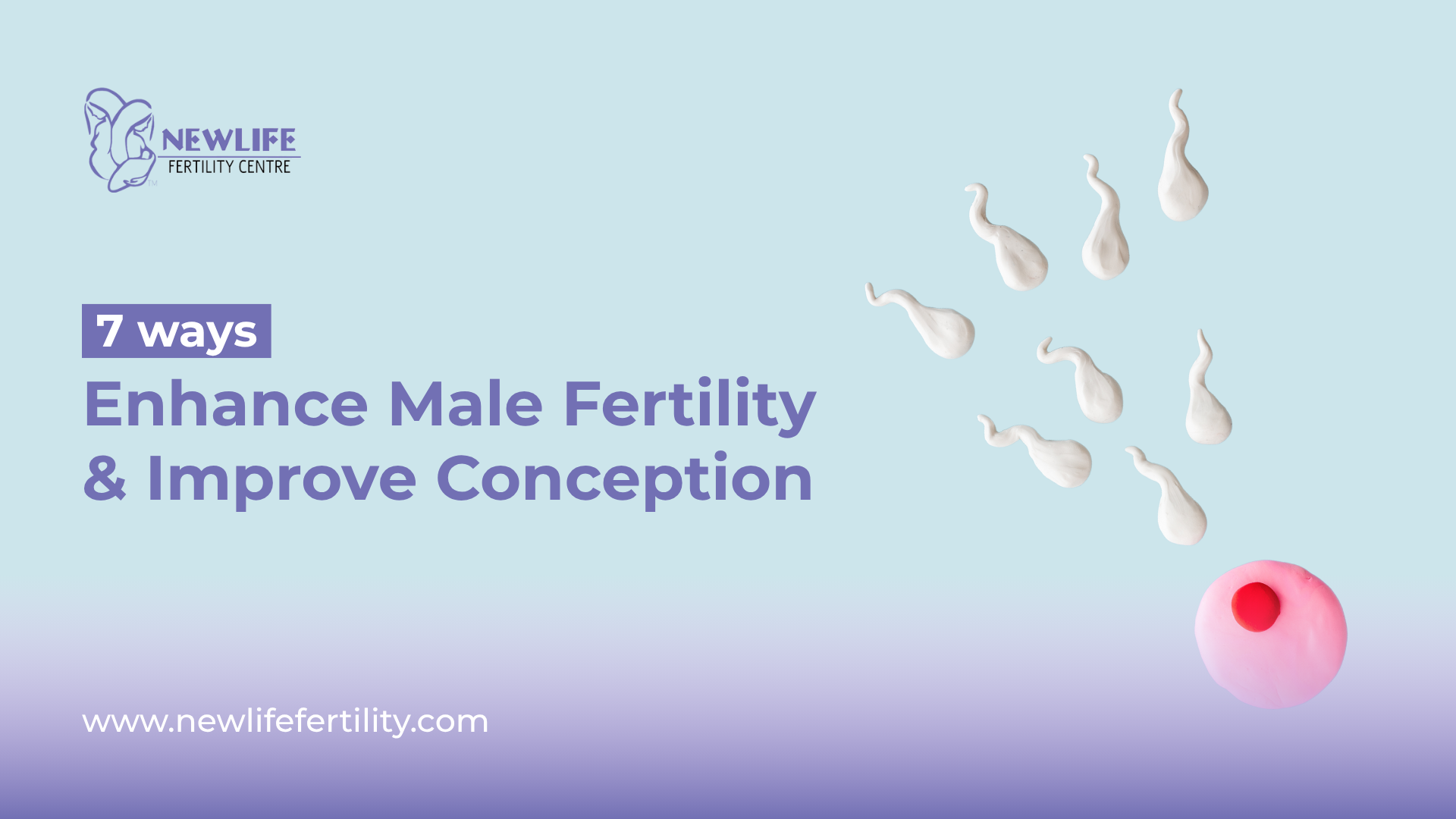
Male factors play a role in roughly 40 to 50% of all infertility cases. Sperm health isn’t a side note in the conception story. It’s half the equation.
And the good news is that a lot of what affects your sperm quality is within your control.
Diet, exercise, weight, sleep, stress, heat exposure, smoking, alcohol. These everyday habits all leave a mark on your sperm, for better or worse.
There’s something genuinely encouraging in that too. Your sperm regenerates. Your body produces new sperm on an ongoing basis, in cycles that take about 2 to 3 months from start to finish. So the choices you make today aren’t locked in forever. They shape the sperm you’ll have a few months from now.
That said, let’s be honest about something else:
Lifestyle changes help. They’re not a guarantee. Some causes of male infertility, like hormonal imbalances, genetic conditions, or structural issues, need medical evaluation and treatment. We’ll cover when that evaluation makes sense.
For now, let’s walk through the 7 changes that make the biggest difference for you.
7 ways you can enhance your fertility
These aren’t ranked by importance. Think of them as different levers you can pull, and most men find it easiest to focus on two or three at a time rather than overhauling everything at once.
Eat a diet that supports your fertility

You’ve heard “eat healthy” a thousand times. What’s less obvious is why it actually matters for your sperm.
Your sperm cells are under constant pressure from oxidative stress, which is basically wear and tear at the cellular level. Antioxidants help neutralize that damage.
Research on antioxidant intake and semen quality found that men with higher levels of certain antioxidants, like alpha-carotene and beta-carotene, had a meaningfully lower risk of low sperm concentration and low total sperm count.
So what should actually be on your plate?
- Colorful fruits and vegetables, especially leafy greens, berries, and carrots, your source of carotenoids and vitamin C
- Whole grains instead of refined carbs
- Lean proteins like chicken, fish, and legumes
- Nuts and seeds, particularly walnuts and Brazil nuts, good sources of omega-3s and selenium
- Healthy fats from olive oil, avocado, and fatty fish
And just as important as what you add is what you cut back on. Diets heavy in saturated fat and processed foods are linked to lower sperm quality, while diets that look more Mediterranean, rich in produce, fish, and healthy fats, tend to protect it.
Exercise regularly to support your fertility

Moderate, regular exercise supports your fertility in more than one way.
It helps you maintain a healthy weight (more on that below), improves blood flow, and supports healthy testosterone levels. All three of these matter for your sperm production.
Aim for the basics: 30 minutes of moderate activity most days. Brisk walking, cycling, swimming, or resistance training all count.
There’s a part that catches a lot of men off guard, though.
More isn’t always better.
Extremely intense or high volume training, like marathon level endurance training or heavy competitive cycling, has actually been linked to lower sperm quality in some studies. The likely reasons include elevated stress hormones and, in the case of cycling specifically, prolonged heat and pressure on the scrotum.
The takeaway isn’t “don’t exercise hard.” It’s “don’t take it to the extreme while you’re trying to conceive.”
Quit smoking and limit your alcohol intake

This one’s straightforward, and the evidence is not subtle.
Smoking introduces toxins that damage your sperm DNA, reduce sperm count, and impair motility, meaning sperm don’t swim as well as they should. Even secondhand smoke exposure has been associated with poorer semen quality.
Alcohol follows a similar pattern, just dose dependent. Occasional, light drinking hasn’t shown strong links to fertility problems. But heavy or regular drinking can lower your testosterone, reduce your sperm count, and affect sperm shape and movement.
If you’re actively trying to conceive:
- Quitting smoking is one of the highest impact changes you can make, full stop
- Cutting back on alcohol, or avoiding it for a few months, gives your body a cleaner runway
- Recreational drug use, including anabolic steroids and marijuana, should also be on your radar (more on steroids below)
None of this needs to be permanent. Think of it as a season, not a life sentence.
Maintain a healthy weight for your fertility

Your body weight and your fertility are more connected than most men realize.
Excess body fat, particularly around your abdomen, throws off the balance of hormones that regulate your sperm production. Fat tissue converts testosterone into estrogen, and higher estrogen relative to testosterone can suppress sperm production. Obesity has also been linked to lower sperm concentration, reduced motility, and higher rates of DNA damage in sperm.
On the flip side, being significantly underweight can also disrupt your hormone levels and fertility.
Your goal is a healthy, sustainable weight, not a crash diet.
Gradual weight loss, if you’re carrying excess weight, tends to work better than aggressive restriction for you. Aggressive calorie cutting can itself add physical stress that works against you.
Pair the diet and exercise habits above with patience. A steady, sustainable pace beats a dramatic short term push.
Manage your stress and get enough sleep

Chronic stress doesn’t just make you feel worn down. It has a real, measurable effect on your reproductive hormones.
Prolonged stress raises your cortisol, and elevated cortisol can suppress testosterone and interfere with the hormonal signals that drive sperm production. Some research has also linked high stress levels to lower sperm concentration and motility.
Your sleep plays a closely related role. Testosterone production happens largely during sleep, so consistently short or poor quality sleep can lower your testosterone levels over time. Both too little sleep and irregular sleep schedules have been associated with reduced semen quality.
A few habits that genuinely help you:
- Aim for 7 to 9 hours of sleep, on a consistent schedule
- Build in a wind down routine that doesn’t involve a screen right before bed
- Try structured stress relief, like exercise, meditation, or simply carving out time that’s actually yours
- If conception itself is a source of stress for you, consider talking to a therapist or counselor who works with fertility patients
Avoid exposing yourself to excessive heat

Something a lot of men have never heard is that your testicles sit outside your body for a reason.
Your sperm production is temperature sensitive. It works best a few degrees cooler than your core body temperature, which is exactly why the scrotum is positioned where it is.
When that area is exposed to prolonged heat, your sperm production and quality can take a hit.
Common culprits include:
- Hot tubs and saunas, especially with regular or prolonged use
- Laptops used directly on your lap for extended periods
- Tight underwear or pants that trap heat
- Long periods sitting, particularly for men who drive for a living
- Occupational heat exposure, like working near furnaces or in hot environments
You don’t need to avoid every hot bath for the rest of your life. But if you’re actively trying to conceive, it’s worth cutting back on the habitual, high frequency exposures, and giving your laptop a desk instead of your lap.
Review your medications, supplements, and medical conditions

This is the step men skip most often, and it might be the most important one for you.
Some prescription medications, over the counter supplements, and underlying health conditions can affect your fertility in ways diet and exercise simply can’t fix.
Anabolic steroids deserve special mention here. They’re one of the most common, and most overlooked, causes of low sperm count in men who are otherwise healthy and fit. Steroids suppress your body’s natural testosterone production, which in turn shuts down sperm production. This effect can persist for months after stopping.
Other things worth a conversation with your doctor:
- Certain blood pressure medications, antidepressants, and testosterone replacement therapy
- Recreational drug use
- A history of testicular injury, undescended testicles, or testicular surgery
- Conditions like varicocele (enlarged veins in the scrotum), one of the most common correctable causes of male infertility
- Chronic conditions like diabetes or thyroid disorders
Don’t stop any prescribed medication without talking to your doctor first. Your goal is simply to have this conversation early, so you’re not ruling anything out or missing something that’s easy to fix.
How can you enhance fertility in a male naturally

If you take one thing away from this article, make it this:
The highest impact natural changes are the ones you already read above: diet, exercise, healthy weight, sleep, stress management, and cutting out smoking. There’s no secret eighth strategy hiding somewhere else for you.
What matters more than any single change is consistency. Your sperm takes roughly 2 to 3 months to fully develop, so a habit you start today won’t show up in your semen for another two to three months.
That’s not a reason to get discouraged. It’s a reason to start now rather than waiting.
A realistic approach for you looks like this:
- Pick two or three changes that feel most doable right now (diet and sleep are a great starting combination for a lot of men)
- Give them a genuine 3 month runway before judging results
- Add more changes gradually rather than trying to fix everything at once
And one honest note: natural methods support your fertility, but they don’t override every underlying medical cause. If you’ve made these changes consistently and conception still isn’t happening, that’s a sign to get evaluated rather than keep waiting.
How long will it take you to improve your male fertility
Roughly 3 months, as a general rule.
This comes directly from your biology. Sperm production, or spermatogenesis, takes about 64 to 74 days from start to finish, with another 10 to 14 days for sperm to fully mature before they’re ready for conception.
So when you quit smoking or start eating better today, you won’t see the effects in this month’s semen. You’ll see them in sperm that’s just beginning development now, which will be ready in roughly 3 months.
A few things affect how quickly, and how much, you’ll see improvement:
- The underlying cause. Lifestyle related issues, like poor diet or excess weight, tend to respond well to lifestyle changes. Structural or hormonal issues usually need medical treatment alongside lifestyle changes, not instead of them.
- How long the habit has been in place. Years of smoking will typically take longer to reverse than a few months of high stress.
- Your consistency. Sporadic effort spread over a year won’t match steady effort over three months.
If you’ve given it a genuine 3 to 6 months and haven’t seen movement, or if you weren’t sure there was a problem to fix in the first place, that’s exactly when a fertility evaluation earns its place in your journey.
When should you get a male fertility test
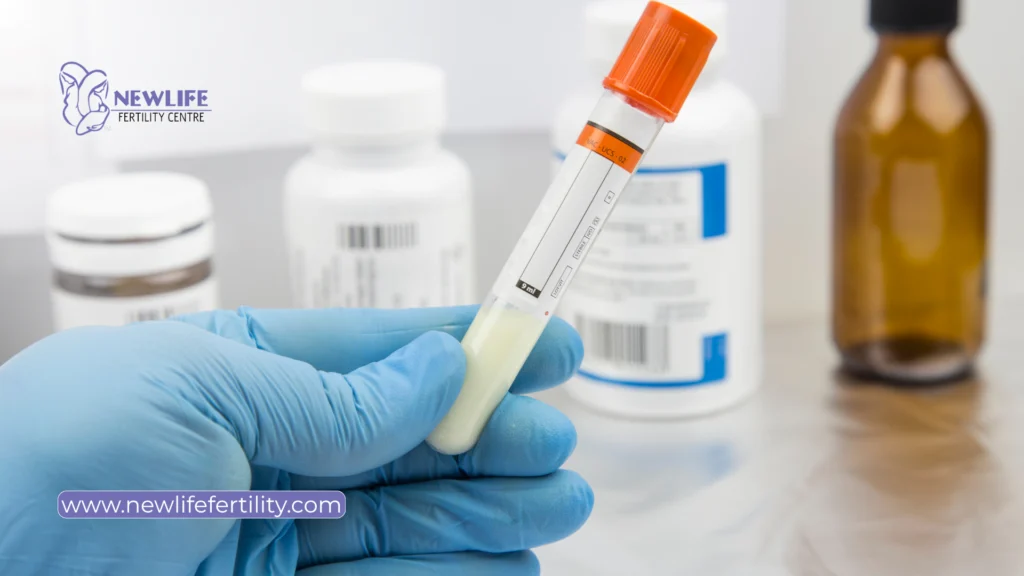
A semen analysis is simple, non-invasive, and often the fastest way for you to get real answers.
Consider getting tested if:
- You and your partner have been trying to conceive for 12 months without success (or 6 months if your partner is over 35)
- You’ve had a previous fertility concern, or a previous partner had difficulty conceiving
- You’ve noticed abnormal ejaculation, erectile difficulties, or a low sex drive
- You have a history of testicular injury, undescended testicles, or testicular or groin surgery
- You take medications, supplements, or substances known to affect fertility, including anabolic steroids
- You simply want a baseline before you start trying, or before starting fertility treatment
A semen analysis looks at several key measures for you:
- Sperm count and concentration: how many sperm are present
- Motility: how well the sperm move
- Morphology: the size and shape of the sperm
- Volume and pH: the overall quality of the semen sample
It’s a single sample, usually collected in a private room at a clinic or at home and delivered within an hour. No needles, no surgery. Just answers.
Male fertility enhancement: what else can help you
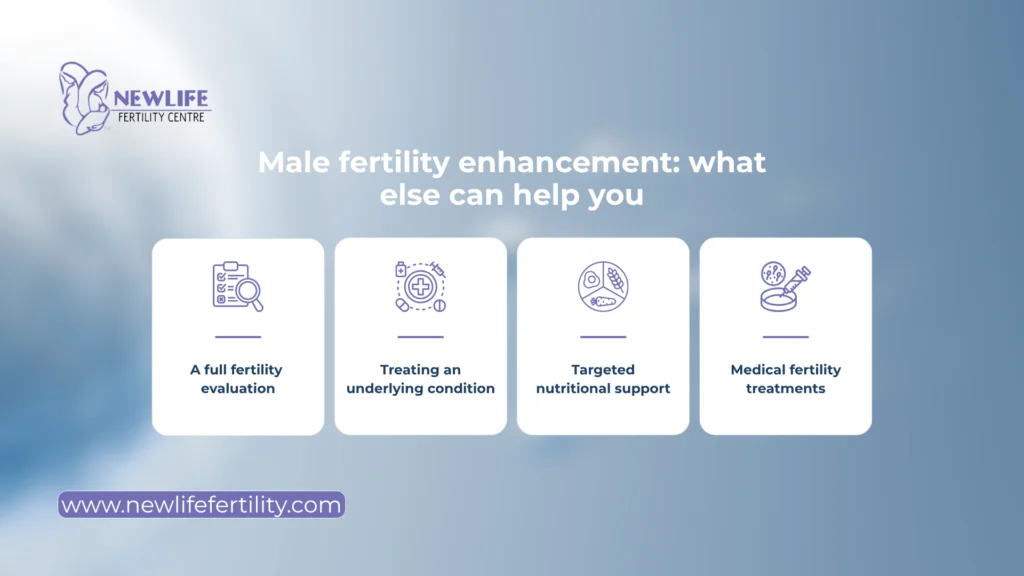
Lifestyle changes are the foundation, but they’re not always the whole picture. If you’ve made consistent changes and you’re still not seeing results, a few other paths are worth exploring:
A full fertility evaluation
This goes beyond a single semen analysis and can include hormone testing, a physical exam, and imaging if needed, to pinpoint exactly what’s happening with you.
Treating an underlying condition
Varicoceles, hormonal imbalances, and infections are all treatable, and treating them often improves sperm parameters significantly.
Targeted nutritional support
Under a doctor’s guidance, specific supplements like CoQ10, zinc, or omega-3s may help in certain cases. This isn’t a substitute for a real diet, and it’s not something to self-prescribe without input from a specialist.
Medical fertility treatments
When lifestyle changes and treating underlying conditions aren’t enough, options like IUI, IVF, or ICSI (a technique where a single sperm is injected directly into an egg) can help you and your partner conceive even with significant male factor infertility.
How will you enhance your male fertility from here
Improving your male fertility usually comes down to a handful of habits, not a complicated protocol: eating well, staying active without overdoing it, protecting your sleep, keeping stress in check, cutting out smoking, watching your alcohol intake, and avoiding unnecessary heat exposure. None of these are complicated on their own. Doing them consistently for a few months is what actually moves the needle for you.
But it’s just as important to remember that lifestyle changes have limits. Conditions like varicocele, hormonal imbalances, and other underlying issues won’t resolve with diet and exercise alone, and they’re far more common than most men expect.

Fertility care can feel easier to navigate when treatment options are clear, practical and within reach.
At NewLife Fertility, our team works with male partners as a core part of every fertility journey, not an afterthought. Our clinics in Toronto and Mississauga offer on site semen analysis and full male fertility evaluations, so you can get real answers instead of guesswork.
If you and your partner have been trying for a while without success, or you just want a clear picture of where you stand, our fertility specialists can help you figure out the right next step, whether that’s a few more months of lifestyle changes or a deeper evaluation.
Book your free consultation with NewLife Fertility today, and let’s find out what’s actually going on, together.
Frequently asked questions about male fertility enhancement
Focus on the fundamentals: eat a nutrient rich diet high in antioxidants, exercise moderately, maintain a healthy weight, get consistent quality sleep, manage stress, avoid smoking, limit alcohol, and reduce prolonged heat exposure to your testicles. Give these changes about 3 months before expecting to see results, since that’s roughly how long sperm takes to develop.
There’s no true shortcut, since sperm production takes 2 to 3 months no matter what you do. That said, quitting smoking and cutting out anabolic steroid use tend to produce the most noticeable improvements once given time, because they remove some of the biggest known disruptors to sperm production.
Yes. Diets rich in antioxidants, healthy fats, and lean protein, similar to a Mediterranean style diet, are consistently linked to better sperm concentration and quality. Diets high in saturated fat and processed foods tend to have the opposite effect.
Moderate, regular exercise supports healthy testosterone levels, blood flow, and weight management, all of which benefit your sperm quality. However, extremely intense or excessive endurance training has been linked to lower sperm quality in some men, so balance matters more than volume.
Yes. Smoking is associated with lower sperm count, reduced motility, and increased sperm DNA damage. Quitting removes one of the most well documented risk factors for poor semen quality, though improvement takes a few months to show up in your semen analysis results.
Around 2 to 3 months, since that’s the full cycle of sperm development from start to maturity for you. Consistency matters more than intensity. Steady habits over a few months will move the needle more than short bursts of effort.
If you’ve been trying to conceive for 12 months without success (or 6 months if your partner is 35 or older), or if you have any risk factors like testicular injury, steroid use, or a previous fertility concern, it’s a good time to get a semen analysis. There’s no reason to wait it out in silence if something feels off sooner than that.