“Do I actually qualify for funded IVF in Ontario?”
“Is there an income limit?”
“Is the first cycle really free, or is there a catch?”
“What if I’m single, or in a same-sex relationship?”
“And if I don’t qualify, what happens then?”
If those questions have been stacking up in your head, you’re not overthinking it. Ontario’s funded IVF program is genuinely one of the more generous ones in Canada, but the official wording can be vague about exactly who it covers and what “funded” actually means once you’re sitting in a clinic.
This guide answers all of it, plainly. Who qualifies, what’s covered, what still comes out of your pocket, how the waitlist actually works, and what your options look like if you don’t meet the criteria.
So let’s start from very most common question 👇
Who is eligible for Ontario’s funded IVF program?
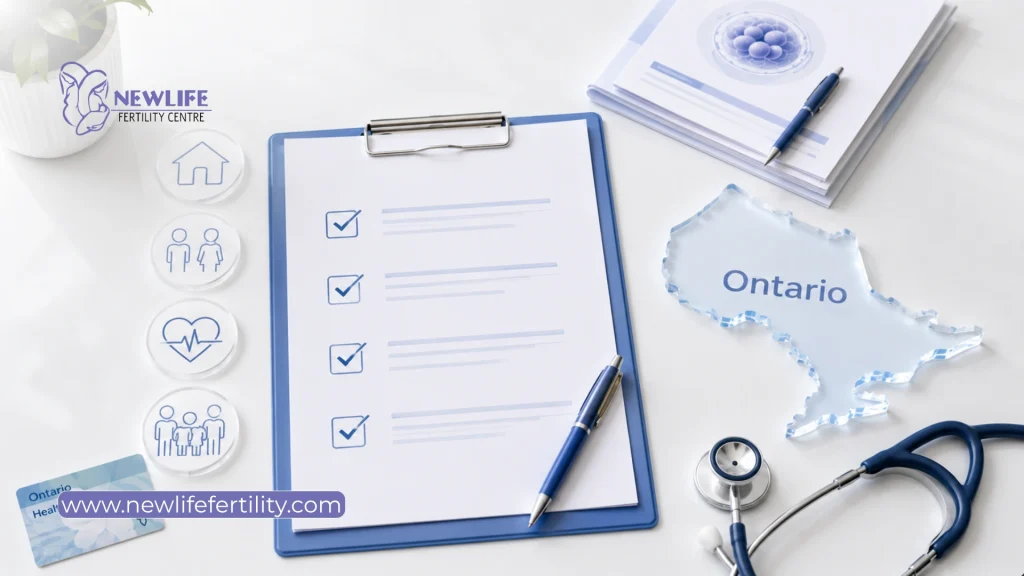
Well most Ontario residents with a valid health card and a medical reason for treatment qualify, regardless of age within the cutoff, relationship status, or sexual orientation.
The program itself is called the Ontario Fertility Program (OFP). It’s funded by the provincial government and delivered through a network of participating fertility clinics across Ontario, rather than through one central application desk. You apply through a clinic, not through OHIP directly.
Let me share the quick version of who it’s for, before we break down each requirement properly.
- You live in Ontario and hold a valid Ontario health card
- You’re within the program’s age window
- You have a documented medical reason for needing IVF
- Your gender, sexual orientation, marital status, or family structure has no bearing on your eligibility
That last point genuinely surprises a lot of people, in a good way.
Ontario IVF funding eligibility requirements
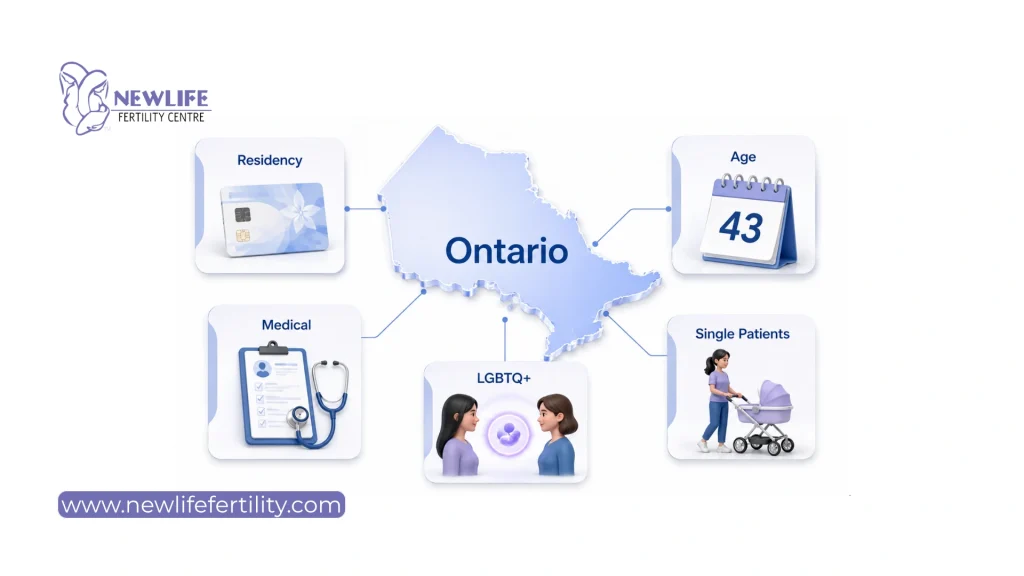
Residency requirements
You need to be an Ontario resident with a valid Ontario health card at the time of treatment. This is the one non-negotiable requirement underlying everything else on this list.
Age requirements
You generally need to begin your funded cycle before turning 43. There’s no minimum age, and importantly, there’s no income limit attached to OFP eligibility itself. (Note that this is different from the separate Ontario Fertility Treatment Tax Credit, which we’ll get to.)
Medical eligibility
You’ll need a documented fertility diagnosis, confirmed through a referral and assessment at a participating clinic. This is a clinical decision made by your fertility specialist, not something you self-certify.
Can LGBTQ+ individuals and couples qualify?
Yes, fully. Ontario’s own program guidelines are explicit that sex, gender, sexual orientation, and family status are not factors in eligibility. This includes reciprocal IVF, where one partner’s eggs are used and the other partner carries the pregnancy.
Can single individuals qualify?
Yes. Single patients pursuing parenthood, typically with donor sperm, are eligible under the exact same criteria as couples.
What does Ontario’s funded IVF program cover?
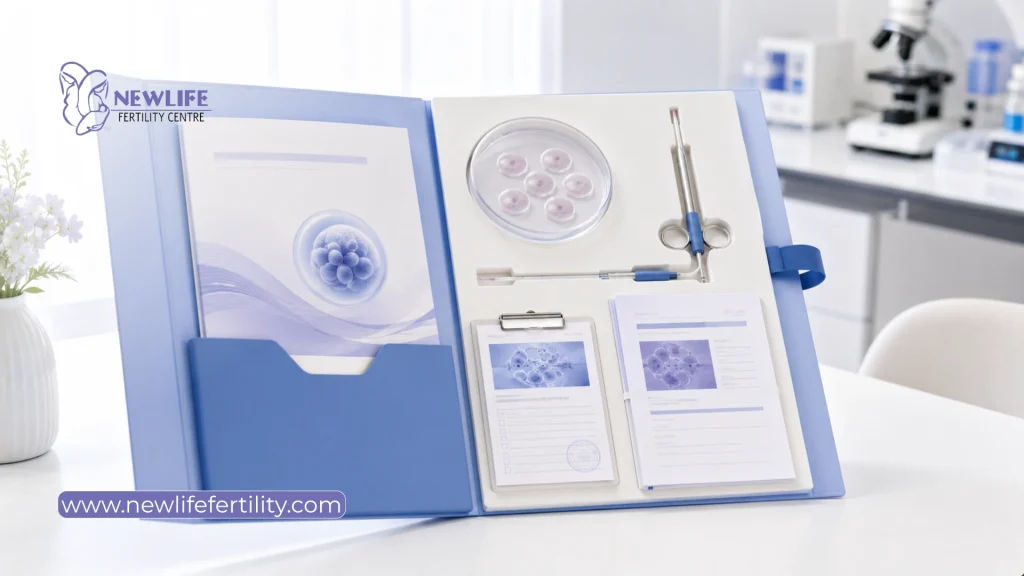
The program funds one complete IVF cycle per eligible person, for life. Here’s what that cycle actually includes.
- Egg retrieval, the procedure to collect eggs for fertilization
- Fertilization and embryology services, including ICSI (intracytoplasmic sperm injection), assisted hatching, and blastocyst culture where clinically appropriate
- Embryo transfer, covering the transfer of all embryos from that cycle, one at a time, whether fresh or frozen
One detail worth knowing: every patient’s treatment plan looks slightly different, since what “one full cycle” includes depends on your specific clinical situation. Your physician determines the exact protocol, not a generic checklist.
What isn’t covered under Ontario IVF funding?
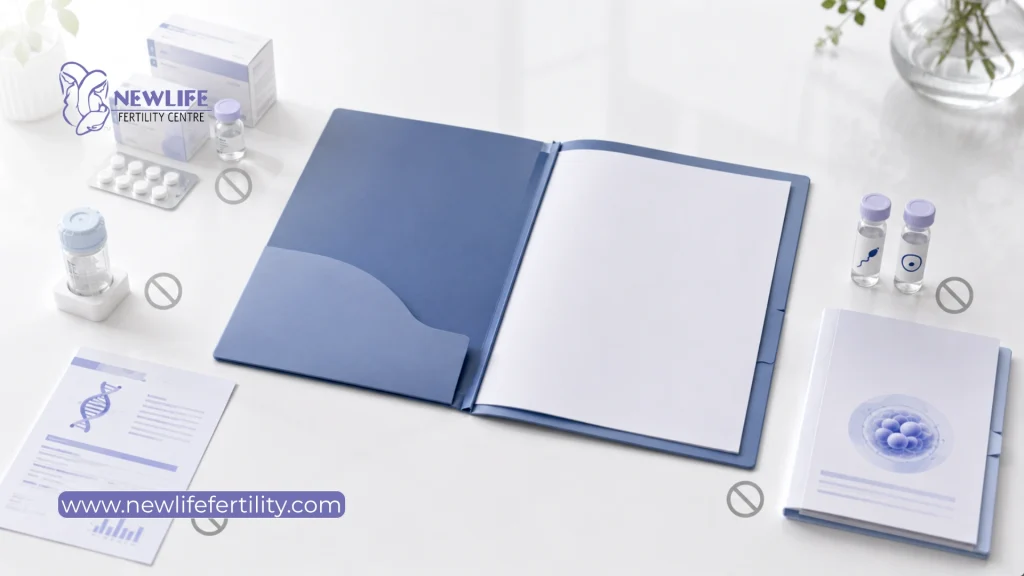
This is where most of the confusion (and most of the actual cost) lives.
- Fertility medications, typically estimated around $5,000 per cycle
- Embryo freezing and storage beyond the funded cycle itself
- PGT-A and other genetic testing
- Donor sperm or donor eggs, including purchase, shipping, and storage costs (though if your donor or surrogate has a valid OHIP card, their related clinical procedures may still be funded, even when the donor material itself isn’t)
- Additional IVF cycles beyond your one funded attempt
- Other optional treatments, such as elective add-ons not deemed medically necessary for your specific cycle
The good news is that several of these gaps can be partially offset by the Ontario Fertility Treatment Tax Credit, which refunds 25% of eligible fertility expenses, up to $5,000 a year. It’s not a substitute for the funded cycle itself, but it does meaningfully soften the costs the program doesn’t touch.
How do you apply for Ontario’s funded IVF program?
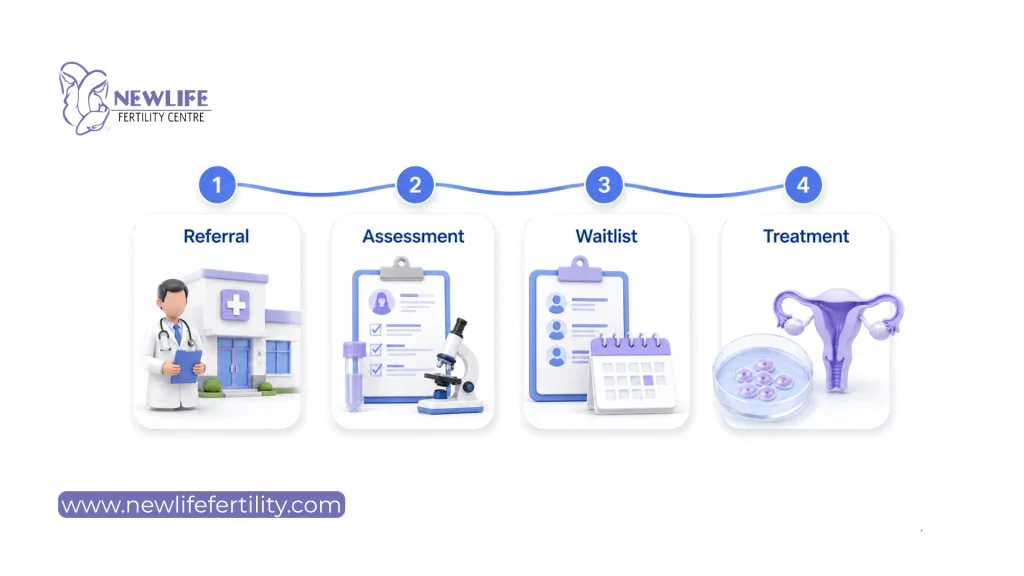
Get referred to a fertility clinic
Start with your family doctor or book your call directly with a participating fertility clinic. There’s no separate government application to fill out yourself.
Complete your fertility assessment
The clinic will run diagnostic testing to confirm your eligibility and determine the right treatment plan for your situation. This step is what actually establishes your medical eligibility.
Join the clinic’s funded IVF waitlist
Once you’re confirmed eligible, the clinic adds you to its own funded-cycle waitlist. This is managed clinic by clinic, prioritized using the treating physician’s clinical judgment, not a single province-wide queue.
Begin treatment when selected
When your spot comes up, your funded cycle begins, following the treatment plan your physician built around your specific diagnosis.
How long is the wait for funded IVF in Ontario?
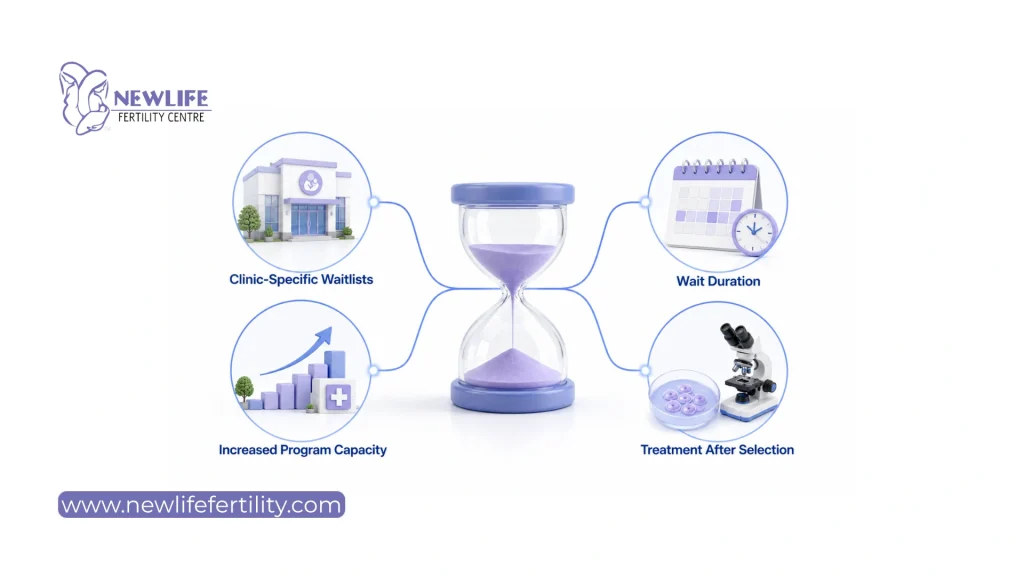
Why waiting times vary
Because each participating clinic manages its own waitlist, wait times genuinely differ from clinic to clinic, sometimes significantly. There’s no single province-wide number that applies to everyone.
Factors affecting waitlists
→ Demand at the specific clinic you choose
→ How close you are to the program’s age cutoff (which can affect prioritization)
→ Overall program capacity, which the province has been actively expanding through new funding aimed at adding thousands of additional cycles and several new or expanded clinics
Historically, waits at busy clinics have stretched well past a year, and at points, closer to two years. That expansion is meant to bring those numbers down over time, but it’s worth asking any clinic directly for their current estimate rather than relying on older figures.
Why some patients choose private IVF instead
If you’re close to the age cutoff, if your timeline doesn’t fit a long wait, or if you’d simply rather start now than wait for a spot, private treatment removes the waitlist entirely. It’s a real and common choice, not a fallback.
What if you don’t qualify for Ontario’s funded IVF program?

Not qualifying doesn’t mean you’re out of options, it just means your path looks different.
→ Past the age limit? Private treatment has no age cutoff built into it the way OFP does.
→ Already used your funded cycle? Many patients move to private treatment for a second or third attempt, since OFP only covers one cycle, for life.
→ Not medically eligible under the program’s criteria? A consultation can clarify exactly why, and what your private treatment options would look like instead.
→ Cost is the real barrier? Most clinics, including NewLife Fertility, offer financing options and can walk you through how the Ontario Fertility Treatment Tax Credit applies to private treatment costs too.
This is usually the point where it helps to talk to a clinic directly rather than trying to piece eligibility rules together from a website. NewLife Fertility’s team can walk you through exactly where you stand, and what funded and private treatment would each realistically look like for you.
Ontario IVF funding eligibility at a glance
| Requirement | Eligible? |
| Ontario resident with valid health card | ✅ |
| Valid OHIP | ✅ |
| Within age requirement (generally under 43) | ✅ |
| LGBTQ+ individuals and couples | ✅ |
| Single patients | ✅ |
| Income limit | None for OFP eligibility |
| Number of funded cycles | 1, lifetime |
Ready to find out if you’re eligible for Ontario’s funded IVF program?
If you’ve made it through this whole guide, here’s the short version: Ontario’s program is genuinely inclusive, age, relationship status, and sexual orientation aren’t barriers, but “funded” still leaves real costs on the table, and exactly where you stand depends on details specific to your situation.
That’s the part no guide can fully answer for you. Every patient’s medical history, timeline, and circumstances are different, and the only way to know exactly where you fall is through an actual assessment.
NewLife Fertility is a participating clinic in the Ontario Fertility Program, and our team can walk you through your eligibility, explain exactly what your funded cycle would and wouldn’t cover, and talk through private treatment options if that ends up being the better fit for your timeline.
Book your free consultation and let’s find out exactly where you stand.
Frequently asked questions about Ontario IVF funding eligibility
Ontario residents with a valid health card, within the program’s age window, and with a documented medical need for IVF. Eligibility doesn’t depend on gender, sexual orientation, marital status, or family structure.
The core procedure, egg retrieval, fertilization, and embryo transfer, is covered. Medication, donor materials, storage, and genetic testing typically aren’t, so most patients still have some out-of-pocket cost even on a funded cycle.
Yes, you generally need to begin treatment before turning 43.
Yes, a valid Ontario health card is required to access the funded program.
Yes, including for reciprocal IVF, where one partner provides the eggs and the other carries the pregnancy. Eligibility doesn’t depend on sexual orientation.
Yes, single women are eligible under the same criteria as couples, typically using donor sperm.
No, medication costs (often around $5,000 per cycle) are generally not included in the funded cycle, though they may be partially offset through the Ontario Fertility Treatment Tax Credit.
It varies by clinic, since each participating clinic manages its own waitlist. Wait times have historically run well over a year at busier clinics, though provincial funding expansions are aimed at bringing that down.
Yes, you can choose any participating clinic and join that clinic’s specific waitlist.
You’re not automatically entitled to another funded cycle. At that point, most patients move forward with a privately funded cycle, while continuing to use the tax credit to offset some of the cost.
Generally, no, the program covers one cycle per eligible person, for life. An exception exists for patients who have acted as a surrogate, who may be eligible for an additional funded cycle.
Yes, NewLife Fertility is a participating clinic in the Ontario Fertility Program and can guide you through eligibility, the application process, and your treatment plan from your first consultation.