You just had your frozen embryo transfer.
And now you’re terrified to move.
Maybe you Googled “can walking ruin embryo implantation” at midnight. Maybe you’ve been lying flat for hours just in case. Maybe you’ve read 47 forum posts and now feel more confused than ever.
If all these sound familiar, then let me tell you that you’re not the only one and not even close.
The days after FET might be the most emotionally intense stretch of the entire IVF journey. Every cramp, every twinge, every toilet trip makes you wonder, “Did I just mess this up?”
Here’s the truth nobody says clearly enough:
Most normal daily movements do not dislodge an embryo.
The conflicting advice online doesn’t help either. One post says strict bed rest. Another says, “Keep moving.” Your clinic says rest but not too much. Your mother-in-law says not to lift a spoon.
So what’s actually true?
That’s exactly what I’m going to cover in this blog. So you can be clear and calm and live without any fear.
You’ll also get straight answers on exercise, bed rest, travel, swimming, walking, sleeping positions, and everything else your anxious brain is currently Googling at 2 AM.
Let’s go.
What actually happens in your body after a frozen embryo transfer?
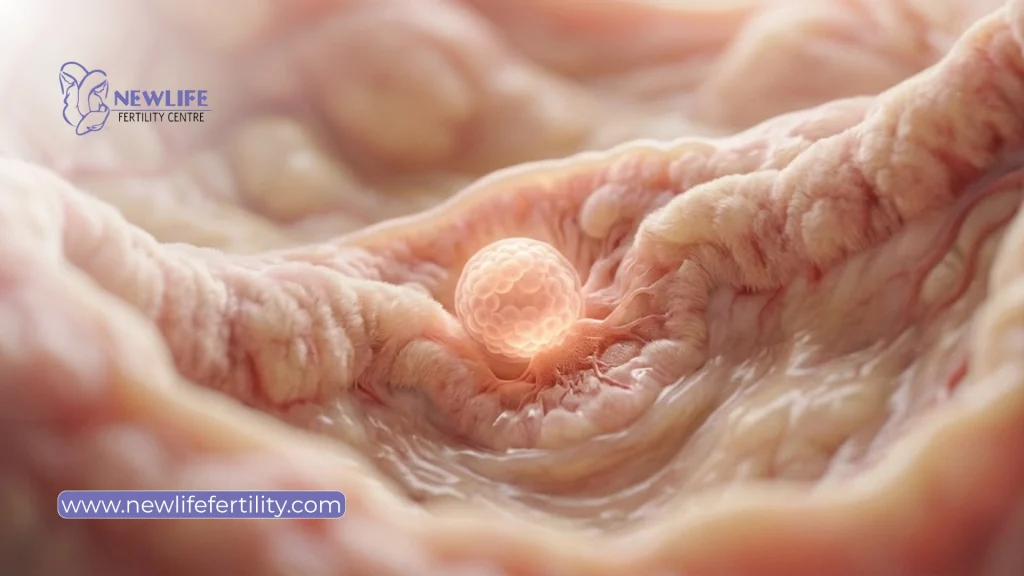
Before we get into the dos and don’ts, let’s talk about what’s actually happening inside your body after a frozen embryo transfer.
After the transfer, the embryo is placed directly into your uterus. For the next 1 to 2 days, it continues developing and begins interacting with the uterine lining. If conditions are right, it then starts attaching to the lining, and this process is called implantation.
For most patients, implantation usually begins within the first few days after transfer.
And this is where the anxiety starts.
“So… can I shake the embryo loose by moving around?”
No. And here’s why.
Your uterus is a strong, muscular organ. It’s not an open space where the embryo can simply fall out when you stand up, walk, or go to the bathroom. The embryo is protected inside the uterine environment while implantation happens.
What actually affects implantation success?
→ Embryo quality
→ Thickness and receptivity of the uterine lining
→ Hormone support like progesterone and estrogen
→ Timing of the transfer
→ Overall uterine environment
Not whether you walked to the kitchen.
That doesn’t mean you should ignore your clinic’s instructions. It just means you don’t need to panic over every small movement after FET.
Feeling anxious during the two-week wait is completely normal. But being constantly afraid that normal daily activity will ruin implantation? That’s a fear many patients can slowly let go of.
Frozen embryo transfer dos and don’ts: The quick overview

Short on time? Here’s the snapshot.
| What You Can Usually Do After FET | What You Should Generally Avoid After FET |
| ✅ Walk normally | ❌ Heavy workouts and high-intensity training |
| ✅ Work at a desk job | ❌ High-impact exercise like running, jumping, or HIIT |
| ✅ Do light household activities | ❌ Overheating from saunas, hot tubs, or very hot baths |
| ✅ Move gently throughout the day | ❌ Swimming, especially in public pools if your clinic advises against it |
| ✅ Travel short distances with clinic approval | ❌ Heavy lifting |
| ✅ Continue most of your normal routine mindfully | ❌ Smoking and alcohol |
| ✅ Rest when your body needs it | ❌ Obsessive Googling at midnight (yes, this one counts) |
Do you need bed rest after a frozen embryo transfer?

No. Strict bed rest is generally not recommended after FET.
In fact, most fertility clinics today actively encourage light movement rather than complete inactivity. Because research has not shown that lying in bed for days improves implantation rates.
What too much bed rest can actually do?
→ Increase your anxiety (your mind has nothing else to focus on)
→ Cause physical discomfort and bloating
→ Disrupt sleep patterns
→ Make you feel worse, not better
The old idea that you had to stay horizontal for 48 hours? Most evidence-based clinics have moved away from that.
After frozen embryo transfer, do I need to lie down?

You’ll probably be asked to rest briefly right after the procedure itself, maybe 15 to 30 minutes at the clinic.
That’s standard.
But once you leave?
You don’t need to spend the next 10 days on your back.
“But what if the embryo falls out when I stand up?”
Let me share a quick anatomy note. Your uterus is not shaped like a cup with an open top. It has a closed cervix at the bottom. The embryo is placed inside the uterine cavity. It cannot just “fall out” when gravity happens.
This is one of the most common fears post-transfer and one of the least grounded ones.
How much rest is actually helpful?

Balance is the word here.
You want:
→ Enough rest to feel comfortable and reduce physical strain
→ Gentle movement to stay mobile and keep circulation healthy
→ Good sleep to support hormonal balance
→ Calm activity to manage anxiety
You don’t need to be bedridden. And you don’t need to run a 5K either.
Think of it as treating yourself like someone recovering from a minor medical procedure, not someone who just had major surgery.
Exercise after frozen embryo transfer: What’s safe?
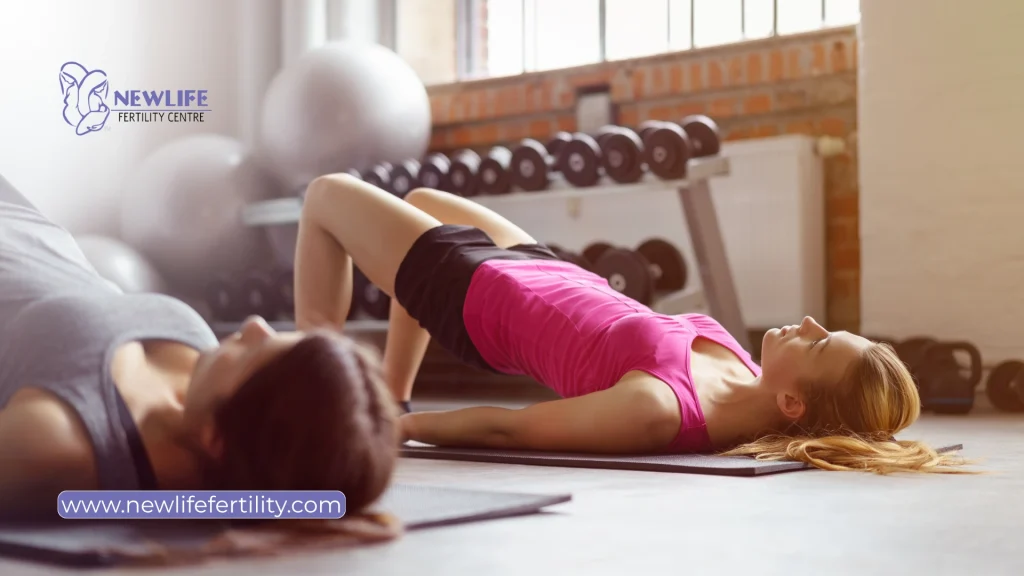
Let’s talk about this carefully.
Because “exercise” can mean very different things like a slow evening walk, intense gym sessions, and heavy lifting.
Can you exercise after FET?
Generally, yes. Light movement is usually considered safe and can even help you feel better physically and emotionally during the wait.
The main goal after FET is to avoid:
→ Raising your core body temperature too much
→ Putting excessive strain on your abdomen
→ Intense cardio that stresses the body
→ Activities with a higher risk of falling or impact
Your ovaries may also still be slightly enlarged or sensitive after treatment, which is another reason most clinics recommend avoiding intense workouts for a while.
Exercises usually considered safe after FET
✅ Walking: One of the safest and most recommended activities after transfer.
✅ Light stretching: Gentle movement is fine. This is not the time for deep flexibility work.
✅ Slow yoga: Non-heated, gentle yoga without intense twisting is usually okay.
✅ Easy stationary cycling: Low-impact movement without excessive strain.
The key word here is gentle.
Exercises usually avoided after FET
❌ Running or long-distance jogging
❌ HIIT and intense cardio workouts
❌ Heavy weightlifting
❌ Intense abdominal exercises
❌ Contact sports
❌ Hot yoga or Bikram yoga
❌ Any activity where falling is a real risk
Why do doctors recommend limiting intense exercise?
Mostly because your body is already doing a lot during the implantation window.
Intense workouts can:
- Raise your core body temperature
- Increase abdominal pressure and discomfort
- Irritate sensitive ovaries
- Put additional physical stress on the body
This doesn’t mean you need to stay in bed all day.
It simply means choosing gentle movement over intense training for a short period of time.
Walking after frozen embryo transfer: Is it okay?

Yes. Absolutely.
Normal walking will not harm implantation. It will not shake the embryo loose or reduce your chances of a successful transfer.
In fact, gentle walking can actually help during this phase.
It keeps blood circulating naturally, helps with bloating after FET, reduces stiffness from too much lying down, and sometimes helps quiet the constant overthinking that happens during the two-week wait.
How much walking is reasonable?
There’s no perfect number. Let your body guide you.
→ Short walks around the house or neighbourhood? Completely fine.
→ Normal daily movement? Also fine.
→ Long hikes or intense endurance walking? Probably best to avoid for now.
The goal is gentle movement, not pushing your body physically.
If you feel tired, rest. If you feel comfortable, continue moving at an easy pace.
“Can I move about after a frozen embryo transfer?”
Yes. You do not need to stay stuck on the couch all day to protect implantation. Gentle, comfortable movement is usually completely okay after FET.
Can you travel or fly after frozen embryo transfer?

This is a big question, and the honest answer is it depends on your clinic and your individual situation.
Many patients travel after FET without complications. But long international journeys or physically exhausting travel plans are worth discussing with your doctor first.
Is travel safe after FET?
For most patients, short to medium-distance travel, including flying, is generally manageable with a few precautions.
The main concerns with flying are usually not about the embryo itself. They’re more about:
→ Increased risk of sitting still for long periods
→ Dehydration from dry cabin air
→ Stress and fatigue from long travel days
→ Difficulty resting comfortably during the journey
These are not reasons to panic. They’re simply things to prepare for.
Tips if you need to fly after frozen embryo transfer
→ Stay well hydrated throughout the journey
→ Get up and walk occasionally during longer flights
→ Avoid lifting heavy luggage if possible
→ Wear loose, comfortable clothing
→ Keep your medications in your carry-on bag
→ Give yourself extra time at airports to reduce stress
When you may want to delay travel
In some situations, your clinic may recommend avoiding travel temporarily.
This can include:
→ History of recurrent implantation failure or high-risk pregnancy
→ OHSS symptoms or significant bloating
→ Heavy bleeding, pain, or fever
→ Specific travel restrictions from your fertility clinic
When in doubt, check with your clinic. They know your medical history and can guide you based on your specific situation.
Can you swim after frozen embryo transfer?
Many clinics advise against swimming, especially in public pools during the initial post-transfer period.
Why some clinics restrict swimming
After FET, the cervix may be slightly more open than usual. The main concerns with swimming are:
→ Infection risk: Pool water, lakes, and the sea carry bacteria. An infection during this window is something you absolutely want to avoid.
→ Cervical irritation: Any external water contact with the vaginal area carries a small risk.
→ It’s a precaution, not a certainty. But it’s one most clinics take seriously.
Are showers safe?
Yes. A regular shower is completely fine.
Just avoid extremely hot water. Your body temperature doesn’t need to spike during the implantation window.
What about hot tubs and saunas?
These are usually clearly discouraged after FET.
The reason is straightforward: prolonged overheating is not ideal during the implantation window. A hot tub or sauna can raise your core body temperature for an extended period. That’s the concern.
Skip the hot tub. Skip the sauna. You can enjoy both again soon.
Sleeping position after frozen embryo transfer: Does it matter?

Another topic that gets heavily debated online.
No sleeping position has been scientifically proven to improve implantation rates after FET.
Not sleeping on your left side. Not your right side. Not flat on your back. Not slightly elevated.
The embryo is inside your uterus, and your sleeping position does not suddenly shift or disturb implantation.
How to sleep more comfortably after FET
That said, sleep quality and comfort do matter.
If you’re feeling bloated or crampy after FET, these small adjustments may help:
→ Place a pillow under your knees if lying on your back feels more comfortable
→ Try a pillow between your legs if side-sleeping feels better
→ Wear loose, soft clothing to bed
→ Avoid scrolling or reading stressful forums before sleep
The goal is good rest, not finding the “perfect” sleeping position.
Sleep in whatever position feels most comfortable for your body.
What to avoid after frozen embryo transfer
Let’s bring everything together clearly.
Things doctors commonly recommend avoiding
❌ Smoking, including passive smoking where possible
❌ Alcohol during the implantation window
❌ Recreational drugs
❌ Heavy lifting that puts strain on the abdomen and pelvis
❌ Extreme exercise like HIIT, heavy weightlifting, or long-distance running
❌ Overheating from saunas, hot tubs, very hot baths, or hot yoga
❌ Missing or stopping medications without your doctor’s guidance
❌ NSAIDs like ibuprofen unless your doctor specifically approves them
Emotional habits to avoid during the two-week wait
This part matters more than many people realize.
The physical dos and don’ts are important, but the mental stress of the two-week wait can become exhausting very quickly.
❌ Obsessing over every symptom
Not every cramp, twinge, or lack of symptoms means something is wrong.
❌ Constant Googling
Late-night searches often increase anxiety more than they provide clarity.
❌ Comparing your journey to other people online
Every transfer, embryo, and body is different. Someone else’s timeline is not a prediction of yours.
❌ Testing too early repeatedly
Testing very early after transfer can lead to confusing or misleading results and unnecessary emotional stress.
Follow your clinic’s testing timeline as closely as possible.
Frozen embryo transfer do’s and don’ts checklist
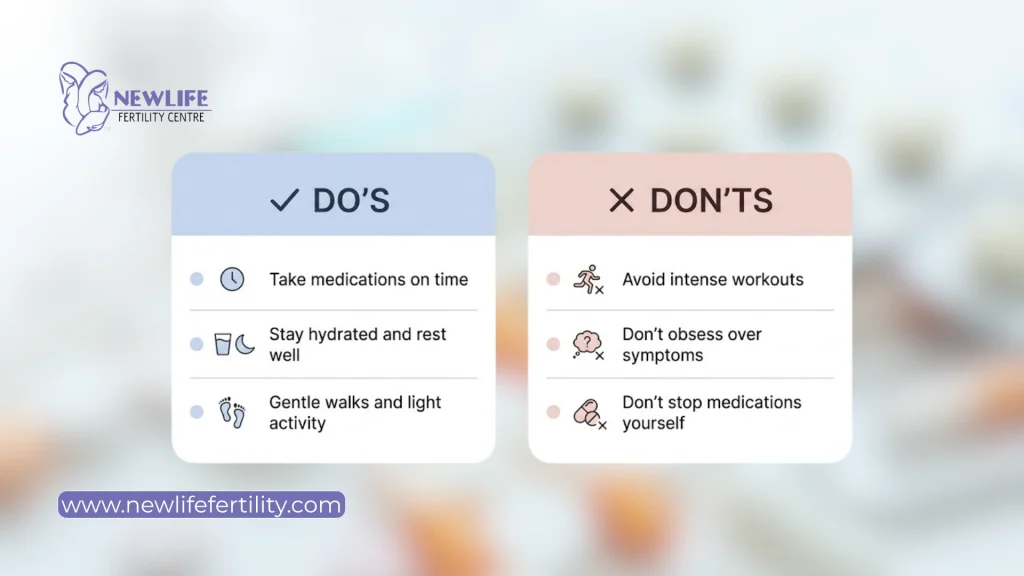
Let’s make this simple. Screenshot it, save it, or come back to it whenever your anxiety starts spiralling.
Do’s After FET
✅ Take your medications exactly as prescribed
✅ Stay hydrated throughout the day
✅ Eat balanced, nourishing meals
✅ Get enough sleep and rest
✅ Move gently with short walks or light daily activity
✅ Attend your follow-up appointments
✅ Ask your clinic questions when you’re unsure
✅ Be kind to yourself during the two-week wait
Don’ts After FET
❌ Don’t panic over every cramp, symptom, or twinge
❌ Don’t jump back into intense workouts or heavy gym sessions
❌ Don’t stop or change medications without medical guidance
❌ Don’t rely on internet forums for medical advice
❌ Don’t compare your journey to other people’s timelines online
❌ Don’t skip meals or overly restrict your diet
❌ Don’t blame yourself for every outcome
Frozen embryo transfer dos and don’ts: So what should you really focus on after FET?
The truth is, successful implantation is not something you control by staying perfectly still or overanalyzing every movement after FET. Walking to the kitchen, sleeping on the “wrong” side, or getting up from the couch will not suddenly ruin your transfer.
What matters most during this phase is following your clinic’s guidance, taking your medications consistently, avoiding extreme physical strain, and caring for yourself gently while your body does the rest.
The two-week wait can feel emotionally exhausting, especially when every symptom, cramp, or silence starts feeling meaningful. But you do not need to carry the pressure of “doing everything perfectly” alone.
At NewLife Fertility, we believe fertility care should feel supportive, clear, and human, not fear-driven. Whether you’re preparing for your first frozen embryo transfer or navigating repeated IVF cycles, our team is here to guide you through every stage with evidence-based care and compassionate support.
If you have questions about your FET cycle, recovery, medications, or next steps, book your free consultation with NewLife Fertility today and speak with a team that truly understands what this journey feels like.