“Does the government pay for IVF in Canada?”
I get asked this almost every week.
And every time, my honest answer is the same: “It depends on where you live.”
Not the answer most people want.
But it’s the true one.
Canada doesn’t have one national IVF program. Healthcare is run province by province. And fertility funding followed the exact same pattern.
So if you’re just starting to research IVF, and you’re trying to figure out what the government will and won’t pay for, you’re in the right place.
Let me walk you through it.
Does IVF get funded by the government in Canada?

Short answer: not universally.
Some provinces fund IVF. Some offer a tax credit instead. And a couple offer nothing at all.
Here’s what that actually means for you:
- IVF funding in Canada is not the same across the country.
- Where you live decides how much support you get, if any.
- Provinces that do fund IVF usually attach conditions like age limits, residency rules, and specific participating clinics.
- Even in the best-funded provinces, funding covers part of the journey, not all of it.
So if a friend in Ontario tells you IVF was “free,” and you live somewhere else, don’t be surprised if your experience looks completely different. That’s not a mistake. That’s just how the system is built.
How does government IVF funding work in Canada?

Here’s the part most people don’t realize: there’s no federal IVF program handing out the same rules to every province.
Each provincial government decides on its own:
- Whether to fund IVF at all
- How many cycles (if any) to cover
- What age range qualifies
- Whether medication, storage, and donor costs are included
- Whether funding comes as a direct-covered cycle or as a tax credit you claim later
That’s why Ontario’s program looks nothing like Alberta’s. And why Quebec covers medication while most other provinces don’t.
Broadly, you’ll come across two models:
Publicly funded IVF: The province pays for (or covers a large chunk of) an actual treatment cycle at a participating clinic.
Tax credits or reimbursement grants: You pay for treatment yourself first, then claim back a percentage of the cost, usually with an annual or lifetime cap.
Neither model is “better” across the board. They’re just different ways of trying to make an expensive medical journey a little less expensive.
Which provinces offer government-funded IVF in Canada?
This is the section you probably came here for. So let’s get into it.
| Province / Territory | Funded IVF Cycle | Medication Coverage | Other Financial Support |
| Ontario | ✔ One funded cycle | ✘ Usually not covered | Ontario Fertility Program |
| Quebec | ✔ One funded cycle | ✔ Covered | Includes embryo storage |
| British Columbia | ✔ One funded cycle | ✘ Varies | Provincial funding program |
| Manitoba | ✘ | ✘ | Refundable tax credit |
| Saskatchewan | ✘ | ✘ | Refundable tax credit |
| Nova Scotia | ✘ | ✘ | Refundable tax credit and surrogacy support |
| New Brunswick | ✘ | ✘ | Household reimbursement program |
| Newfoundland & Labrador | ✘ | ✘ | Lifetime fertility subsidy |
| Prince Edward Island | ✘ | ✘ | Annual income-based reimbursement |
| Yukon | ✘ | ✘ | Fertility and surrogacy tax credit |
| Alberta | ✘ | ✘ | No provincial IVF funding |
| Northwest Territories & Nunavut | ✘ | ✘ | No public IVF funding |
At a glance: Ontario, Quebec, and British Columbia currently fund an IVF treatment cycle, while several other provinces provide tax credits, reimbursements, or subsidies instead. The type of support, medication coverage, and eligibility requirements vary by province, so it’s important to review your local program before starting treatment.
What does government-funded IVF usually cover?
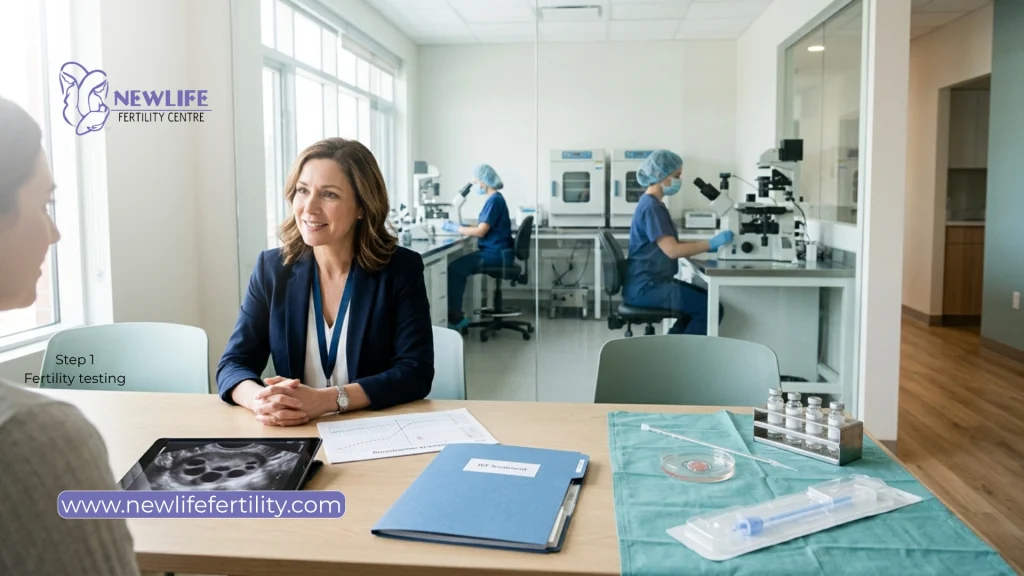
Where funding exists, it typically covers the core clinical parts of a cycle:
- The IVF procedure itself (egg retrieval, fertilization, embryology)
- Monitoring appointments and ultrasounds during the cycle
- Lab services tied to that cycle
- Embryo transfer
Quebec goes a step further and also covers medication and short-term embryo storage. That makes it one of the more complete programs in the country. But that’s the exception, not the rule.
What expenses are usually not covered?

Even in provinces with funding, you should expect to pay for some things yourself. Commonly excluded costs include:
- Fertility medications (often $4,000 to $6,000+ per cycle on their own)
- Donor sperm
- Donor eggs
- Embryo storage beyond the free period
- Genetic testing (like PGT-A)
- Any additional IVF cycles beyond the one that’s funded
This is the part that catches people off guard the most. “Funded” doesn’t mean “free.” It usually means one meaningful chunk of the cost is taken care of, while the rest is still on you.
Who may qualify for government IVF funding in Canada?

Every province sets its own rules, but a few factors show up almost everywhere:
Residency: You generally need a valid provincial health card and to actually live in that province.
Age: Most funded programs have an upper age limit, often somewhere between 41 and 43.
Medical assessment: A fertility specialist usually needs to confirm treatment is appropriate for you.
Participating clinics: Funding is often tied to specific approved fertility clinics, not every clinic in the province.
One thing worth knowing: Many provinces have opened up eligibility regardless of relationship status, sexual orientation, or gender identity. That means single parents by choice and LGBTQ+ individuals and couples can often access the same funded programs as anyone else, subject to the same medical and residency criteria.
For the exact eligibility rules where you live, it’s worth checking your province’s specific guide rather than relying on what applies somewhere else.
How can you apply for government-funded IVF?
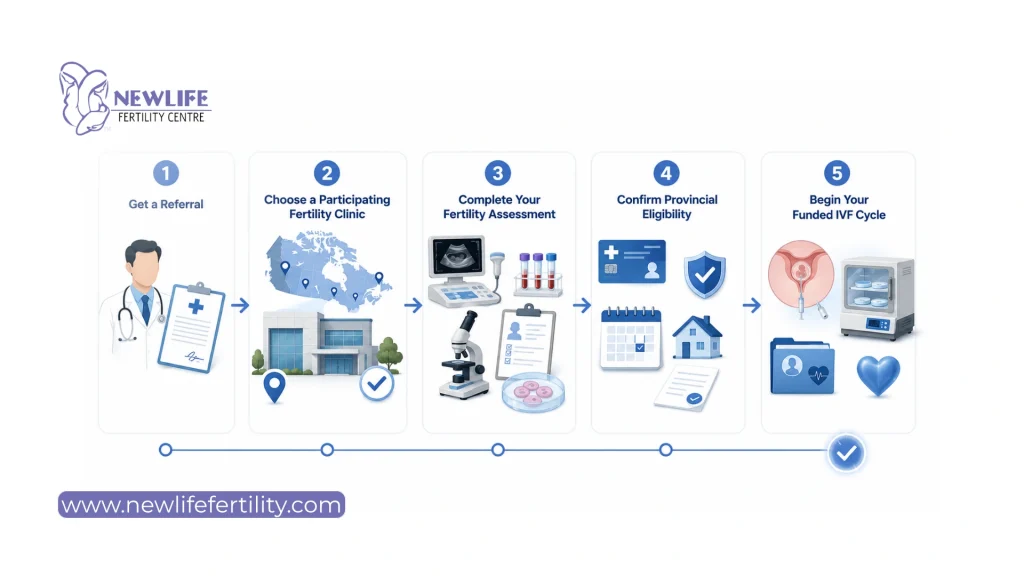
The exact steps vary slightly by province, but the general path looks like this:
Get a referral
Most funded programs require a referral from your family doctor or a fertility specialist before anything else can happen.
Choose a participating fertility clinic
Not every clinic offers funded cycles. You’ll need to confirm your chosen clinic is part of your province’s program.
Complete your fertility assessment
Expect bloodwork, ultrasounds, and a consultation to understand your fertility profile and confirm IVF is the right next step.
Confirm provincial eligibility
The clinic or provincial program will verify your residency, age, and any other requirements before approving funding.
Begin treatment if approved
Once approved, your funded cycle moves forward like a regular treatment cycle, just with part of the bill already taken care of.
What if your province doesn’t fund IVF?
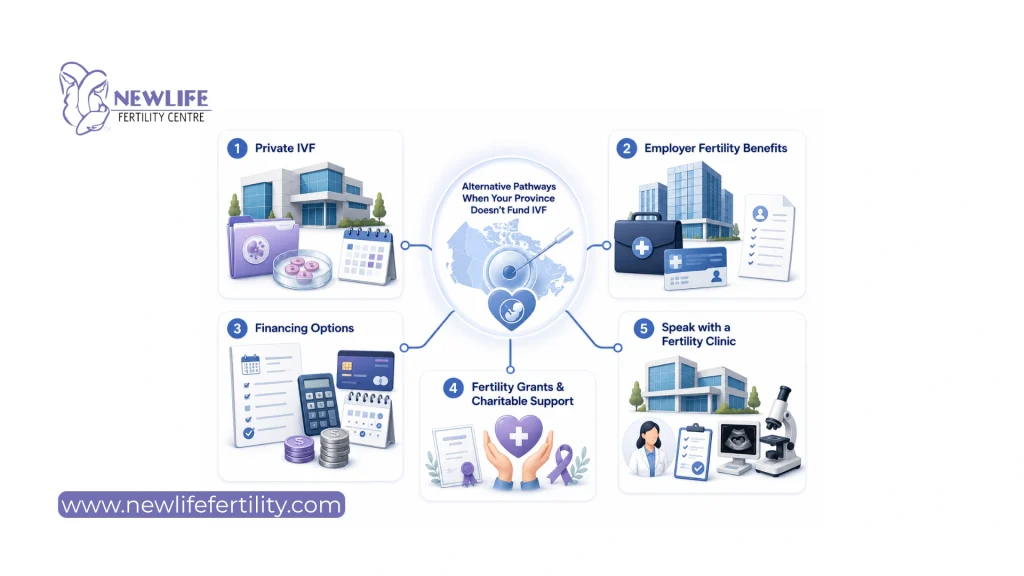
If you live somewhere without a funded program, or you’ve already used your one funded cycle, you’re not out of options. A few paths worth exploring:
Private IVF
You pay the full clinic fee, but you keep full control over timing and cycle planning without waiting on a public program.
Employer fertility benefits
Some workplace health plans now include coverage for medications, consultations, or even a portion of treatment costs. Worth checking with HR before you assume you’re on your own.
Financing options
Many clinics offer payment plans or partner with fertility-specific financing providers to spread out the cost.
Fertility grants and charitable support
A small number of organizations offer grants for fertility treatment, though spots are limited and competitive.
Speaking with a fertility clinic directly
A good clinic will walk you through what’s realistically available to you, funded or not, based on your specific situation.
None of these make IVF cheap. But they do mean “my province doesn’t fund it” isn’t the end of the road.
Government IVF funding across Canada at a glance
| Question | Quick answer |
| Is IVF government funded across Canada? | No |
| Is funding the same in every province? | No |
| Are medications always covered? | Usually no |
| Do all provinces offer IVF funding? | No |
| Can private IVF still be an option? | Yes |
Can government IVF funding in Canada be the right option for you?
Government IVF funding in Canada can make fertility treatment more affordable, but the support you receive depends on the province you live in. Understanding your province’s funding program, what’s covered, and which costs you’ll still need to pay is an important first step in planning both your treatment and your budget.
At NewLife Fertility, we’re here to help you navigate your options with confidence. Whether you’re eligible for a government-funded IVF program, exploring provincial funding, or considering private treatment, our experienced fertility specialists will help you understand the available pathways and create a treatment plan that aligns with your needs and family-building goals.
Every fertility journey is different, and having the right guidance can make the process feel much more manageable.
Book your free consultation with NewLife Fertility today, and let us help you understand your government IVF funding options and take the next step toward growing your family.
Frequently asked questions about IVF government funding in Canada
Only in some provinces. Ontario, Quebec, and British Columbia currently fund a cycle of IVF. Most other provinces offer a tax credit or reimbursement instead, and a few offer no support at all.
Ontario, Quebec, and British Columbia currently fund an actual IVF cycle. Manitoba, Saskatchewan, Nova Scotia, New Brunswick, Newfoundland & Labrador, PEI, and Yukon offer tax credits or reimbursement programs instead.
There’s no single federal program. Support comes entirely from provincial governments, and each one decides its own rules.
Usually not. Quebec is the main exception, since its program includes medication. Most other funded or partially-funded provinces leave medication costs to the patient.
In most provinces with funding, yes. Eligibility is typically based on medical need, residency, and age rather than relationship status or sexual orientation. It’s still worth confirming the specific rules for your province.
There’s no funding to apply for if your province doesn’t have a program. But you can still pursue private IVF, look into employer benefits, financing, or grants, and speak with a fertility clinic about your options.
Generally, you’ll need a referral, a participating fertility clinic, a fertility assessment, and confirmation of eligibility before your funded cycle can begin.
Yes. Even in provinces with funding, many patients choose private treatment for faster timelines, additional cycles, or more flexibility in scheduling.
Yes. Our team helps patients understand what’s available in their province, confirm eligibility, and plan treatment, whether that means using funded support, going private, or combining both.