Have you ever seen a seed that’s already started to sprout before it’s even planted?
That’s what a blastocyst is like.
Unlike a Day 3 embryo, which is still in an earlier stage, a blastocyst has already been developing for about five days. It arrives at the transfer more advanced, already active, and already beginning the process of becoming something.
And yet, from the moment it’s placed inside your uterus, the two week wait begins. The silence begins. The Googling begins.
You check for symptoms. You talk yourself out of symptoms. You search “Day 4 after blastocyst transfer cramping” at midnight and somehow land on a forum from 2009 that makes everything feel worse.
If that sounds familiar, you’re in the right place.
In this guide, I will walk you through what’s actually happening inside your body, day by day, after a blastocyst frozen embryo transfer. You’ll understand when implantation happens, what success rates look like for Day 5, Day 6, and Day 7 blastocysts, and what you can realistically expect during those long days of waiting.
No fluff. No false hope. Just clear, honest information you can actually use.
What is a blastocyst frozen embryo transfer?
Let’s start at the beginning, briefly, because you probably already know the basics.
After eggs are retrieved during IVF, they are fertilized and allowed to develop in the lab. Most clinics now wait until Day 5 or Day 6 so the embryo can reach the blastocyst stage before freezing it. At this stage, the embryo is more developed and has two distinct cell types, including the group of cells that will eventually form the placenta.
So why wait until Day 5 instead of transferring on Day 3?
Because the blastocyst stage acts as a natural selection point. Not all embryos make it to Day 5. The ones that do have shown a stronger ability to grow and develop, which is why blastocyst transfers often have higher success rates compared to Day 3 transfers.
A blastocyst frozen embryo transfer means that one of these Day 5, Day 6, or sometimes Day 7 embryos, which was vitrified or rapidly frozen at the blastocyst stage, is later thawed and transferred into your uterus during a carefully prepared cycle.
It is one of the most commonly used approaches in modern IVF. And it has helped many people achieve successful pregnancies.
Day 5, Day 6, and Day 7 blastocysts: What’s the difference?
This is where a lot of anxiety shows up, especially if your embryo reached the blastocyst stage on Day 6 or Day 7 instead of Day 5.
So let’s talk about it honestly.
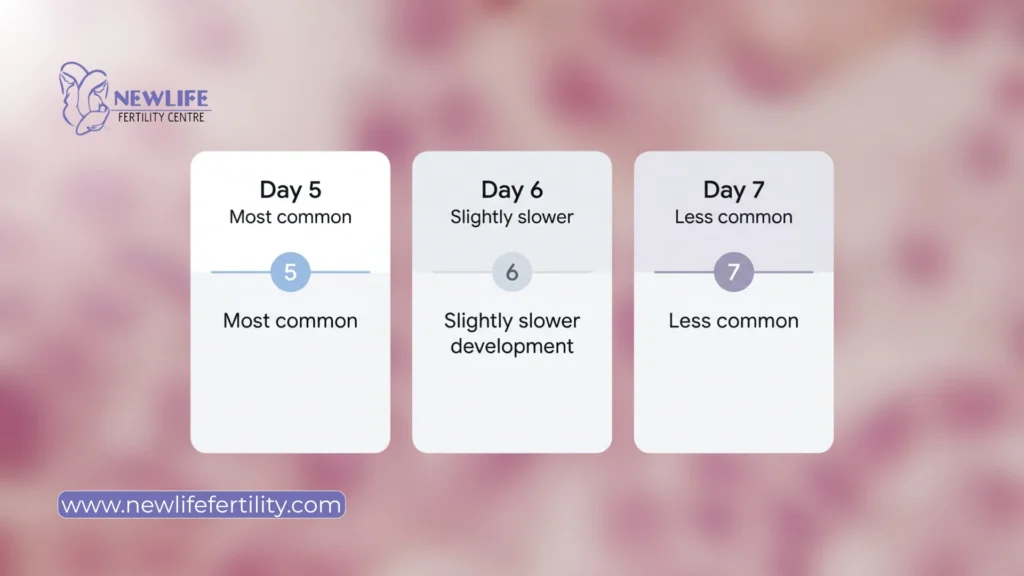
Day 5 blastocysts are the most common and the most studied. Embryos that reach full development by Day 5 have shown strong and consistent implantation rates across large clinical groups. Most IVF success rate data you’ll come across is based on Day 5 embryos.
Day 6 blastocysts developed a little more slowly in the lab, but slower does not mean weaker. The research here is actually reassuring. Day 6 embryos may have slightly lower average success rates compared to Day 5, but the difference is much smaller than most people expect. Many women go on to have healthy pregnancies with Day 6 embryos. When embryo quality is good, the real-world gap is modest.
Day 7 blastocysts are less common and do have lower success rates on average. But lower does not mean zero. Day 7 embryos can still implant and lead to successful pregnancies. Clinics only freeze Day 7 blastocysts when they believe the embryo has real potential.
Let me tell you the most important thing to remember across all three. The day number tells you when the embryo developed. It does not define its full potential.
Embryo quality, the grade your clinic assigns, is a much stronger predictor of success than the day alone. A high-quality Day 6 blastocyst can absolutely outperform a lower-grade Day 5 embryo.
Do not let the number become the whole story.
Blastocyst FET timeline: What happens day by day
This is the section you probably came here for. So let’s go through it day by day and talk about what’s actually happening inside your body, even when you can’t feel a thing.
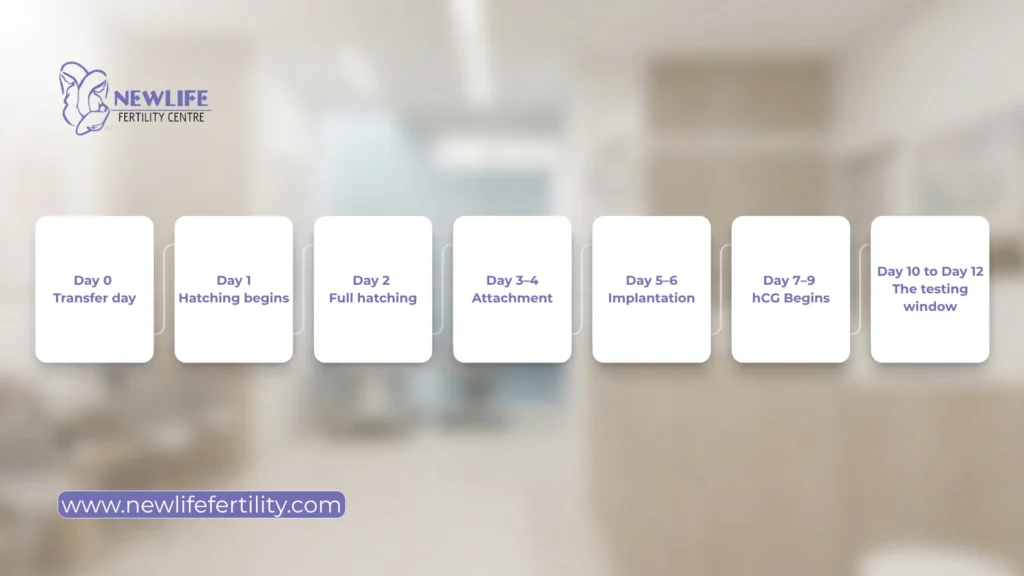
Day 0: Transfer day
The blastocyst is thawed, checked for survival, and placed into your uterus using a thin catheter. The procedure takes only a few minutes. Most women feel little to no discomfort. The embryo is now inside your uterine cavity, surrounded by the lining your body or medication has prepared.
Day 1: Hatching begins
The blastocyst is surrounded by a protective shell called the zona pellucida. Before implantation can happen, it needs to break out of this shell. This process is called hatching, which begins around Day 1. You won’t feel it, but it’s an important step.
Day 2: Full hatching
By Day 2, the blastocyst has usually completed hatching. It is now free and beginning to interact with your uterine lining for the first time. This is the start of the implantation process.
Day 3 to Day 4: Attachment and early implantation
The embryo begins attaching to the uterine lining. Cells from the embryo start embedding into the endometrium. Some women notice mild cramping or very light spotting during this time. Many feel nothing at all. Both are completely normal.
Day 5 to Day 6: Implantation deepens
The embryo embeds further into the uterine lining. The cells that will become the placenta begin developing, and early connections with your blood supply start forming. This is a critical phase where implantation becomes more established.
Day 7 to Day 9: hCG begins rising
The developing placenta starts producing hCG, the hormone detected in pregnancy tests. Levels are still low at this stage. Testing too early, especially around Day 7 or 8, will likely show a negative result even in a successful cycle. This can be misleading.
Day 10 to Day 12: The testing window
By this point, hCG levels are usually high enough to be detected in a blood test. Most clinics schedule your beta hCG test during this window. Home pregnancy tests may also start showing results, but blood tests are more accurate and reliable.
One thing worth holding onto during this time. What you feel does not reliably reflect what is happening inside your body.
Cramping does not mean failure. No symptoms do not mean failure. Spotting can be implanted. Feeling completely normal can also be an implantation.
Early pregnancy symptoms and progesterone effects often feel the same, which makes symptom tracking confusing and often stressful.
When does implantation happen in a blastocyst FET?
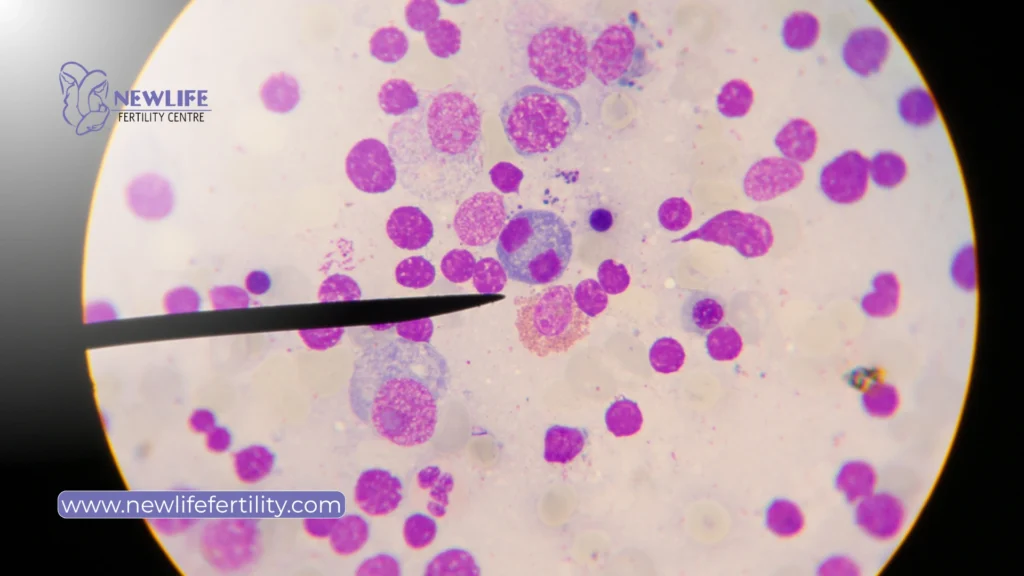
The short, clear answer is usually within 1 to 5 days after transfer.
Because a blastocyst is already at an advanced stage when it is transferred, implantation begins sooner compared to a Day 3 embryo. A Day 3 embryo still needs about 2 more days to reach the blastocyst stage, which means implantation in those cases may not start until Day 5 or 6 after transfer.
With a blastocyst transfer, that early development has already happened. The embryo is ready to hatch, attach, and begin implantation almost immediately after being placed in the uterus.
This is one of the main reasons blastocyst transfers are commonly preferred. The timing between the embryo’s development and the uterine lining’s readiness is more closely aligned, which supports a smoother implantation process.
Success rate of blastocyst frozen embryo transfer

Let’s talk numbers honestly, with the context they actually need.
Blastocyst frozen embryo transfer is one of the highest-performing procedures in IVF. Across large clinical populations, success rates generally range from about 40% to 60% per transfer cycle. This depends heavily on factors like age and embryo quality. Some clinics with strong lab conditions and carefully selected cases report even higher rates.
Here’s a broad age-based view, because age is one of the biggest factors:
- Women under 35 often see success rates around 50% to 60% or higher, especially with chromosomally normal embryos.
- Ages 35 to 37 typically see around 40% to 55%.
- Ages 38 to 40 usually fall between 30% to 45%.
- Over 40, rates are lower, but success is still very much possible.
When it comes to embryo development timing:
- Day 5 blastocysts tend to show slightly higher success rates on average.
- Day 6 blastocysts are close behind, and when embryo quality is good, the difference is often small.
- Day 7 blastocysts have lower average success rates but still show meaningful outcomes, often in the 20% to 35% range depending on embryo grade and study data.
The most important thing to remember is this. These numbers are population averages, not predictions for your specific cycle.
Your outcome depends far more on your individual factors, your age, embryo quality, uterine environment, and treatment protocol than on any general percentage you see online.
What affects blastocyst FET success rates?
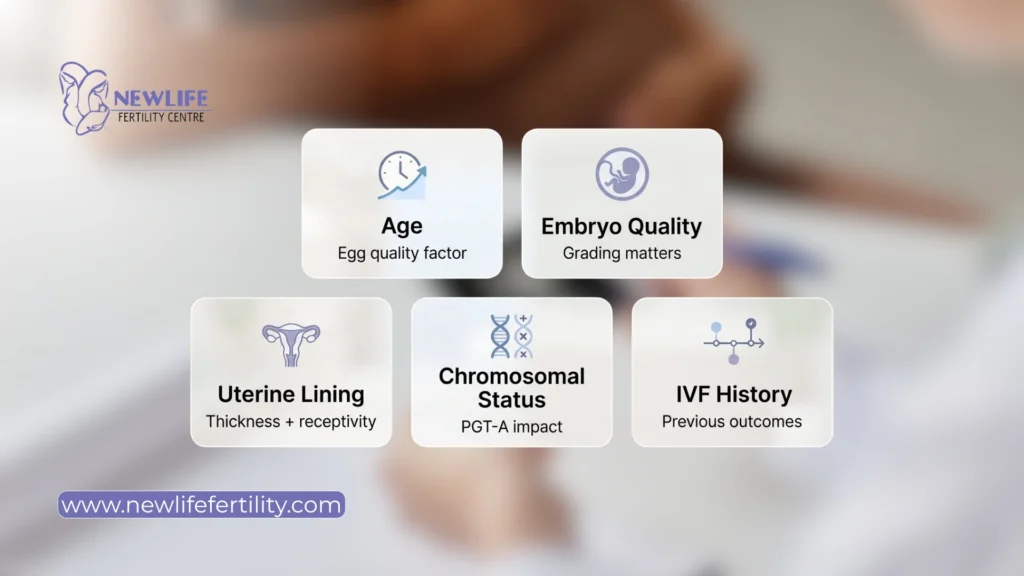
Understanding the factors at play helps you look at success rates in the right way, without dismissing them or over-fixating on them.
Age
Age is the most consistent predictor across IVF research. As age increases, egg quality declines. Since blastocysts are created from those eggs, embryo quality reflects that. Using donor eggs can significantly change this factor.
Embryo quality and grading
This often matters more than the day the embryo reached blastocyst stage. Clinics grade embryos based on expansion, inner cell mass, and trophectoderm quality. For example, a 4AA blastocyst and a 3BC blastocyst can have very different potential, even if both are Day 5.
Uterine lining
The thickness and quality of the uterine lining are critical. Most clinics look for a trilaminar lining of at least 7 to 8 mm, but receptivity is not just about thickness. It also depends on how well your lining responds to hormones and supports implantation.
Chromosomal status
If your embryo has undergone PGT-A testing, this becomes one of the strongest predictors. A euploid embryo, meaning chromosomally normal, has a higher chance of implantation compared to an untested embryo.
Previous IVF history
If you have experienced implantation failure before, there may be underlying factors involved. These can include uterine conditions, immune responses, or timing differences in endometrial receptivity. In such cases, further evaluation before the next transfer can be helpful.
Symptoms after blastocyst transfer: What’s normal?

During the two week wait, your body is going to do things. Some will feel important. Most will feel confused.
Here’s the honest rundown.
Mild cramping or pelvic pressure
This is very common in the days after transfer and usually nothing to worry about. It can come from the procedure itself, progesterone support, or sometimes early implantation.
Light spotting
Especially around Day 3 to Day 6, light spotting can be implantation-related. It is usually very light, pink or brown in colour, and short-lived. It does not happen in every successful cycle.
Breast tenderness, bloating, fatigue, mood changes
These are extremely common and are mostly caused by progesterone. They do not confirm pregnancy, and not having them does not mean the cycle has failed.
No symptoms at all
This is not a bad sign. It is worth repeating. Many women who go on to have successful pregnancies feel almost nothing during the two week wait. Your body can be doing everything right without showing clear signals.
When to call your clinic
Heavy bleeding that is more than a light period, severe pain, or fever should be reported to your clinic.
For everything else, the truth is simple. Most symptoms during this phase are unclear and difficult to interpret.
When to take a pregnancy test after blastocyst transfer
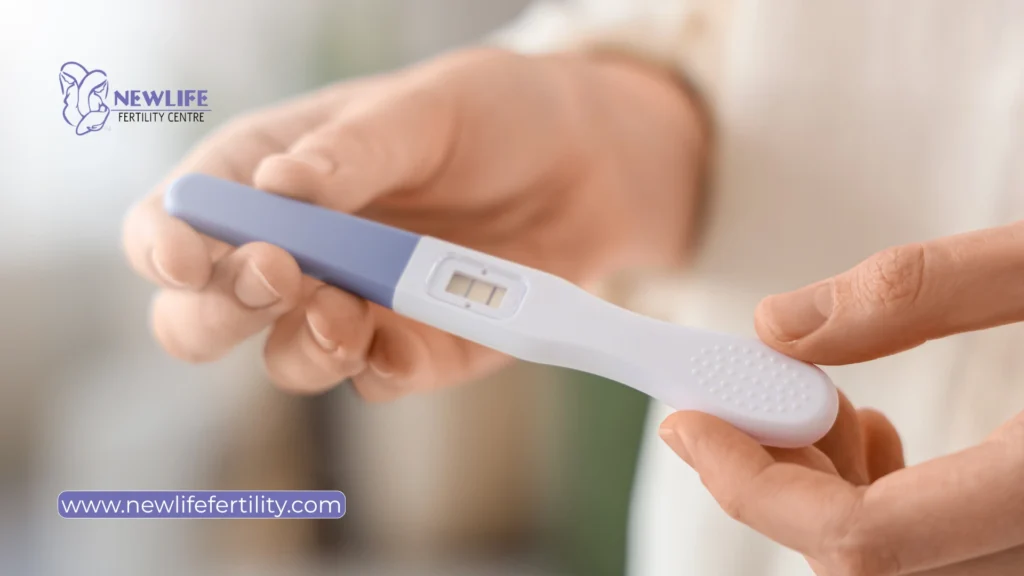
The urge to test early is completely understandable. It is also one of the most common reasons people go through unnecessary stress during the two week wait.
Here is why timing matters.
A home pregnancy test detects hCG only after it crosses a certain level. In a blastocyst transfer, hCG usually does not reach detectable levels until around Day 9 or Day 10 after transfer. Testing on Day 5 or Day 6 will almost always show a negative result, even if implantation is happening.
Early testing can also confuse things. If you had a trigger shot or any medication containing hCG, you might see a false positive or a misleading result in the early days.
Your clinic’s blood test, called beta hCG, is the one that truly matters. It is more sensitive, gives an exact number, and is scheduled at the right time to provide a reliable answer. That timing is intentional, and it is worth trusting.
If you choose to test at home, wait until at least Day 10 after transfer. Day 12 to 14 gives a much clearer picture. A negative result on Day 10 is not final. A positive result around Day 12 is usually reliable.
Common mistakes after blastocyst FET
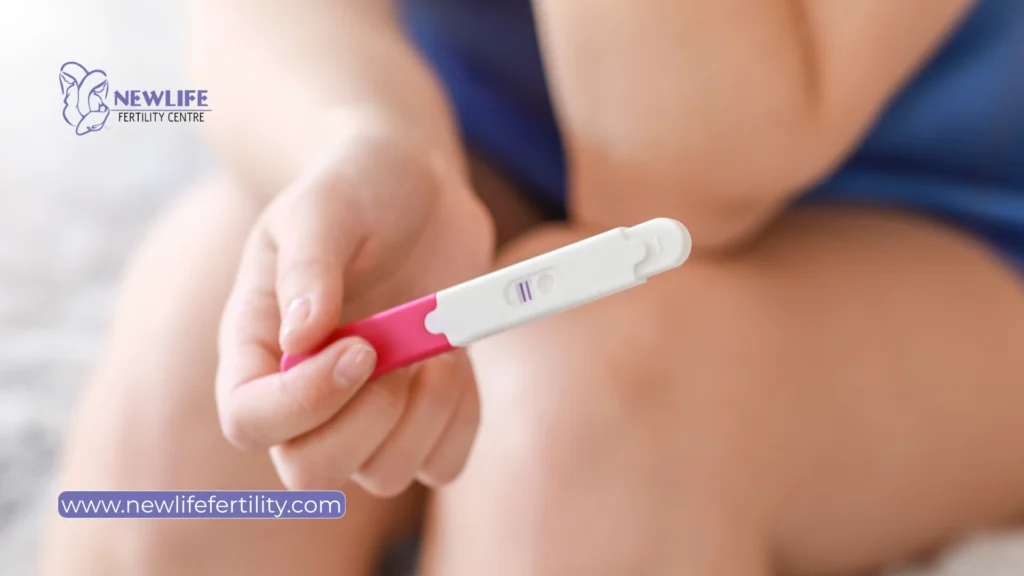
These aren’t judgments. They are patterns that show up again and again. Knowing them early can save you a lot of unnecessary stress.
Testing too early
This is the biggest one. Testing on Day 5 or Day 6 after transfer usually gives you a negative result that does not mean anything. It often creates anxiety that a later positive could have avoided. Early testing adds confusion, not clarity.
Overanalysing every symptom
This is an easy trap, especially when you have waited so long and have so much emotionally invested. Every sensation starts to feel important. The reality is that implantation symptoms and progesterone effects feel almost identical. Tracking every detail gives your mind something to focus on, but it does not give you reliable answers.
Excessive googling
Searching for things like “no symptoms at 6dp5dt” or “cramping success stories” often makes things worse. Online forums contain every possible outcome, both positive and negative. They are not a reflection of what will happen in your case, and spending hours there usually increases anxiety.
Restricting activity out of fear
It is natural to feel like you should do as little as possible, but strict bed rest is not helpful and may even work against you. Gentle movement, short walks, and your normal daily routine are generally safe and healthy unless your doctor advises otherwise.
Blastocyst frozen embryo transfer: What should you hold onto during the wait?
You are waiting for news that could change your life.
That is not a small thing. Being in this space between possibility and answer can feel heavy, uncertain, and at times overwhelming.
What is important to hold onto is this. The process is moving forward, even when you cannot feel it. Implantation, rising hCG, early development, all of it is happening quietly in the background while you go about your day.
The outcome is not something you can control through symptom checking or second guessing. You have done your part to reach this stage. Your medical team has guided the process. The rest now comes down to biology doing what it is meant to do.
What you can control is how you support yourself right now. Rest when you need to. Eat well. Be gentle with your thoughts. Stay close to people who make this waiting feel a little less heavy.
And if you are still unsure about your journey, your next steps, or what all of this means for you personally, you do not have to figure it out alone.
NewLife Fertility Centre offers trusted guidance, expert care, and emotional support throughout the journey of frozen embryo transfer.
At NewLife Fertility, we take the time to understand your full picture and guide you with clarity, not confusion. If you want honest answers and a plan that actually fits your situation, you can book your free consultation with NewLife Fertility and have a real conversation about your path forward.
Frequently asked questions about blastocyst frozen embryo transfer
A 5-day blastocyst transfer means the embryo reached the blastocyst stage on Day 5 after fertilization. It is the most common type and is associated with strong implantation potential due to the embryo’s advanced development.
On average, slightly, but the difference is smaller than most people expect. A high-quality Day 6 blastocyst can perform just as well as an average Day 5. Embryo quality matters more than the day alone.
Yes. Day 7 blastocysts have lower average success rates, but they can still implant and lead to healthy pregnancies. Clinics freeze them because they have meaningful potential.
Implantation usually begins within 1 to 5 days after transfer. Since the embryo is already developed, hatching and attachment start relatively quickly, often by Day 3 or Day 4.
Success rates generally range from 40% to 60% per cycle, depending on age and embryo quality. Women under 35 with chromosomally normal embryos tend to see higher success rates. These are general figures. Your individual chances depend on your specific situation, which your doctor can guide you on.