You just came back from your doctor’s appointment.
And somewhere in the conversation, you heard the words “chromosome test.”
If you paused for a second and thought, what does that actually mean? You’re not alone.
For most people, this is the first time they hear about chromosome testing. It usually comes up after a routine checkup, a fertility discussion, or when a doctor is trying to understand the reason behind certain health concerns. Naturally, the next step is opening Google and looking for answers.
Here’s the reassuring part.
Chromosome testing is quite common, it’s not something to panic about, and once you understand what it looks for, it becomes much easier to process.
In this guide, we’ll walk through:
- What a chromosome test actually is
- Why doctors recommend chromosome testing
- The different types of chromosome tests available
- How to understand chromosome test results at a basic level
By the end of this article, you’ll have a clear idea of what a chromosome test involves and feel more confident about discussing the results or next steps with your doctor.
Let’s start from the basics.
What is a chromosome test?

Okay, let’s start with the basics.
Your body is made up of trillions of cells. Inside almost every cell, there are structures called chromosomes. You can think of chromosomes as instruction manuals that tell your body how to develop, grow, and function.
Humans have 23 pairs of chromosomes, which makes 46 chromosomes in total.
Each chromosome carries many genes. And genes hold the instructions that influence everything from physical development to certain health conditions.
So where does chromosome testing come in?
A chromosome test is usually done using a blood sample, though in some cases other samples may be used (saliva, cheek swab, amniotic fluid, tissue). The test looks at your chromosomes to check:
- Whether you have the correct number of chromosomes
- Whether the structure of the chromosomes appears normal
- Whether there are any missing, extra, or rearranged chromosome segments
In simple terms, chromosome testing looks at the overall structure and organization of your genetic material.
This is different from gene testing.
While gene tests focus on very small, specific changes within individual genes, a chromosome test looks at the bigger picture.
A helpful way to think about it is this:
A gene test is like checking a single sentence in a book.
A chromosome test is like making sure all the pages are present and in the correct order.
Once you understand that difference, chromosome testing becomes much easier to grasp.
Why is a chromosome test done?

Doctors don’t recommend a chromosome test at random.
It’s usually suggested in specific situations where understanding chromosome structure can help explain what’s happening with your health or pregnancy.
Some of the most common reasons include:
Infertility evaluation
If a couple has been trying to conceive without success, a chromosome test can help identify whether a chromosomal variation may be affecting fertility. In some cases, a person may still be able to conceive, but the test gives doctors clearer insight into possible challenges.
Recurrent pregnancy loss
If someone has experienced multiple miscarriages, chromosome testing can help determine whether a structural chromosome change may be affecting pregnancy viability.
Congenital conditions
When a baby is born with physical or developmental differences, chromosome testing can sometimes help identify an underlying chromosomal cause.
Family history of genetic disorders
If there is a known genetic condition in the family, a chromosome test may be recommended to check whether someone carries a related chromosomal change.
Abnormal prenatal screening results
If a screening test during pregnancy suggests that something may be different, a chromosome test can provide more detailed information.
| Important point to keep in mind 👇 Chromosome testing helps identify possible causes, but it does not predict outcomes. A normal result means the chromosomes appear typical. An abnormal result means there is a difference, but what that difference means for health or future pregnancies can vary widely. This is why discussing results with a doctor or genetic counselor is always essential. |
Types of chromosome tests
Here’s something important to know.
There isn’t just one chromosome test.
Different situations call for different types of testing. The test your doctor recommends depends on why the testing is needed in the first place.
Below are the main types of chromosome tests and when each one is used.
Karyotype test

A karyotype test looks at all 46 chromosomes in the body. It checks whether the number of chromosomes is correct and whether their overall structure appears normal. This is one of the most commonly used chromosome tests and has been used reliably for many years.
What kinds of problems can it identify?
- Extra or missing chromosomes (for example, an extra chromosome 21 in Down syndrome)
- Large rearrangements or translocations, where parts of chromosomes swap places
- Large deletions, where a section of a chromosome is missing
When is this test usually recommended?
Karyotype testing is often the first step when investigating infertility, recurrent pregnancy loss, or a known family history of chromosomal conditions. Results usually take about 7 to 10 days.
If you want a deeper explanation of how this test works, what the results mean, and who should consider it, you can read our full guide on Karyotype Testing.
Chromosomal Microarray (CMA)

A chromosomal microarray is a more detailed test that looks for smaller chromosomal changes that may not be visible on a karyotype test.
What kinds of problems can it identify?
- Very small missing pieces of chromosomes (microdeletions)
- Very small extra pieces of chromosomes (microduplications)
- Subtle changes that may be linked to developmental or neurological conditions
When is this test usually recommended?
Microarray testing may be recommended if a child has unexplained developmental delays, if prenatal screening raises concerns, or if symptoms persist despite a normal karyotype result.
FISH test

FISH stands for Fluorescence In Situ Hybridization. Instead of examining all chromosomes, this test focuses on specific chromosome areas that doctors already suspect may be affected.
What kinds of problems can it identify?
- Specific chromosomal changes linked to known conditions
- Targeted abnormalities when a quick answer is needed
When is this test usually recommended?
FISH testing is often used when rapid results are important, such as during pregnancy, or when doctors are checking for a particular chromosomal condition rather than scanning the entire chromosome set.
Prenatal chromosome tests (NIPT, CVS, amniocentesis)

These tests are used during pregnancy to assess the baby’s chromosomes before birth. Some are screening tests, while others provide a definitive diagnosis.
What kinds of problems can it identify?
- Conditions related to extra or missing chromosomes
- Certain structural chromosomal differences
When is this test usually recommended?
- NIPT is a non-invasive blood test and is often used as an early screening tool.
- CVS and amniocentesis are diagnostic tests and may be recommended if screening results suggest a higher risk or if there is a known genetic concern.
Your doctor will explain which test is appropriate and why.
Embryo Chromosome Testing (PGT)

PGT, or preimplantation genetic testing, checks the chromosomes of embryos created through IVF before they are transferred to the uterus.
What kinds of problems can it identify?
- Embryos with extra or missing chromosomes
- Chromosomal abnormalities that could affect implantation or pregnancy outcome
When is this test usually recommended?
PGT is used during fertility treatment to help select embryos with normal chromosomes, which may reduce the risk of miscarriage or chromosomal conditions.
How is a chromosome test performed?
Let’s talk about the practical side.
How does a chromosome test actually happen?
Sample collection

For most chromosome tests, your doctor collects a blood sample. It’s just like a routine blood test. A needle, a small vial, and you’re done.
In certain situations, other samples may be used, such as:
- Tissue samples (often in cancer-related testing)
- Amniotic fluid (when testing during pregnancy)
- Saliva (less common, but sometimes possible)
That said, blood is by far the most commonly used sample.
What happens in the lab?

Once the sample is collected, it’s sent to a laboratory. The lab specialists extract cells and examine the chromosomes.
What they look at depends on the type of test:
- Some tests examine all 46 chromosomes (like a karyotype test)
- Others focus on specific areas or smaller changes (like microarray or FISH testing)
How long results take

The timeline can vary based on the test:
- Karyotype test: usually about 7–10 business days
- Chromosomal microarray: around 10–14 days
- FISH test: often faster, sometimes within 24–48 hours
Your doctor will let you know what timeline applies to your situation.
One important thing to remember: waiting for results is normal. The lab isn’t being slow. They’re being careful and thorough to make sure the results are accurate.
Understanding chromosome test results
So, your results are back.
Now what do they actually mean?
Here’s a simple way to understand them.
Normal results

If your chromosome test results are described as normal, it means your chromosomes appear typical. You have 46 chromosomes, the expected pairs are present, and no major structural changes were identified.
That’s generally reassuring news.
However, it’s important to understand that normal results don’t rule out all health or fertility concerns. They simply mean that chromosome differences are not the cause. Other factors may still be involved, depending on the situation.
Abnormal results

If the results show something different, your doctor will explain what was found and why it matters.
This could include:
- An extra chromosome (for example, trisomy 21, which causes Down syndrome)
- A missing piece of a chromosome, known as a deletion
- A rearranged chromosome segment, called a translocation
Not all abnormalities have the same impact, which brings us to an important distinction.
Balanced vs. unbalanced changes (explained simply)
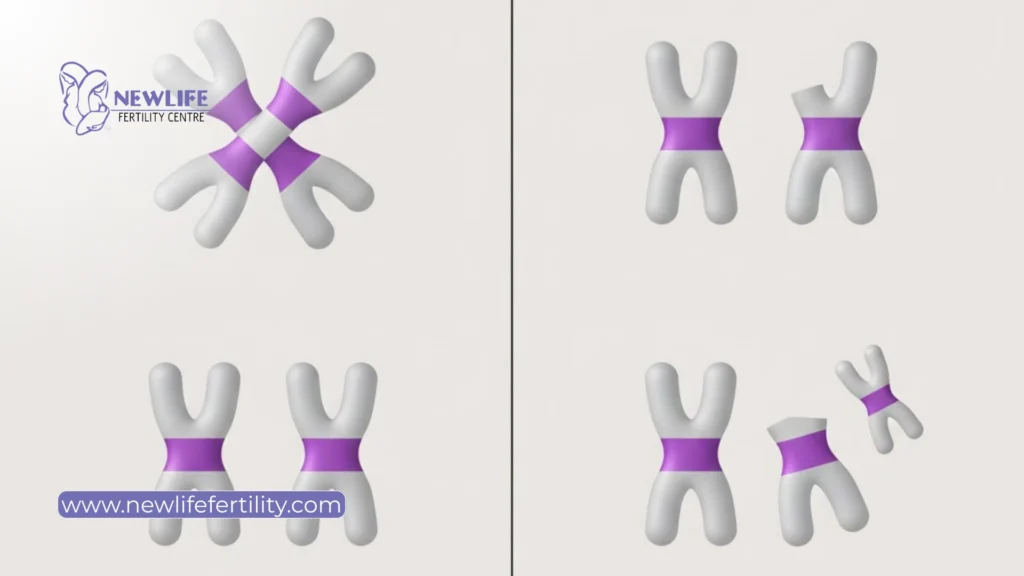
This concept can sound complicated, but it’s easier than it seems.
A balanced change means chromosome pieces are rearranged, but no genetic material is missing or extra. A helpful way to think about it is shuffling cards. All the cards are still there, just in a different order.
An unbalanced change means there is extra or missing genetic material.
Unbalanced changes are more likely to affect health or development. Balanced changes often do not cause symptoms, but they can sometimes affect fertility or increase the risk of pregnancy complications.
The most important thing to remember 👇
Chromosome test results always need professional interpretation.
The same finding can mean different things for different people. That’s why doctors and genetic counselors are involved. They help explain what the results mean for your health, fertility, or pregnancy and guide you on possible next steps.
What a chromosome test cannot tell you
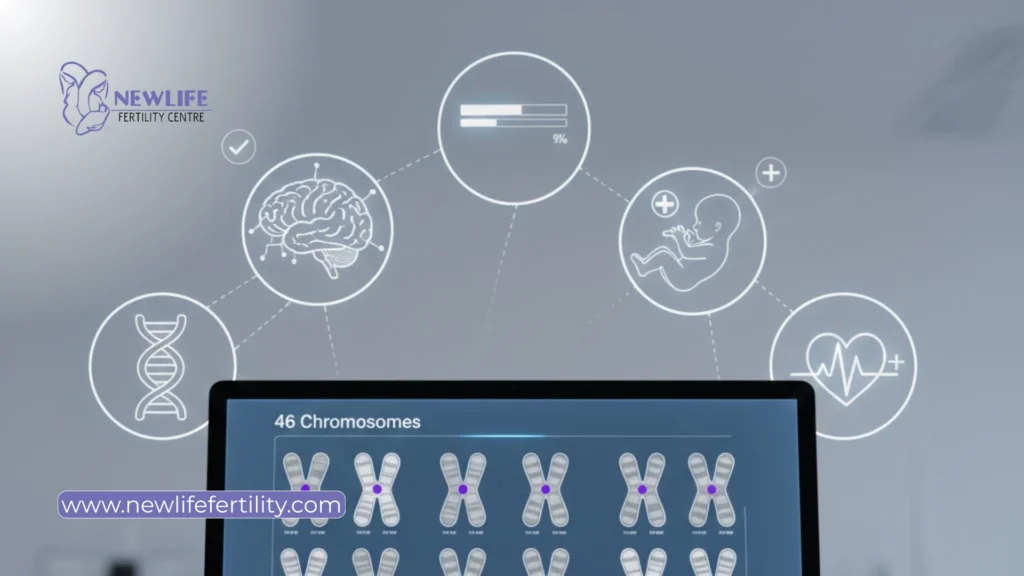
It’s important to be clear about the limits of chromosome testing.
While this test provides useful information, it does not explain everything.
It cannot predict overall health or intelligence
A chromosomal difference does not automatically mean poor health, and normal chromosomes do not guarantee lifelong health. Many people with chromosomal variations live healthy lives, while others may face health challenges for reasons unrelated to chromosomes.
Chromosomes are just one part of a much larger picture.
It cannot detect all genetic conditions
Some genetic conditions are caused by changes in individual genes rather than whole chromosomes. A chromosome test looks at large structural changes, so it won’t identify every possible genetic condition.
It cannot fully explain fertility outcomes
Even when chromosome test results are normal, conception may still be difficult. Fertility is influenced by many factors, and chromosomal differences are only one possible cause.
It cannot predict pregnancy outcomes
A normal chromosome result does not guarantee a successful pregnancy. Likewise, an abnormal result does not automatically mean a pregnancy will not continue. Each situation is unique and depends on many variables.
| Key takeaway 👇 Chromosome testing is an informative tool, not a prediction of destiny. It helps doctors understand one important aspect of health or fertility, but it is never the whole story. |
Who should consider a chromosome test?

In most cases, a chromosome test is recommended by a doctor rather than requested randomly.
That said, chromosome testing is commonly helpful in the following situations.
For individuals
- People experiencing infertility
- Individuals with unexplained developmental delays or disabilities
- Those with a known family history of chromosomal conditions
- Individuals diagnosed with certain cancers, where chromosomal changes may play a role
For couples
- Couples who have experienced recurrent pregnancy loss
- Couples with a family history of genetic or chromosomal conditions
- Couples planning a pregnancy who want more clarity about potential risks
During pregnancy
- When prenatal screening suggests a possible concern
- If there is a previous child with a chromosomal condition
- When maternal age is higher, so is the likelihood of certain chromosomal differences increases
The most important thing to remember is this.
A chromosome test is usually suggested because a doctor sees a clear medical reason to look deeper. You don’t have to decide on testing alone.
If your doctor recommends a chromosome test, it’s a good idea to ask why it’s being suggested and how the results may help guide next steps.
What should you do after learning about a chromosome test?
If you made it this far, take a moment to pause.
You started this article because you heard the words “chromosome test” and felt unsure about what they really meant. That confusion is completely normal.
Now, you know what a chromosome test looks for, why doctors recommend it, what the results mean, and, just as importantly, what the test cannot tell you.
A chromosome test is not a diagnosis.
It is not a prediction of your future.
It is information.
And information helps you and your doctor make clearer, calmer decisions.
Whether you are navigating infertility, pregnancy planning, recurrent pregnancy loss, or a health concern, understanding chromosome testing gives you a stronger voice in your care. It helps you ask better questions. It helps you feel less overwhelmed by medical terms and reports.
The next step is not figuring everything out on your own.
The next step is having the right conversation with the right medical team at one of the top fertility clinics in Canada, where specialists can interpret chromosome test results and guide your next steps with clarity and care.

At NewLife Fertility Centre, we believe that no test result should ever feel confusing or isolating. Our specialists take the time to explain chromosome test results in simple language, discuss what they mean for your specific situation, and guide you through the options ahead with care and honesty.
If you have recently been advised to get a chromosome test, or if you already have results and are unsure what they mean, you do not have to navigate this alone.
Book your free consultation today and speak with a fertility specialist who will listen, explain, and help you plan your next steps with clarity and confidence.
You are asking the right questions.
You deserve clear answers.
And you deserve care that puts you first.
Frequently asked questions about chromosome testing
A chromosome test is usually done using a blood sample, so most people feel only a brief needle prick. The process is quick and generally painless. If you’re nervous about needles, let the lab technician know. They’re experienced in helping people feel comfortable during a chromosome test.
Yes, a chromosome test done through a blood sample is considered very safe and carries no risk. Your body naturally replaces the small amount of blood taken. During pregnancy, non-invasive chromosome tests like NIPT are also safe. Invasive chromosome tests such as CVS or amniocentesis carry a very small risk, which your doctor will explain before recommending them.
A chromosome test is highly accurate. Tests like karyotype analysis and chromosomal microarray are among the most reliable genetic tests available. When performed correctly, a chromosome test provides dependable information about chromosome number and structure, which doctors use confidently for medical decision-making.
Not always. Whether both partners need a chromosome test depends on the situation. In cases of infertility or recurrent pregnancy loss, doctors may recommend chromosome testing for both partners to get a complete picture. In other cases, testing just one person may be sufficient.
If a chromosome test shows an abnormal result, the next step is usually a discussion with a doctor or genetic counselor. They will explain what the finding means, how it may affect health or future pregnancy, and what options are available next. Sometimes additional testing is needed, and sometimes no further action is required. Each chromosome test result is interpreted based on the individual situation.