
You may have recently heard the term “karyotype test” during a doctor’s visit, while reviewing a medical report, or during a discussion about fertility or pregnancy.
And if your initial reaction was, what exactly does that mean? You’re not alone.
Medical terms can feel overwhelming, especially when they relate to something as personal as your health, fertility, or a future pregnancy. One moment everything feels routine, and the next you’re hearing unfamiliar words that send you searching for answers.
Here’s the reassuring part.
A karyotype test is a type of chromosome test. It’s a well-established and commonly used test that becomes easy to understand once you know what it checks and why doctors recommend it.
In this guide, we’ll walk through:
- What a karyotype test is
- Why doctors recommend it
- How the test is performed
- What the results mean
- And what steps usually come next?
By the end of this article, you’ll have the clarity and confidence to discuss a karyotype test with your doctor without panic or confusion.
Let’s start with the basics.
What is a karyotype test?

A karyotype test is usually done using a blood sample and examines all 46 chromosomes in your body.
To understand what that means, it helps to step back for a moment.
Chromosomes are like instruction manuals for your body. Almost every cell contains 23 pairs of chromosomes, which together carry the genetic information that influences how your body develops and functions.
A karyotype test examines these chromosomes using laboratory imaging techniques to check:
- Whether the correct number of chromosomes is present
- Whether the overall structure of the chromosomes appears normal
This test looks at the big picture of your chromosomes. It does not analyse individual genes or specific DNA sequences. Instead, it checks for obvious changes such as missing chromosomes, extra chromosomes, or large rearrangements.
A simple way to think about it is like a quality check of a library.
Are all 46 books there?
Are they intact and in the right order?
Is anything missing or misplaced?
Once you see it this way, the purpose of a karyotype test becomes much easier to understand.
What does a karyotype test look for?

A karyotype test focuses on three main things.
Chromosome number
Most people have 46 chromosomes, arranged in 23 pairs. Sometimes, however, a person may have an extra chromosome or be missing one.
For example, in Down syndrome, there are three copies of chromosome 21 instead of two. A karyotype test is designed to detect these differences in chromosome number.
Large structural changes
In some cases, a chromosome may have a large visible change. A section can break off, get duplicated, or rearrange itself. These are not tiny gene-level mutations. They are larger changes that affect the overall structure of the chromosome.
A karyotype test is well suited to identify these kinds of visible structural differences.
Translocations, deletions, and duplications
These are common terms you may hear in karyotype results. Here’s what they mean in simple language:
- Translocation: A piece of one chromosome breaks off and attaches to another chromosome.
- Deletion: A section of a chromosome is missing.
- Duplication: A section of a chromosome is copied or repeated.
Because these changes involve larger chromosome segments, they can be seen using laboratory imaging techniques. This is why a karyotype test is effective at detecting them.
Why do doctors recommend a karyotype test?

Doctors recommend a karyotype test in specific situations where understanding chromosome number or structure can help explain what’s happening with health, fertility, or pregnancy.
Some of the most common reasons include:
Infertility evaluation
If you and your partner have been trying to conceive without success, a karyotype test can help identify whether a chromosomal difference may be affecting fertility.
Recurrent pregnancy loss
For individuals who have experienced multiple miscarriages, a karyotype test may help determine whether a chromosomal issue is contributing to the pregnancy losses.
Family history of chromosomal conditions
If there is a known chromosomal or genetic condition in the family, a doctor may recommend karyotype testing to see whether someone carries a related chromosome change.
Abnormal genetic or prenatal screening results
When prenatal screening tests, such as maternal blood screening or ultrasound findings, show abnormal results, a karyotype test can provide more detailed and definitive information.
Certain developmental or health concerns
If a child has developmental delays or multiple congenital differences, doctors often recommend a karyotype test to check for an underlying chromosomal cause.
In fertility and pregnancy-related care, a karyotype test is often one of the first chromosome tests recommended. It helps identify the most common and clearly visible chromosomal differences, which can guide further testing or treatment decisions.
Karyotype test in fertility and pregnancy

If you’re reading about a karyotype test, it’s often because fertility or pregnancy is part of the picture.
In these situations, a karyotype test can play an important role in understanding what might be happening behind the scenes.
In infertility
A small percentage of people experiencing infertility have a chromosomal difference that can affect egg or sperm development. This may make it harder to conceive or to maintain a pregnancy. A karyotype test helps doctors identify whether a chromosome-related factor could be contributing, which can influence the choice of treatment moving forward.
In recurrent pregnancy loss
For individuals who have experienced two or more miscarriages, chromosome testing is often considered. In some cases, one partner may carry a balanced chromosomal change that does not affect their own health but can impact pregnancy viability.
In IVF or assisted reproduction
Many fertility clinics in Canada recommend a karyotype test before starting IVF.If a chromosomal difference is identified, it allows the care team to plan treatment more carefully, including decisions around embryo testing, such as preimplantation genetic testing (PGT).
Key takeaway 👇
A karyotype test can provide valuable information before investing time, emotional energy, and financial resources into fertility treatment. It helps doctors and patients make more informed, thoughtful decisions at each step.
How is a karyotype test performed?

Many people I’ve spoken to feel anxious when they hear about a karyotype test. That reaction is completely understandable.
Here’s the reassuring part.
A karyotype test is simply a blood draw.
There’s no invasive procedure and no special preparation needed. You visit the lab, a technician takes a small blood sample from your arm, and the process is usually over in just a few minutes.
What happens after the blood sample is taken?

Once the blood sample is collected, it’s sent to a laboratory for analysis.
In the lab, specialists grow the cells from your blood in a controlled environment for about 7 to 10 days. This step is important because chromosomes are easiest to examine when cells are actively dividing.
As the cells divide, the chromosomes become visible using laboratory imaging techniques. The chromosomes are then stained, photographed, and arranged into a standard layout. This arranged image is called a karyotype.
A trained geneticist or laboratory expert reviews this karyotype to check for any chromosomal differences.
Why does a karyotype test take time?

It’s common to wonder why karyotype test results aren’t immediate.
The reason is simple. Chromosomes can only be clearly studied when cells are dividing, and growing cells takes time. On top of that, the analysis needs to be done carefully to ensure accuracy.
So while the test itself is straightforward, the laboratory process behind it requires patience. The waiting period is a normal and necessary part of getting reliable results.
How long does a karyotype test take?

In most cases, karyotype test results are ready within 7 to 10 business days.
Some laboratories may deliver results a little sooner, sometimes within 5 days, if the cell culture grows quickly. In other cases, results may take up to two weeks, especially during holidays or periods of high sample volume.
Here’s a realistic breakdown of the timeline:
- Day 1: Blood sample is collected.
- Days 2–7: Cells are cultured and allowed to grow.
- Days 8–10: Chromosomes are analyzed and carefully reviewed.
- By day 10 (or earlier): Results are sent to your doctor.
Once the results are available, your doctor will review them with you and explain what they mean for your specific situation.
What can delay karyotype test results?
In some cases, results may take longer due to:
- Technical issues with cell growth
- The need for repeat testing or additional analysis
- Laboratory backlogs during busy periods
- Weekends or public holidays
Your doctor or lab will usually give you an expected timeframe when the test is ordered. If results take longer than expected, it’s completely okay to follow up and ask for an update.
Understanding karyotype test results
This is often the part people care about the most.
Let’s walk through what normal and abnormal karyotype test results actually mean, in simple terms.
What a normal karyotype result looks like

A normal karyotype result is usually written as:
- 46,XX for individuals with female chromosomes
- 46,XY for individuals with male chromosomes
This means there are 46 chromosomes, arranged in the typical pairs, with no large structural changes detected.
In practical terms, a normal result suggests that there is no major chromosomal difference likely to be affecting health, fertility, or pregnancy. It does not rule out all medical or fertility concerns, but it does rule out large, visible chromosome abnormalities.
What an abnormal karyotype result looks like
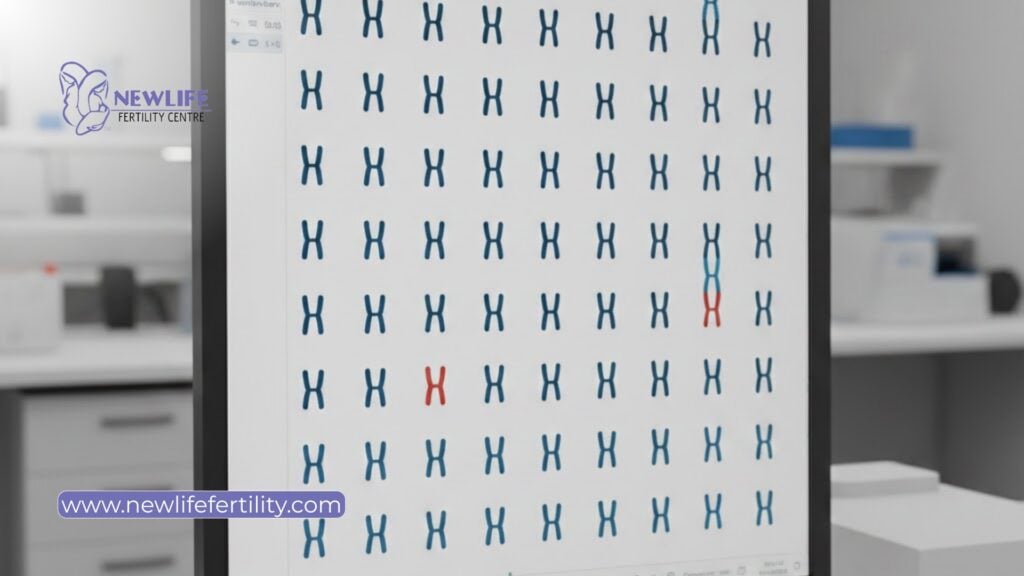
An abnormal result means there is a difference in chromosome number or structure. You may see results written in formats such as:
- 47,XX,+21 – indicates an extra copy of chromosome 21 (associated with Down syndrome)
- 45,X – indicates a single X chromosome instead of two (associated with Turner syndrome)
- 46,XY,der(14;21)(q10;q10) – indicates a chromosomal translocation, where a segment of one chromosome is attached to another
These results can look intimidating on paper, but the notation is simply a technical way for laboratories to describe what they see.
If a karyotype test shows an abnormal result, your doctor or a genetic counselor will explain:
- What the finding means
- Whether it has implications for fertility, pregnancy, or health
- What steps, if any, are recommended next
Balanced vs unbalanced karyotype changes
This is an important distinction, because not all chromosomal changes affect health in the same way.
Balanced changes
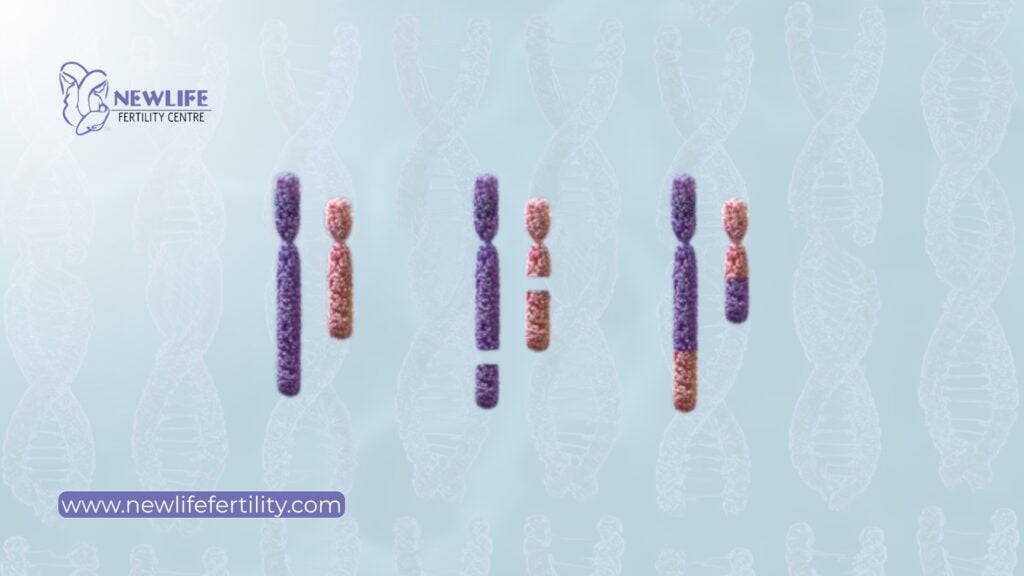
A balanced karyotype change means that chromosomes are rearranged, but no genetic material is missing or extra overall.
For example, a piece of chromosome 14 may attach to chromosome 21. This is known as a Robertsonian translocation. Even though the chromosomes are arranged differently, all the genetic material is still present.
As a result, people with balanced changes are often healthy and have no symptoms.
However, this is where fertility and pregnancy come into the picture.
When the body produces eggs or sperm, chromosomes need to divide evenly. With a balanced rearrangement, that process doesn’t always happen smoothly. This can lead to eggs or sperm that carry extra or missing genetic material.
This is why someone with a balanced karyotype change may experience infertility or recurrent miscarriage, even though they themselves are otherwise healthy.
Unbalanced changes
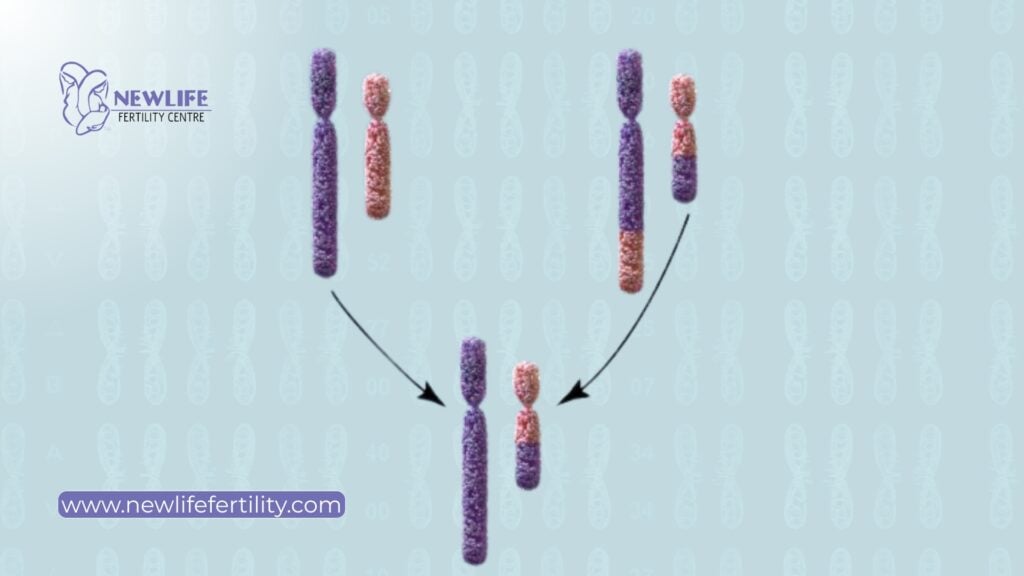
An unbalanced karyotype change means that genetic material is actually missing or extra.
For example, having an extra chromosome, such as in Down syndrome, means there is additional genetic material that affects how the body develops.
Unbalanced changes are more likely to cause noticeable effects on health, development, or pregnancy viability, because the genetic balance needed for normal development is altered.
Why this difference matters
If a karyotype test shows an abnormal result, knowing whether the change is balanced or unbalanced helps put the finding into context.
It helps clarify whether the result mainly affects your own health, fertility, pregnancy outcomes, or a combination of these. This understanding is key to having informed, meaningful conversations with your doctor or genetic counselor.
What a karyotype test cannot detect

Before moving forward, it’s important to understand the limits of a karyotype test.
While it provides valuable information, a karyotype test does not detect everything.
A karyotype test cannot identify:
Small genetic mutations
If a change occurs within a single gene or a very small piece of DNA, a karyotype test will not detect it. These changes require more detailed genetic tests, such as gene sequencing.
Conditions caused by gene-level mutations
Some genetic conditions, such as cystic fibrosis, sickle cell disease, or hereditary breast and ovarian cancer, are caused by specific gene mutations rather than whole chromosome changes. A karyotype test does not screen for these conditions.
Carrier status for inherited conditions
If someone carries one copy of a recessive genetic condition but does not have symptoms, a karyotype test will not identify carrier status.
Epigenetic changes
Epigenetic changes affect how genes are turned on or off without altering the chromosome structure itself. A karyotype test does not assess these changes.
Because of these limitations, it’s possible for a karyotype test to come back normal while additional genetic testing is still recommended.
That doesn’t mean something is wrong. It simply means your doctor may want a more detailed view to rule out other possibilities and ensure nothing important is missed.
What happens after an abnormal karyotype test?

If you’ve received an abnormal karyotype test result, the first thing to know is this.
An abnormal result does not mean the worst. It means you now have information that helps guide what comes next.
Here’s what typically happens after an abnormal karyotype result.
Genetic counseling
In most cases, your doctor will refer you to a genetic counselor. Genetic counselors are trained to explain karyotype results in clear, understandable language and help you understand what the findings may mean for your health, fertility, or family planning.
They are not there to judge or push decisions. Their role is to support you with information so you can make informed choices that feel right for you.
Understanding what the result means for you specifically
The same karyotype finding can have different implications for different people.
For example:
- A balanced translocation may not affect your overall health but could influence fertility or pregnancy outcomes.
- If a partner also carries a chromosomal change, the impact and recommendations may be different.
A genetic counsellor or specialist will walk you through how your specific result applies to your situation, not just what it means in general.
Additional testing, if needed
In some cases, an abnormal karyotype result leads to further testing to gather more clarity.
This may include:
- Detailed ultrasound monitoring during pregnancy
- Additional genetic tests
- Preimplantation genetic testing (PGT) during IVF if fertility treatment is part of the plan
These steps are taken to refine understanding, not to alarm you.
Creating a treatment or monitoring plan
Based on your results and your personal goals, your doctor will discuss the most appropriate next steps.
This may include:
- Monitoring without immediate intervention
- Adjustments to fertility treatment plans
- Pregnancy care or monitoring strategies
- Family planning discussions
The goal is always to tailor care to your situation, not to apply a one-size-fits-all approach.
Who should consider a karyotype test?

Let’s keep this practical.
Not everyone needs a karyotype test. Doctors usually recommend it only when there’s a clear medical reason to look deeper at chromosome structure.
A karyotype test is commonly suggested in the following situations.
For individuals
- People diagnosed with infertility as part of an evaluation
- Individuals who have experienced recurrent miscarriages
- Those with a known family history of chromosomal conditions
- Individuals with unexplained developmental delays or multiple congenital differences
For couples
- Couples trying to conceive without success for 12 months or longer
- Couples who have experienced two or more pregnancy losses
- Couples with a known family history of genetic or chromosomal conditions
During pregnancy
- When prenatal screening results come back abnormal
- If one partner or a close family member has a known chromosomal condition
- In some cases, as part of preconception or early pregnancy evaluation
Here’s the most important point.
You should never feel pressured to undergo a karyotype test unless your doctor recommends it based on your specific situation. This test is usually suggested because a clinician sees a meaningful reason to gather more information.
If you’re unsure whether you need a karyotype test, ask your doctor why it’s being considered and how the results might help guide next steps. That conversation is exactly what these tests are meant to support.
How is a karyotype test different from other chromosome tests?
You may hear about other chromosome tests, such as microarray or FISH, and wonder how they compare to a karyotype test.
Here’s a simple way to understand the differences.
Karyotype vs. microarray

A karyotype test examines all 46 chromosomes and looks for missing chromosomes, extra chromosomes, or large structural rearrangements. It’s especially good at identifying big, visible changes.
A chromosomal microarray uses more detailed DNA-based technology. It can detect very small deletions or duplications that a karyotype test may not pick up.
In practice, a karyotype test is often the first step. If the karyotype result is normal but doctors still suspect a genetic issue, a microarray may be recommended for deeper analysis.
Karyotype vs. FISH
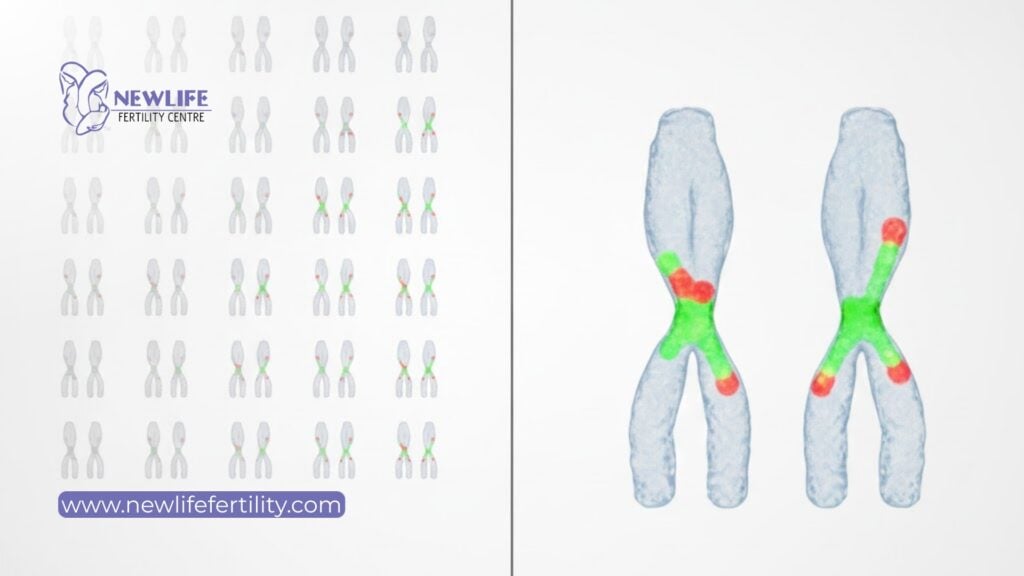
A karyotype test reviews all 46 chromosomes at once, giving a complete overview.
FISH (fluorescence in situ hybridization) focuses on specific chromosomes or chromosome regions. It does not scan everything, but it can provide faster results when doctors are looking for a particular condition.
FISH is often used when there is a clear suspicion, such as checking for a specific chromosomal condition, and a quicker answer is needed.
Why is a karyotype test often recommended first?
A karyotype test offers a broad, reliable view of chromosome number and structure. Because it evaluates all chromosomes at once, it’s commonly used as the starting point for chromosome analysis.
The good news is that you don’t need to decide which test is right. Your doctor will recommend the most appropriate test, or combination of tests, based on what they are trying to understand.
What should you do after learning about a karyotype test?
If you’ve reached this point, you’ve already done the hardest part. You’ve taken the time to understand what a karyotype test is, why it’s recommended, and what the results can actually mean.
A karyotype test is not a judgment on your body or your future. It’s information. And information gives you clarity, direction, and better options.
Whether you’re dealing with infertility, planning a pregnancy, facing recurrent losses, or just trying to make sense of a doctor’s recommendation, you don’t have to figure this out on your own.

At NewLife Fertility Centre, we take the time to explain karyotype test results in simple language, answer your questions honestly, and help you understand what the next steps look like for your situation.
If you’ve been advised to get a karyotype test, or if you already have results and feel unsure about what they mean, we’re here to help.
Book your free consultation today and talk to a fertility specialist who will listen, explain, and guide you with care.
Frequently asked questions about the karyotype test
A karyotype test is usually not painful. The only part you may feel is a brief needle prick during the blood draw, similar to any routine blood test. Most people describe it as mildly uncomfortable at most and over within a few seconds.
Yes, a karyotype test is considered very safe. It is done using a standard blood sample and does not involve any risk or side effects. This test is routinely performed in medical settings, and thousands of people undergo karyotype testing every month without complications.
A karyotype test is highly accurate for detecting changes in chromosome number and large structural abnormalities. It reliably identifies missing or extra chromosomes and major rearrangements. However, a karyotype test does not detect very small gene-level changes, which is why additional genetic testing may sometimes be recommended even if karyotype results are normal.
Not always. Whether both partners need a karyotype test depends on the clinical situation. In some fertility or miscarriage evaluations, doctors may recommend testing one partner first and then testing the other if needed. In other cases, both partners may be tested to get a complete picture. Your doctor will advise what makes sense for your specific situation.
No, a karyotype test is used in many medical contexts beyond fertility. It may be recommended to evaluate developmental delays in children, investigate recurrent pregnancy loss, assess abnormal prenatal screening results, check family history of chromosomal conditions, or study chromosomal changes in certain cancers. Fertility evaluation is just one of the reasons doctors use karyotype testing.