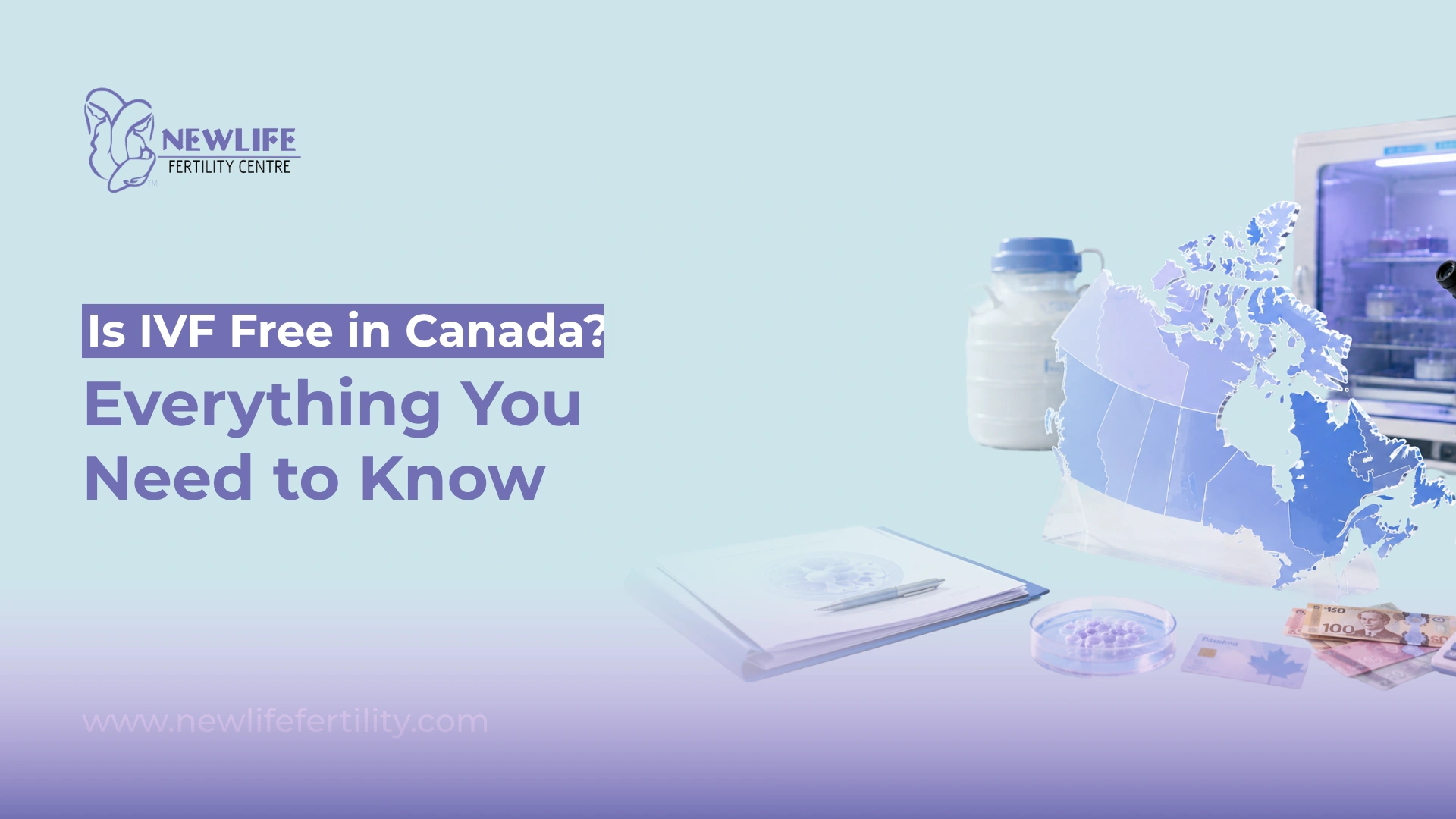
You typed “is IVF free in Canada” into Google at 11pm, didn’t you?
Maybe after a hard conversation with your partner about money. Maybe after a clinic quote made your stomach drop. Either way, you’re here for a straight answer, not a runaround.
So here it is, upfront: IVF is not free across Canada. It depends entirely on which province you live in, and even then, “funded” rarely means every single cost disappears.
Some provinces will cover a full cycle. Some offer a tax credit instead. A couple offer nothing at all, not even a credit. It’s a genuinely uneven map, and where you happen to live can mean the difference between paying $0 CAD and paying $20,000 CAD for the exact same treatment.
Let’s walk through exactly where you stand.
Is IVF free in Canada?
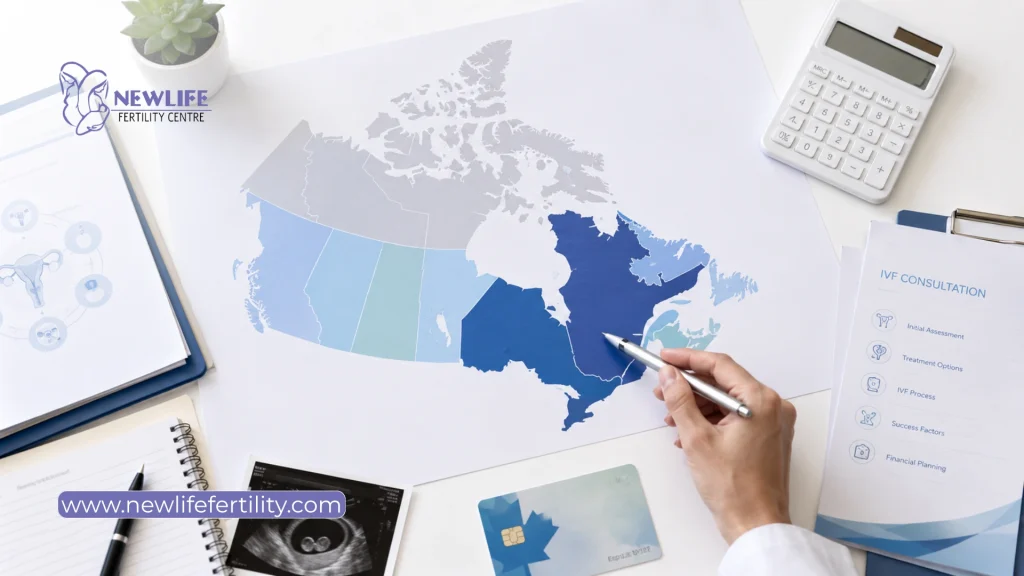
Short answer: not universally, but in several provinces, it’s much closer to free than you might expect.
Canada doesn’t have one national IVF program. Healthcare here is delivered provincially, and fertility treatment has ended up following the same pattern. That means Ontario’s rules look nothing like Alberta’s, and Quebec’s program covers things that Ontario’s doesn’t even touch.
Let me share the general shape of it, before we get into province-specific detail.
- A handful of provinces fund one full IVF cycle directly
- Several others offer a tax credit instead, which helps after the fact but doesn’t cover anything upfront
- One province currently offers neither
- Even where a cycle is funded, things like medication, donor materials, and extra storage are usually still on you
That last point trips people up constantly. “Funded” and “free” are not the same word, even when they get used interchangeably online.
Which provinces offer publicly funded IVF in Canada?
Let’s take a close look at which provinces in Canada generally offer public funded IVF.
Ontario
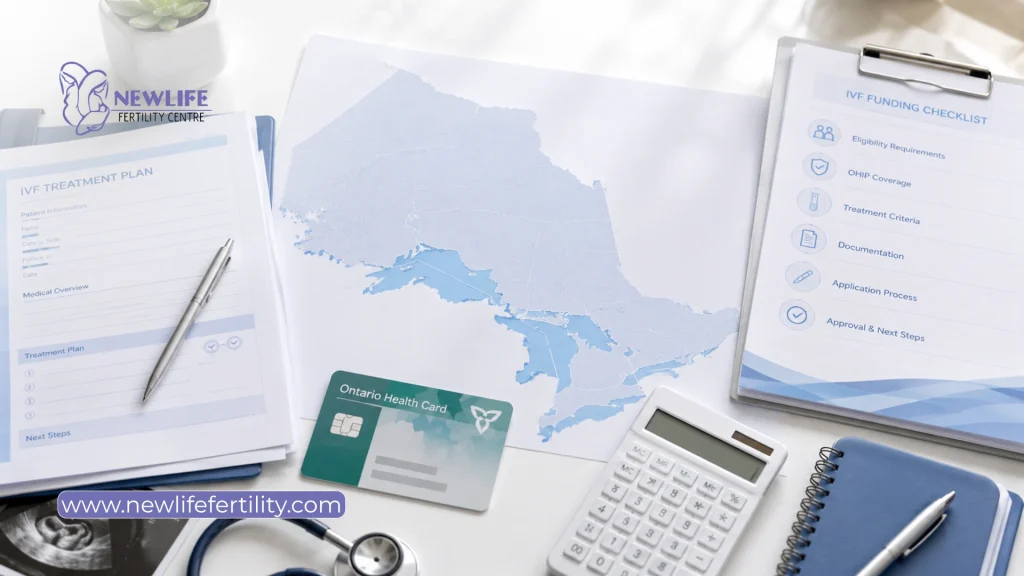
Through the Ontario Fertility Program, accessed with a valid OHIP card, Ontario funds one complete IVF cycle per person, for life. This covers egg retrieval, fertilization and embryology services, and the transfer of embryos from that cycle.
It does not cover medication, donor eggs or sperm, storage, or genetic testing. As of January 2025, eligible residents can also claim a Fertility Tax Credit refunding 25% of eligible costs, up to $5,000 CAD a year, which helps offset what the program itself doesn’t.
Quebec
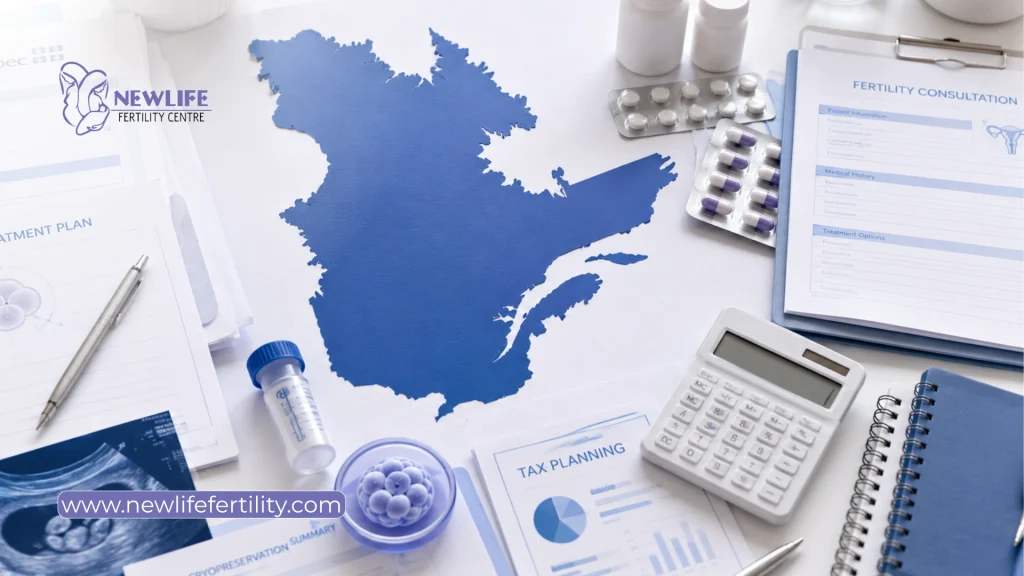
Quebec’s program, run through RAMQ, is the most complete single-cycle coverage in the country. It funds one IVF cycle for life, and unlike most other provinces, this includes the medication itself, plus freezing and storage of extra embryos for the first year.
You need to start treatment between ages 18 and 41, with embryo transfer allowed up to 42. Unlimited insemination (IUI) cycles are also covered. If you need treatment beyond your one funded cycle, Quebec’s income-based tax credit can cover 20% to 80% of costs, up to $20,000 CAD a year.
British Columbia
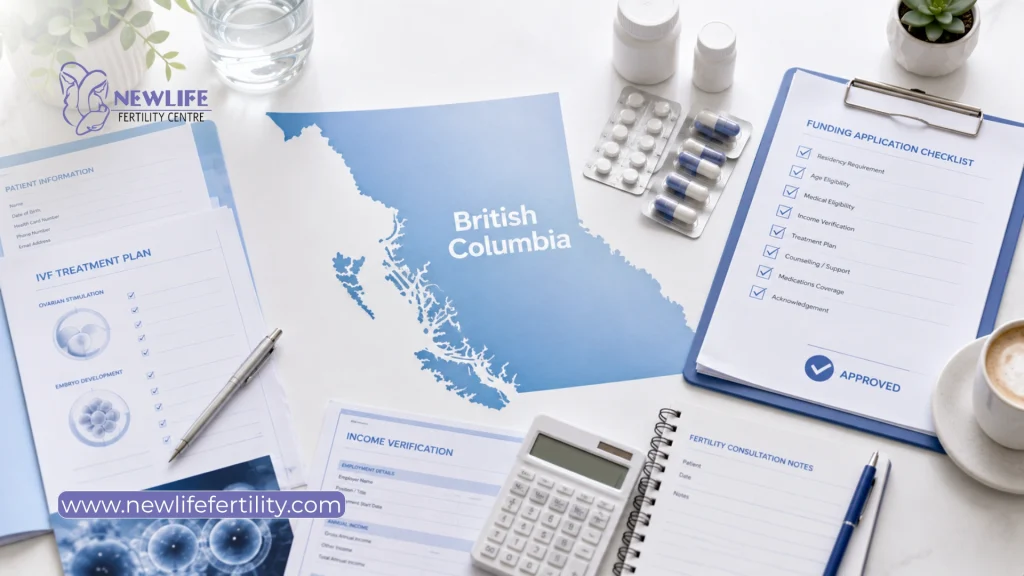
BC is the newest province to join the list. Its Publicly Funded IVF Program launched on July 2, 2025, and covers one IVF cycle, including medication, for eligible residents. Funding is income-based, so you’ll need to submit income verification documents as part of your application.
Plus for this you generally need to be 41 or younger at the time of embryo transfer, with some flexibility if your eggs were retrieved before you turned 42.
Manitoba
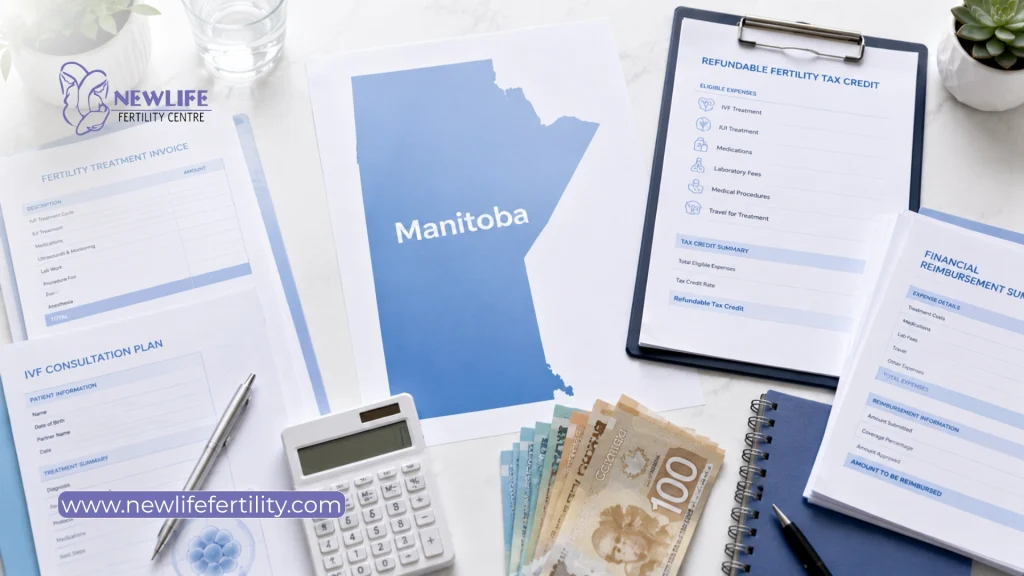
Manitoba offers a refundable tax credit rather than a funded cycle. It covers 40% of fertility treatment costs, including IVF and IUI, up to $40,000 CAD in eligible expenses annually, for a maximum credit of $16,000 CAD a year. There’s no limit on the number of treatments you can claim for.
Prince Edward Island
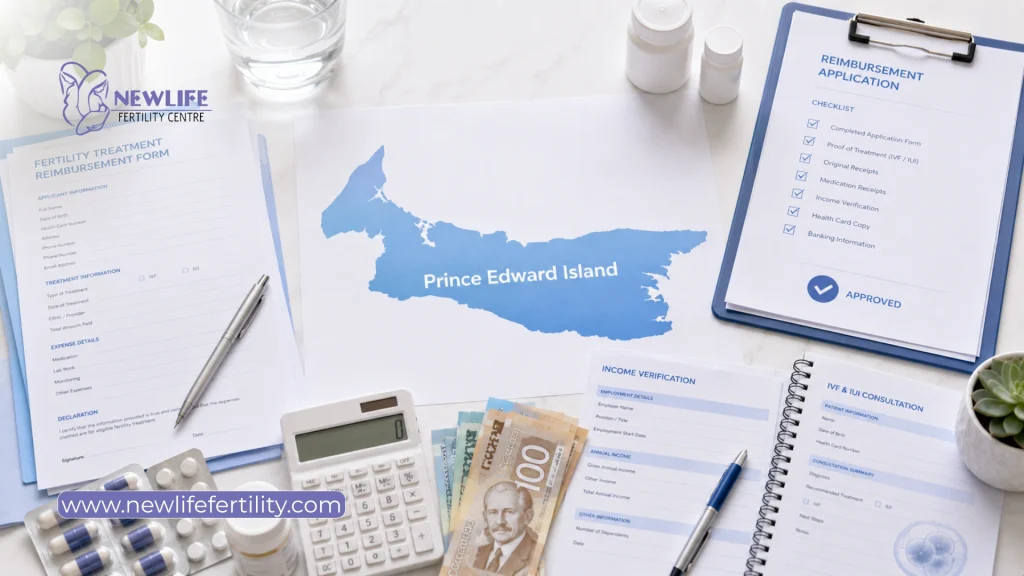
PEI reimburses eligible residents between $5,000 CAD and $10,000 CAD annually for IVF or IUI costs, including medication, with the exact amount depending on household income.
Nova Scotia
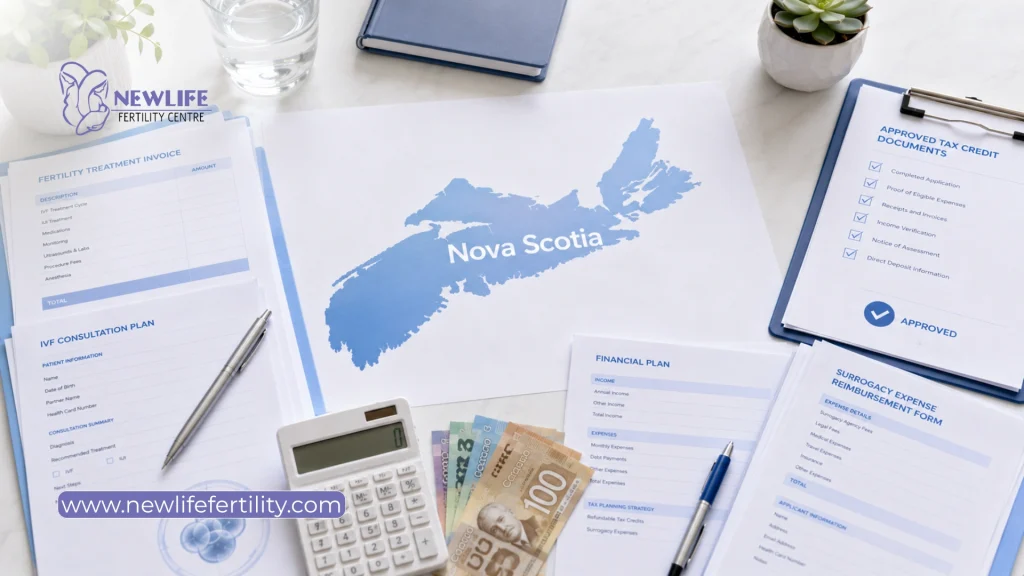
Nova Scotia mirrors Manitoba’s structure closely: a 40% refundable tax credit, up to $20,000 CAD in eligible costs, for a maximum of $8,000 CAD a year. This credit has also been extended to cover surrogacy-related expenses.
Alberta
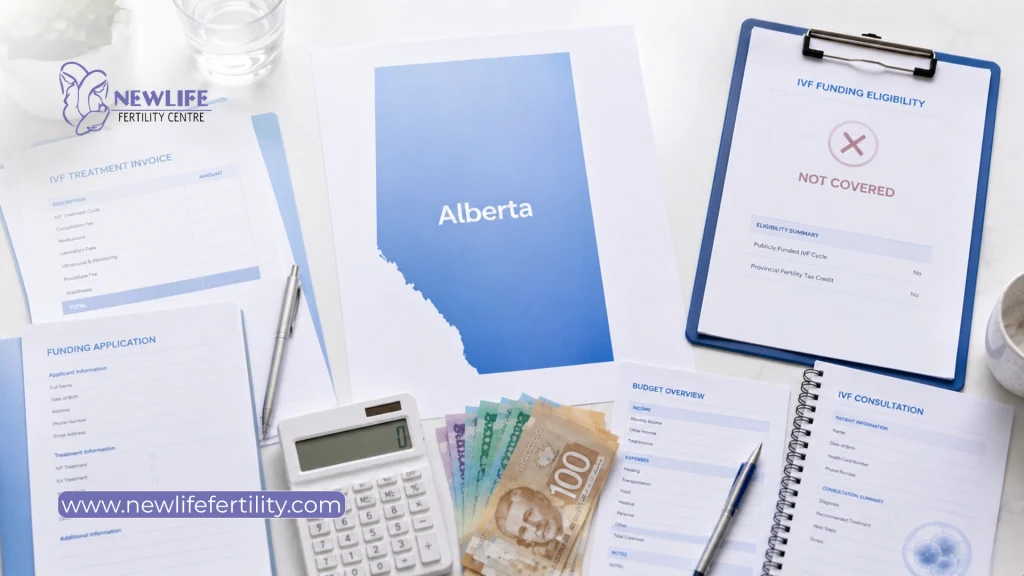
As of now, Alberta is the only province in Canada with no funded cycle and no tax credit at all. Residents pay the full cost of treatment out of pocket, and there’s currently no announced timeline for that to change, despite ongoing advocacy from groups like Fertility Alberta.
Saskatchewan
Saskatchewan introduced its first-ever fertility support in the 2025-26 budget: a 50% refundable tax credit on treatment costs incurred in the province, up to $20,000 CAD in expenses, for a maximum credit of $10,000 CAD. It’s a one-time, lifetime claim, and treatment must be received at a Saskatchewan-licensed clinic.
New Brunswick
New Brunswick significantly expanded its program as of April 1, 2025. The Fertility Treatment Reimbursement Program now covers up to $20,000 CAD for IVF or $10,000 CAD for IUI, per household, over a lifetime, a major increase from the previous one-time $5,000 CAD grant. It also covers costs associated with donor sperm, eggs, or embryos.
Newfoundland and Labrador
Newfoundland and Labrador also increased its support significantly, raising its lifetime subsidy from $5,000 CAD to $20,000 CAD per eligible resident. The subsidy can apply to IVF, frozen embryo transfer, donor egg or embryo cycles, egg freezing, and gestational carrier cycles, including for residents who need to travel elsewhere in Canada for treatment.
Yukon, Northwest Territories, and Nunavut
Yukon is rolling out a tax credit similar to Manitoba’s and Nova Scotia’s model: 40% of eligible fertility and surrogacy costs, up to $10,000 CAD a year, with unlimited lifetime availability, applying to expenses incurred from January 2024 onward. Northwest Territories and Nunavut currently offer no fertility funding or tax credit of any kind.
IVF funding by province: Quick comparison table
| Province | Public Funding | IVF Cycles Covered | Age Limit | Key Notes |
| Ontario | Yes, funded cycle | 1, lifetime | Under 43 | Plus 25% tax credit up to CAD 5,000/year |
| Quebec | Yes, funded cycle | 1, lifetime (incl. medication) | 18–41 to start, 42 for transfer | Most complete single-cycle coverage |
| British Columbia | Yes, funded cycle | 1, lifetime | 41 (some flexibility to 42) | Income-based, launched July 2025 |
| Manitoba | Tax credit | No limit on claims | None specified | 40% up to CAD 40,000/year (CAD16,000 credit) |
| Prince Edward Island | Reimbursement | Annual | None specified | CAD5,000–CAD10,000/year, income-based |
| Nova Scotia | Tax credit | No limit on claims | None specified | 40% up to CAD20,000/year (CAD8,000 credit) |
| Alberta | None | 0 | N/A | No funded cycle or tax credit |
| Saskatchewan | Tax credit | 1, lifetime claim | None specified | 50% up to CAD 20,000 (CAD 10,000 credit) |
| New Brunswick | Reimbursement | Lifetime, per household | None specified | Up to CAD 20,000 IVF / CAD 10,000 IUI |
| Newfoundland and Labrador | Subsidy | Lifetime | None specified | Up to CAD 20,000 lifetime |
| Yukon | Tax credit (rolling out) | No limit on claims | None specified | 40% up to CAD 10,000/year |
| Northwest Territories | None | 0 | N/A | No funded cycle or tax credit |
| Nunavut | None | 0 | N/A | No funded cycle or tax credit |
Note: Funding rules and dollar amounts change often. Always confirm current details with your provincial health ministry or fertility clinic before planning around them.
Who qualifies for publicly funded IVF in Canada?
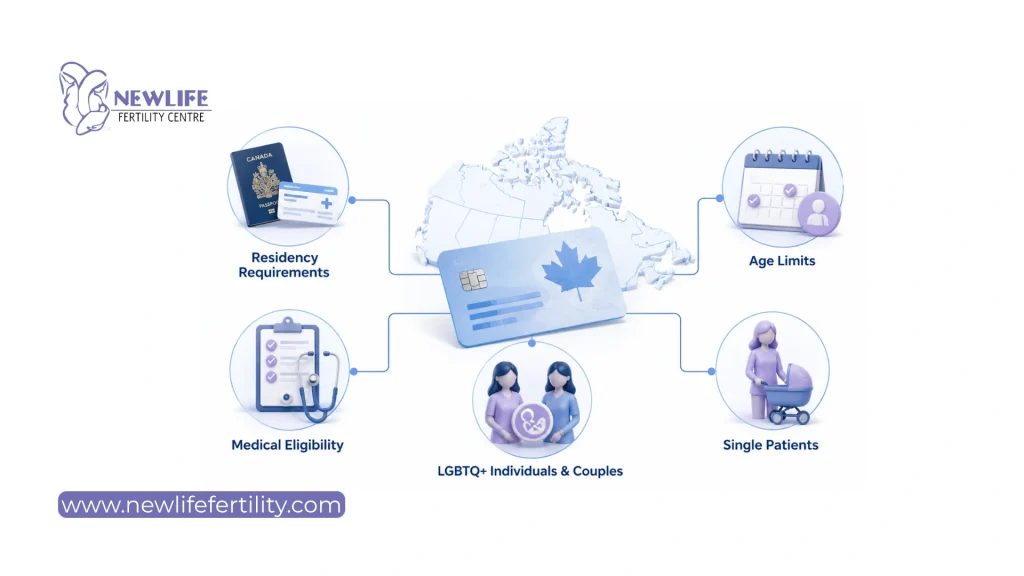
Residency requirements
Every program on this list requires provincial residency and a valid health card or provincial ID, depending on the program. You can’t access Quebec’s RAMQ funding while living in Ontario, and vice versa.
Age limits
Most funded-cycle programs cap eligibility somewhere in the early 40s. Ontario and BC sit around 41 to 43, Quebec around 41 to 42. Tax credit programs generally don’t apply an age limit at all, since they’re reimbursing costs rather than gating access to a procedure.
Medical eligibility
Programs vary in how strictly they define infertility, but most require a documented medical basis for treatment, confirmed through your fertility clinic.
LGBTQ+ individuals and couples
Where a funded cycle exists, eligibility is explicitly not tied to gender, sexual orientation, or relationship structure. Ontario, Quebec, and BC’s programs all state this directly. This also applies to reciprocal IVF, where one partner’s eggs are used and the other partner carries the pregnancy.
Single patients
Single women are eligible for the same funded programs as couples, generally with donor sperm. This is treated the same as any other path to parenthood under these provincial programs.
Is the first round of IVF free in Canada?
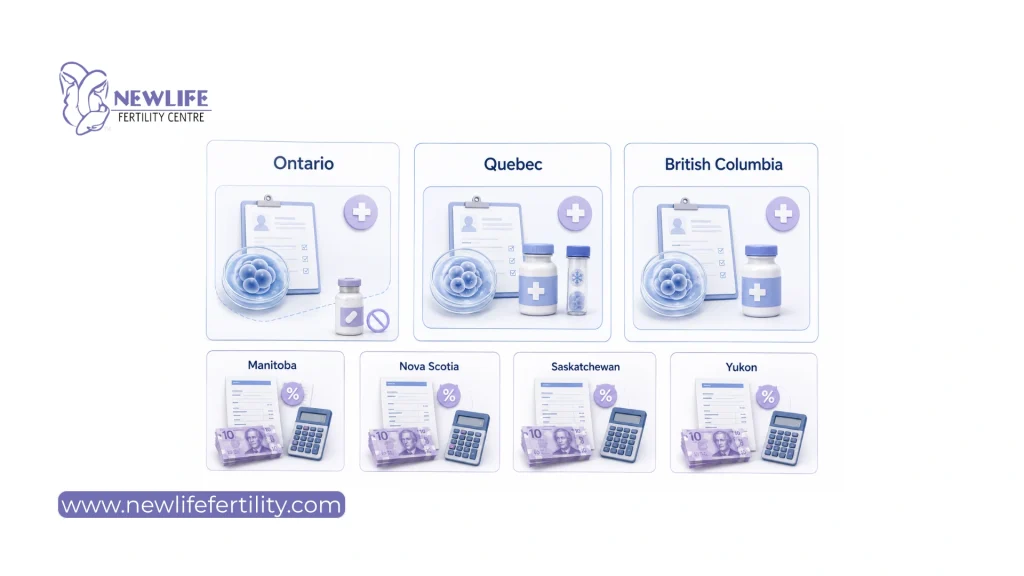
It can be, in the provinces that fund a cycle directly, though “free” still comes with some fine print.
Ontario
Your first (and only lifetime) funded cycle covers the core procedure. You’ll still pay for medication, which the province estimates at roughly $5,000 per cycle, plus anything like genetic testing or storage.
Quebec
This is the closest to a true “free first cycle” in Canada, since RAMQ funding includes medication and a year of embryo storage on top of the procedure itself.
Other provinces
In BC, your funded cycle includes medication, which puts it closer to Quebec’s model than Ontario’s. In every tax-credit province (Manitoba, Nova Scotia, Saskatchewan, Yukon), you pay upfront and claim a percentage back afterward, so nothing is free at the point of treatment, even if a meaningful chunk eventually comes back to you.
Important exceptions
✅ If you’re under the age cutoff and meet residency requirements, your funded cycle is likely close to free in Ontario, Quebec, or BC.
❌ If you’ve already used a previous funded cycle, need a second round, or live in Alberta, the territories outside Yukon, or simply prefer a different clinic than your funded program offers, you’re looking at private rates.
What IVF costs are not covered?
Even the most generous provincial programs leave gaps. Here’s what typically falls outside funded coverage across Canada.
- Fertility medications (covered in Quebec and BC, not in Ontario)
- Donor sperm or donor eggs
- PGT-A (preimplantation genetic testing)
- Embryo freezing and long-term storage beyond what’s included
- Additional IVF cycles beyond your one funded attempt
- Frozen embryo transfers, in provinces where these aren’t bundled into the original funded cycle
This is exactly why two people in the same province, both technically “covered,” can end up with very different final bills.
How much does private IVF cost in Canada?
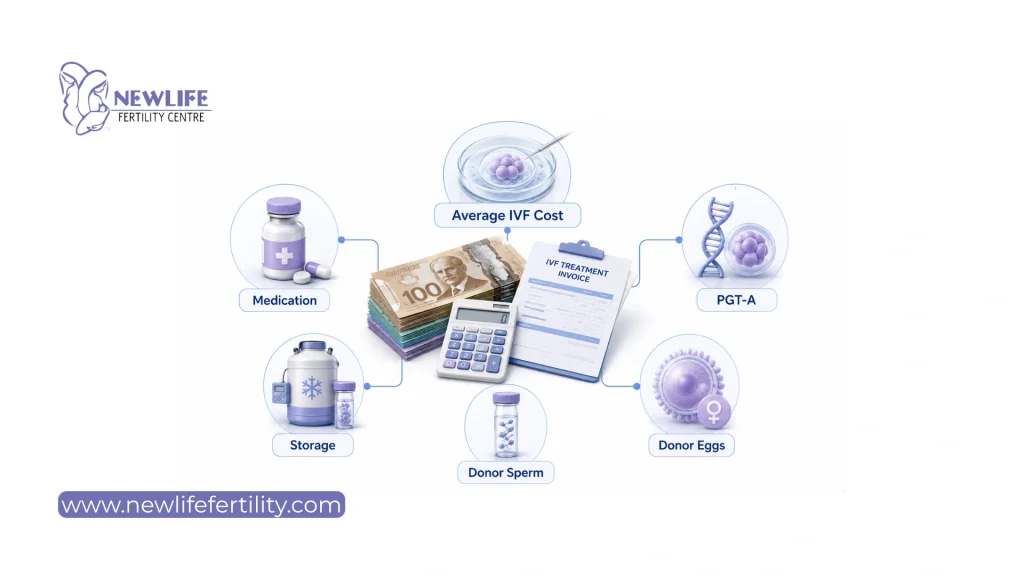
Average IVF costs
A single private IVF cycle in Canada typically runs $15,000 CAD to $20,000 CAD, though it’s common to see total costs climb toward $25,000 CAD to $30,000 CAD once add-ons are included. Advocacy groups and clinics across the country generally cite $20,000 CAD as the realistic baseline for one round.
Additional treatment costs
| Add-on | Typical Cost |
| Fertility medication | $5,000–$8,000 per cycle |
| Genetic testing (PGT-A) | Around $3,000 |
| Embryo, egg, or sperm storage | Around $700/year |
| Donor sperm | Several hundred dollars per vial |
| Donor eggs | $10,000+ |
Most people need more than one cycle to achieve a live birth, which is the real reason this adds up the way it does. A funded first cycle helps enormously, but it’s rarely the entire financial picture.
Should you wait for publicly funded IVF or choose private treatment?

This is one of the hardest, most personal calculations in this whole process, and there’s genuinely no universally right answer.
Benefits of funded IVF
The obvious one is cost. A fully funded cycle in Quebec or BC, including medication, can save you close to $20,000 CAD compared to going private. Even Ontario’s narrower coverage still removes the single biggest line item from your bill.
Waiting lists
This is the tradeoff that doesn’t show up in any funding chart. Wait times for funded cycles in Ontario have stretched past a year, and at points during higher demand, closer to two years. For some patients, particularly those closer to the upper age cutoffs, that wait carries its own real cost.
When private IVF may make more sense
If you’re close to an age cutoff, if you’ve already used your funded cycle, if you live somewhere without a program at all, or if the wait simply doesn’t fit your timeline, private treatment isn’t a consolation prize. It’s a legitimate path that gives you more control over timing, clinic choice, and protocol.
What if you don’t qualify for publicly funded IVF?
If you’ve read this far, you already know the honest version of this story: where you live in Canada genuinely changes what IVF costs you, sometimes by tens of thousands of dollars.
If you’re in Quebec, Ontario, or BC and you meet the criteria, that’s worth taking full advantage of. If you’ve already used your funded cycle, you’re in Alberta, or your timeline simply can’t wait out a long waitlist, that doesn’t mean you’re out of options. It means the next right step looks a little different than the one you’d hoped for.
This is exactly where NewLife Fertility can help. Our team works with patients navigating every stage of this, whether that’s making the most of a provincial program, planning a self-funded cycle, or exploring paths like reciprocal IVF, donor treatment, or surrogacy when a funded cycle alone doesn’t get you to the family you’re picturing.
Book your free consultation and let’s figure out what makes sense for you, together.
Frequently asked questions about free IVF in Canada
Not universally. It depends entirely on your province. Quebec, Ontario, and British Columbia each fund one IVF cycle, while several other provinces offer tax credits instead, and Alberta currently offers neither.
The procedure itself is covered through the Ontario Fertility Program, but medication and any add-ons like genetic testing are not included, so there’s still an out-of-pocket cost even on a “funded” cycle.
Yes, in a specific and limited way. OHIP funds one IVF cycle per person, for life, through the Ontario Fertility Program, but medication, donor materials, and storage fall outside that coverage.
Yes. Every province that funds a cycle, including Ontario, Quebec, and BC, explicitly states that eligibility does not depend on gender, sexual orientation, or relationship structure. This includes reciprocal IVF for couples where both partners are able to carry a pregnancy.
Yes, single women can access the same funded programs as couples, typically using donor sperm, under the same provincial eligibility rules.
You’re not automatically entitled to a second funded cycle in most provinces. At that point, your options are private treatment for additional cycles, or, in provinces like Quebec, applying the income-based tax credit toward further costs.
No. Every provincial program requires provincial residency and a valid health card, so international patients are not eligible for funded treatment and would need to pursue private care.