Behind every IVF egg retrieval there is not just a medical chart but a story. A story of someone’s fear, someone’s strength, and someone’s hope.
On Reddit, there are many women like you or partners who share their experiences or in the search of a similar journey who have already been through all these ups and downs, many people opened their hearts about what this step felt like for them. Reading their words feels like sitting in a circle where everyone is honest, raw, and human.
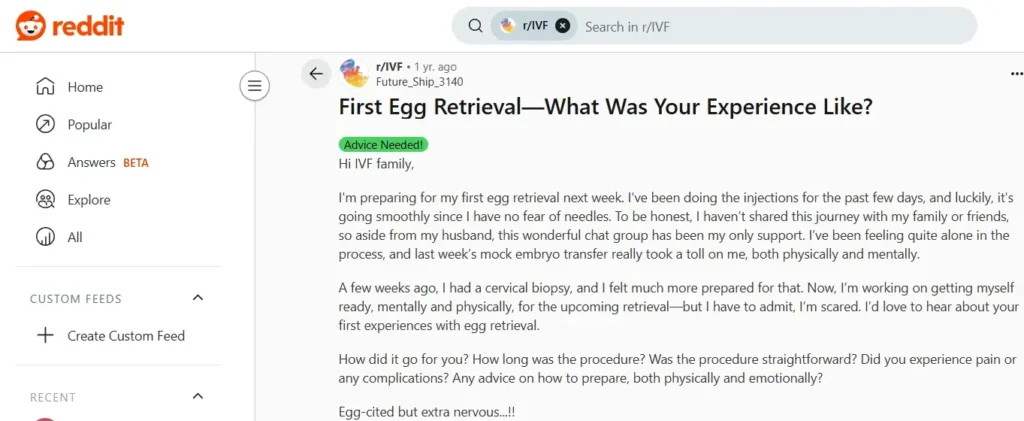
One woman who shared her feelings on Reddit “First egg retrieval and what was your experience like?”
“How she felt alone, hiding her journey even from family, sharing it only with her husband. The injections didn’t scare her, but the silence did. She was nervous, scared, but still hopeful even calling herself “egg-cited.” Her words remind me that courage often looks like trembling but still moving forward.”
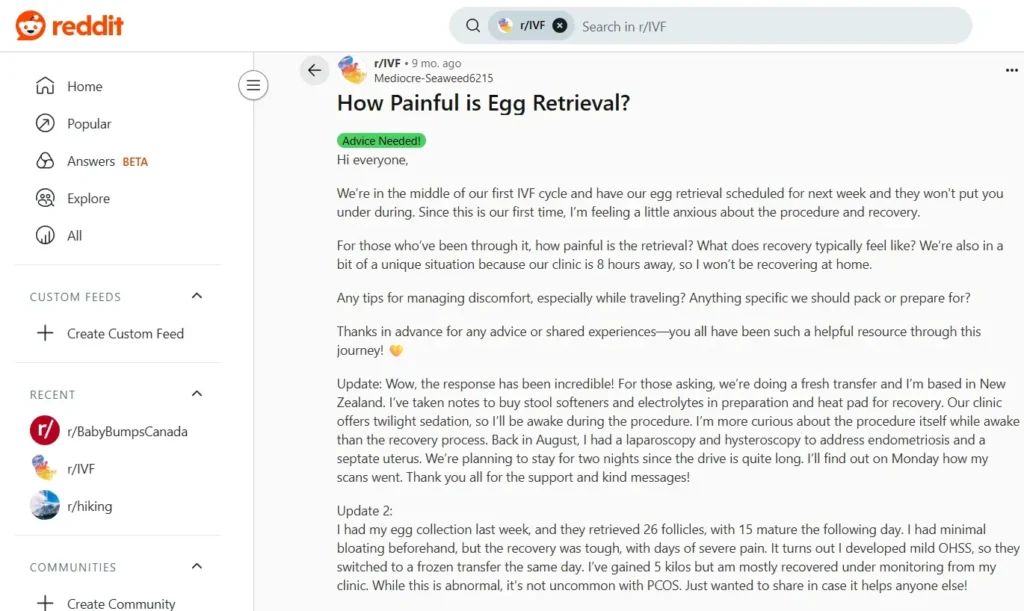
Another journey I found on Reddit is related to “How Painful is Egg Retrieval?”
“This couple feared the procedure itself. She asked strangers for advice on managing pain and recovery. Later, she shared how she had 26 follicles retrieved, 15 matured, but also developed mild OHSS (ovarian hyperstimulation syndrome). Her journey shows that recovery can be tough, but sharing the truth helps others feel prepared.”
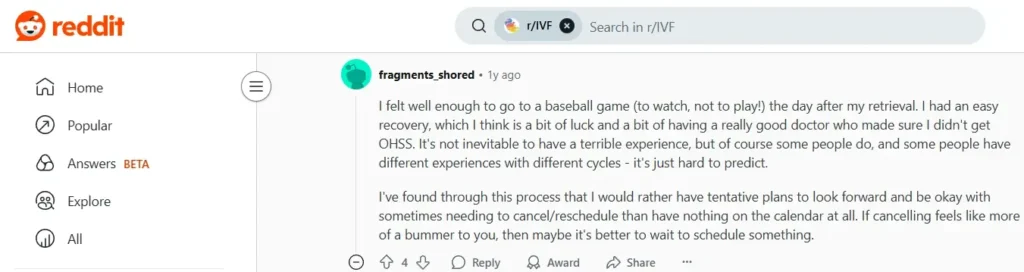
And then, someone else shared simply on Reddit….
“That they went to a baseball game the very next day after retrieval. For them, the pain was minimal, this proof that experiences are never the same. Some journeys are harder, some are easier, but all are real.”
These experiences highlight a crucial truth: the journey is deeply personal. While no two stories are the same, understanding the egg retrieval process itself can transform fear into confidence.
This guide will walk you through everything you need to know about the IVF egg retrieval procedure in Canada. We’ll cover the preparation, what to expect on the day, and what recovery really looks like.
What is an IVF egg retrieval?
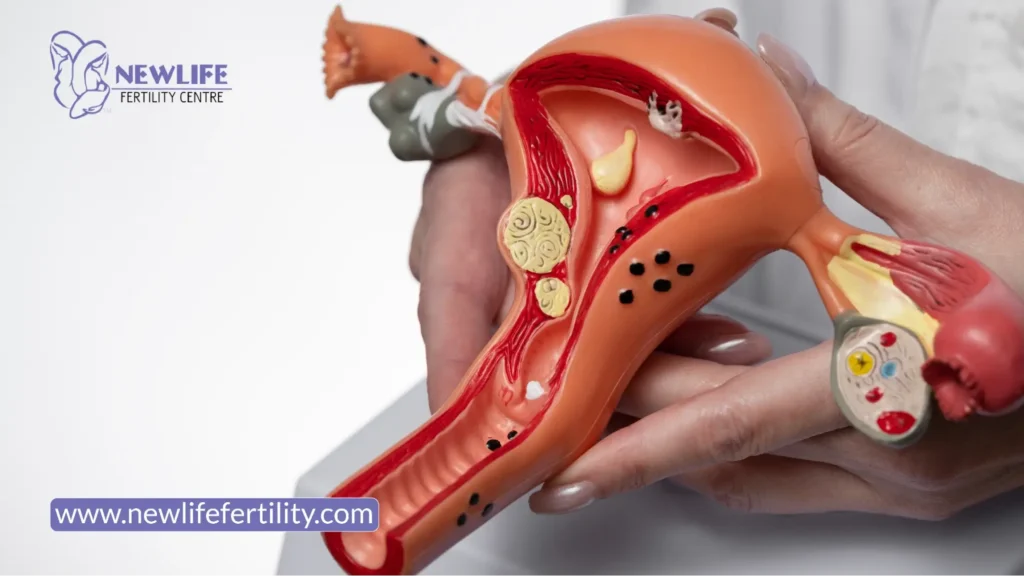
Egg retrieval procedure in IVF (in vitro fertilization, which means fertilization “in glass”) is the step where mature eggs are collected from a patient’s ovaries. Once retrieved, these eggs are fertilized with a partner’s or donor’s sperm in a laboratory to create embryos.
Think of it as gathering the tiny seeds of life that will later have the chance to grow into a baby. While it sounds technical, egg retrieval is simple in that we just take out the body part or cells just to make them grow outside the body until they form into mature embryos, which is a way to take what the body already makes and give it the best chance in the lab.
How to prepare for your egg retrieval procedure

Getting ready for your egg retrieval starts about 10–12 days before the procedure. Your Canadian fertility clinic will give you a clear plan. This plan usually has the following steps:
Ovarian stimulation
You will give yourself hormone shots. These medicines help your ovaries make many eggs at one time, instead of just one egg like in a normal month.
Monitoring appointments
You will go to the clinic for blood tests and transvaginal ultrasounds. These tests help the doctors check how your follicles (the small sacs that hold the eggs) are growing. This makes sure the timing of your procedure is just right.
The “Trigger Shot”
About 36 hours before your egg retrieval, you will take one last hormone injection. This special shot tells your eggs to finish growing so they are ready.
Day-of instructions
On the day of your procedure, the clinic will ask you not to eat or drink for about eight hours. You should wear loose, comfortable clothes. You also need someone to drive you home, because you will be given medication and won’t be able to drive yourself.
The egg retrieval procedure: A step-by-step guide

The egg removal IVF procedure is quick and usually takes only 20–30 minutes. It is done at your fertility clinic, and you can go home the same day. Here is what happens:
Guided aspiration
The doctor uses a transvaginal ultrasound probe to see your ovaries. A thin needle is connected to this probe.
Egg collection
The doctor gently moves the needle through the vaginal wall and into each mature follicle in your ovaries.
Follicle aspiration
The needle uses soft suction to pull out the fluid from each follicle. This fluid has the eggs inside.
Lab analysis
The fluid is quickly given to an embryologist in the lab next door. They check the fluid under a microscope to find and count the eggs, then put them into a culture dish to wait for fertilization.
After the procedure
You will rest in a recovery area for about an hour before going home. Some mild cramping, like period pain, is normal. A heating pad and over-the-counter medicine can help you feel better.
After the procedure: What happens to the eggs?
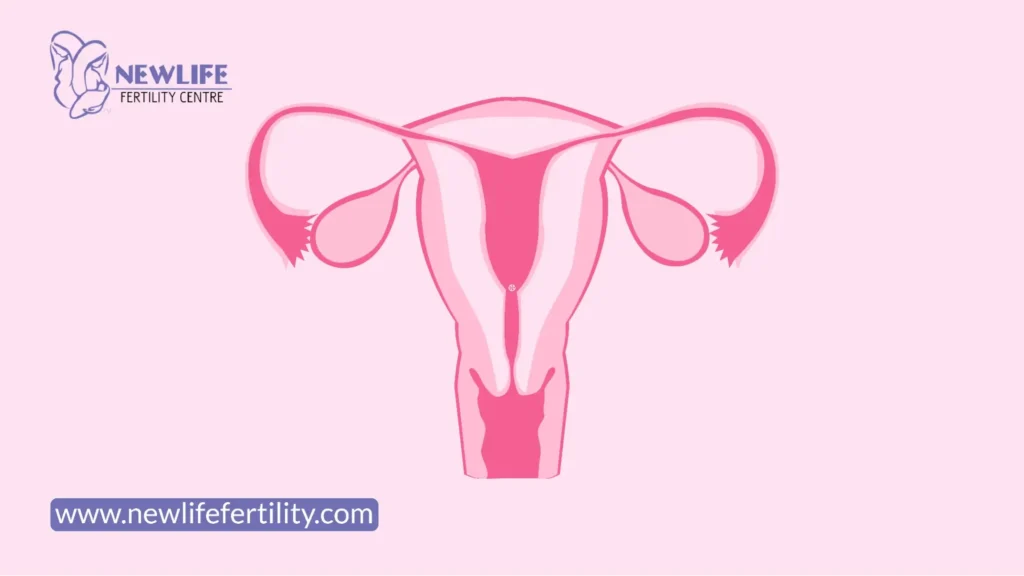
While you are resting and recovering, the important work starts in the embryology lab.
Fertilization: On the day of the IVF egg removal, the mature eggs are joined with sperm from either your partner or a donor. This can be done in two ways:
Conventional fertilization: The eggs and sperm are placed together in a dish, and fertilization happens naturally.
ICSI (Intracytoplasmic Sperm Injection): An embryologist puts one healthy sperm directly into each egg. This method is used when there are worries about sperm quality.
Embryo development: The next day, the embryologist checks how many eggs were fertilized. These become embryos. The embryos are then kept in a special incubator to grow for 3 to 6 days.
Embryo transfer or freezing: After the embryos grow, the best-quality one(s) can be placed into the uterus in a fresh transfer. But in many Canadian clinics, the embryos are frozen (cryopreserved). Later, a frozen embryo transfer (FET) is planned. This gives your body time to rest after the stimulation medications.
Risks and side effects of egg retrieval

The egg retrieval procedure is very safe, but it is good to know about possible side effects and risks.
Common side effects
Most side effects are mild and go away in a few days. These may include:
- Bloating and a heavy or full feeling
- Mild cramping, like period cramps
- Light spotting or vaginal discharge
- Constipation
Rare complications
It’s very unusual to see these rare complications.
Ovarian Hyperstimulation Syndrome (OHSS)
Sometimes, the ovaries react too strongly to fertility medicines. This can make them swell and feel painful. Your clinic will watch you closely to lower this risk.
Bleeding or Infection
Because a needle is used in the procedure, there is a very small chance of bleeding or infection. Severe problems are very rare, especially with an experienced medical team.
Recovery after the egg retrieval procedure

Most women recover within 48 hours. Here are a few tips to help you feel more comfortable:
Rest: Plan to relax for the rest of the day after your procedure.
Hydrate: Drink plenty of fluids, especially water and electrolyte-rich drinks.
Use a heating pad: A warm heating pad on your abdomen can work wonders for cramping.
Avoid strenuous activity: Your doctor will likely advise you to avoid heavy lifting, high-impact exercise, and sexual intercourse for about a week to allow your ovaries to return to their normal size.
Emotional well-being
It is normal to feel many emotions after your egg retrieval, like relief, worry, hope, or even disappointment. The hormone changes in your body can also affect your mood. Be gentle with yourself and your partner during this time. Talking with your partner, a close friend, or a fertility support group can help you feel better. Remember, you are not alone on this journey. ❤️
Your journey is more than just an egg retrieval procedure
The egg retrieval is an important medical step, but the real story is the courage it takes to reach this point.
It shows in the quiet moments, taking a deep breath before an injection, driving nervously to a monitoring appointment, or holding on to hope even when it feels hard. Everyone who goes through this journey shows strength, vulnerability, and resilience. That strength, whether loud or quiet, deserves respect.
And to the partners and loved ones: you are not just watching from the side. You are part of the journey. Your support is in the small things, holding a hand, listening after a tough day, or saying, “We’re in this together.” These moments of care can turn fear into connection.
Achieve parenthood with expert care through NewLife Fertility Centre IVF services.
At NewLife Fertility, we know this journey is about more than medicine. It is about people. Our mission is to give not only expert care but also a safe and kind space where you feel seen, supported, and strong at every step.
When you feel ready to take the next step, we are here to walk with you.
📞 Book your free consultation with NewLife Fertility.
FAQs: Your egg retrieval questions answered
No, you will not feel pain during the procedure. Your care team will take steps to keep you comfortable.
After the medication wears off, it is normal to have mild cramping, bloating, or light spotting. Most people say it feels like period cramps. A heating pad and simple pain medicine can help. These feelings usually go away in a day or two.
The number of eggs is different for everyone. It depends on your age, your ovarian reserve (how many eggs are left in your ovaries), and how your body reacts to the stimulation medicines. Some people may have 5 eggs collected, while others may have more than 20.
In Canada, the average is about 10–15 eggs in one cycle. But remember, it’s not just about numbers. A smaller group of healthy, mature eggs is better than a large group of lower-quality eggs. Your doctor will choose the treatment plan that works best for you.
Recovery is usually fast. Most people feel much better within 24–48 hours. It’s normal to feel tired, bloated, or crampy on the day of the procedure, but rest and hydration help you recover quickly.
Most patients can return to their normal, non-strenuous activities in a couple of days. Listen to your body and give yourself the time you need to rest.
Yes, many people return to work the next day, especially if their job is not physically hard.
But if you can, it’s a good idea to take at least one day off to rest. If you still feel crampy or bloated, that extra rest can make you feel better. Try not to plan anything too stressful for the first two days after your procedure.
Your care team will keep you as comfortable as possible during the 20–30 minute procedure.
Because of the medication, you may feel sleepy for a few hours afterward. You might not drive yourself home. You will need a responsible adult to take you home. The effects of the medicine usually wear off by the next morning.