Planning for reciprocal IVF is a bit like planning for a home down payment.
You know it’s one of the biggest investments you’ll ever make, so before moving forward, you want a clear picture of the costs involved and whether there are ways to reduce them.
For many same-sex female couples, reciprocal IVF offers something truly unique. One partner provides the eggs, while the other carries the pregnancy, allowing both partners to play a direct role in bringing their child into the world.
Along with the excitement often comes an important question:
“How much does reciprocal IVF actually cost in Canada?”
The answer depends on several factors, including fertility testing, medications, donor sperm, embryo freezing, insurance coverage, and where you receive treatment.
Understanding these costs upfront can make the process feel far less overwhelming and help you plan with confidence.
Below, we’ll break down the average cost of reciprocal IVF in Canada, what is included, potential funding and insurance options, and ways to make treatment more affordable.
How much does reciprocal IVF cost in Canada?
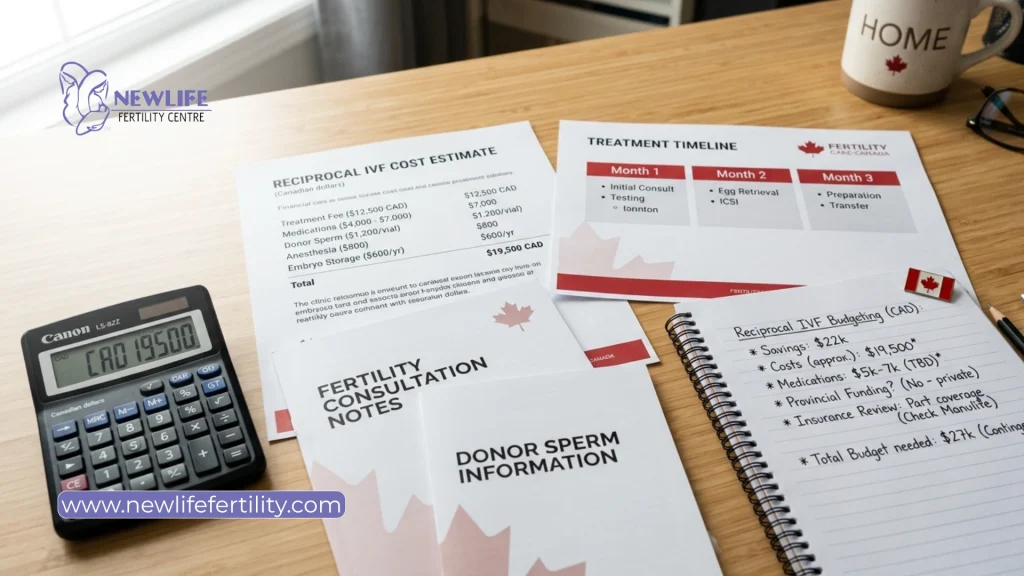
Most couples in Canada can expect to spend between CAD 20,000 and CAD 35,000 for a complete reciprocal IVF cycle.
This estimate typically includes fertility testing for both partners, donor sperm, ovarian stimulation medications, egg retrieval, laboratory fertilization, embryo transfer, and embryo freezing or storage fees where applicable. Without medications, the base cost of a reciprocal IVF cycle generally ranges from CAD 12,000 to CAD 18,000.
The total cost varies from couple to couple. Factors such as age, ovarian reserve, medication requirements, donor sperm selection, additional genetic testing, and the fertility clinic you choose can all influence the final price.
The table below provides a general overview of the expenses associated with reciprocal IVF in Canada.
| Expense | Typical Cost Range |
| Fertility testing (both partners) | CAD 800 to CAD 2,500 |
| Donor sperm | CAD 1,000 to CAD 2,500 |
| IVF cycle (clinic fees) | CAD 8,000 to CAD 15,000 |
| Medications | CAD 3,000 to CAD 7,000 |
| Embryo transfer | CAD 1,000 to CAD 3,000 |
| Embryo freezing | CAD 500 to CAD 1,500 |
| Annual storage fees | CAD 500 to CAD 1,000 per year |
| Total estimated cost | CAD 20,000 to CAD 35,000+ |
These figures are estimates only. Your actual costs will depend on your treatment plan, clinic fees, insurance coverage, and the province where you receive care.
Why is reciprocal IVF more expensive than traditional IVF?

Yes, reciprocal IVF is generally more expensive than traditional IVF because two partners are medically involved in the treatment process.
In a traditional IVF cycle, one person undergoes fertility testing, ovarian stimulation, egg retrieval, and embryo transfer. With reciprocal IVF, both partners require evaluations and treatment planning.
The partner providing the eggs undergoes ovarian stimulation and egg retrieval, while the partner carrying the pregnancy needs fertility testing, uterine assessment, and endometrial preparation before embryo transfer. This means additional consultations, monitoring appointments, bloodwork, ultrasounds, and medications compared to a standard IVF cycle.
As a result, reciprocal IVF often costs more than traditional IVF, even though many parts of the treatment process are similar.
For example, a standard IVF cycle in Canada typically costs between CAD 10,000 and CAD 15,000, excluding medications. Reciprocal IVF can add CAD 5,000 to CAD 10,000 or more in additional expenses due to dual-partner testing, monitoring, donor sperm, and the coordination required to prepare both partners for treatment.
While the higher cost can be significant, many couples feel the ability for both partners to participate directly in the family-building journey makes reciprocal IVF a meaningful investment.
What is included in the cost of reciprocal IVF?
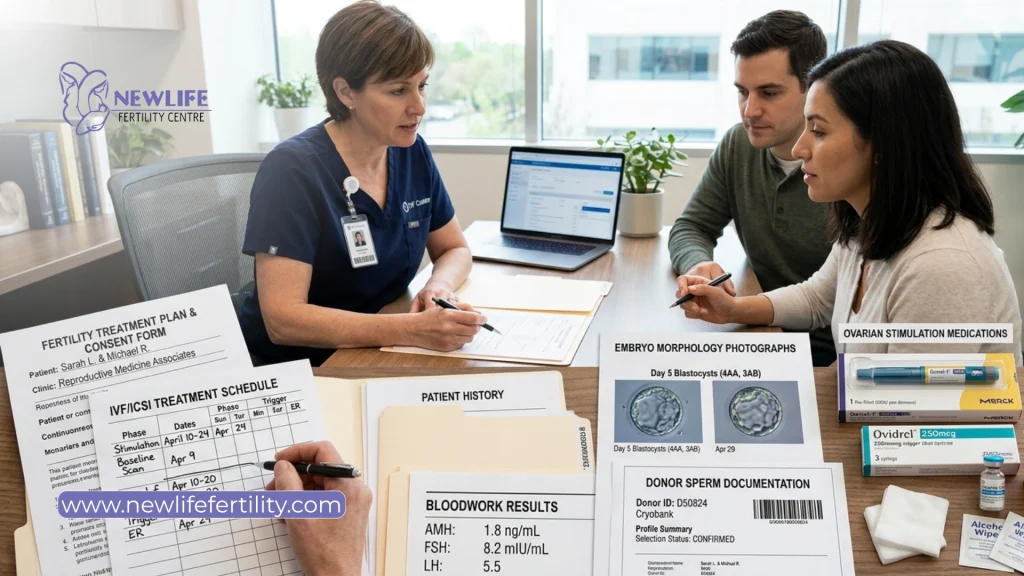
The total cost of reciprocal IVF is made up of several separate expenses. While the exact fees vary between clinics, most treatment plans include the following components.
Initial fertility consultations
Both partners will meet with a fertility specialist to review their medical history, discuss family-building goals, and create a personalized treatment plan. Consultation fees typically range from CAD 200 to CAD 500 per appointment, although some clinics include them in their treatment packages.
Fertility testing for both partners
Reciprocal IVF requires fertility assessments for both the egg provider and the partner who will carry the pregnancy. Testing may include bloodwork, hormone panels, ultrasounds, ovarian reserve testing, and uterine evaluations.
Estimated cost: CAD 800 to CAD 2,500
Donor sperm costs
Because reciprocal IVF requires donor sperm, most couples purchase sperm from a licensed Canadian or international sperm bank. Costs vary based on the donor and sperm bank selected.
Estimated cost: CAD 1,000 to CAD 2,500 per vial
Ovarian stimulation medications
The egg provider takes fertility medications to stimulate the ovaries and encourage the development of multiple mature eggs. Medication costs vary depending on dosage requirements and treatment response.
Estimated cost: CAD 3,000 to CAD 7,000
Egg retrieval procedure
Once the eggs are ready, they are collected during a minimally invasive egg retrieval procedure. This fee is often included in the clinic’s IVF package but may sometimes be billed separately.
Estimated cost: CAD 2,000 to CAD 5,000 (if not included)
Laboratory fertilization and embryo development
Retrieved eggs are fertilized using donor sperm and monitored in the laboratory as embryos develop. This stage typically includes fertilization, embryo culture, and embryology services.
Estimated cost: Usually included in the IVF cycle fee
Embryo transfer
After embryo development, one embryo is transferred to the partner carrying the pregnancy. Depending on the clinic and treatment plan, this may be a fresh or frozen embryo transfer.
Estimated cost: CAD 1,000 to CAD 3,000
Embryo freezing and storage fees
Additional embryos can be frozen for future use. Most clinics charge a one-time freezing fee followed by annual storage fees.
Estimated cost: CAD 500 to CAD 1,500 for freezing, plus CAD 500 to CAD 1,000 per year for storage
Understanding these individual costs can help you budget more accurately and avoid unexpected expenses during treatment.
Sample reciprocal IVF cost breakdown for a Canadian couple

To give you a better idea of what to expect, let me share an example of the costs associated with a typical reciprocal IVF cycle for a couple in their early 30s. Actual costs will vary depending on your clinic, treatment plan, medication requirements, and whether additional services are needed.
| Treatment component | Estimated cost |
| Fertility testing (both partners) | CAD 1,500 |
| Donor sperm (1 vial) | CAD 1,800 |
| IVF cycle (base clinic fee) | CAD 12,000 |
| Medications | CAD 5,000 |
| Frozen embryo transfer (FET) | CAD 2,000 |
| Embryo freezing | CAD 800 |
| First-year storage | CAD 600 |
| Total estimated cost | ~CAD 23,700 |
This example represents a relatively straightforward treatment cycle without significant complications or additional procedures. Some couples may spend less, while others may face higher costs due to medication needs, genetic testing, multiple embryo transfers, or additional fertility treatments.
The key takeaway is that most couples should budget for a total investment in the range of CAD 20,000 to CAD 35,000 for a complete reciprocal IVF cycle in Canada.
Is reciprocal IVF covered by insurance in Canada?

Insurance coverage for reciprocal IVF varies significantly depending on your provider, employer benefits, and province. While most private insurance plans do not cover the IVF procedure itself, some may help reduce the overall cost by covering certain treatment-related expenses.
What private insurance may cover
Many extended health insurance plans provide coverage for fertility-related services, including:
- Fertility medications
- Diagnostic bloodwork
- Hormone testing
- Monitoring ultrasounds
- Specialist consultations
Medication coverage can be particularly valuable, as fertility drugs alone often cost between CAD 3,000 and CAD 7,000 per cycle.
Because coverage varies between plans, it’s important to review your benefits carefully and contact your insurance provider before beginning treatment.
What insurance usually does not cover
In many cases, private insurance plans do not cover:
- IVF procedures
- Egg retrieval and laboratory fees
- Donor sperm purchases
- Embryo transfer procedures
- Embryo freezing and storage fees
However, some employers now offer dedicated fertility benefits that extend beyond traditional insurance coverage.
How much can insurance reduce reciprocal IVF costs?
The amount you save depends entirely on your plan. Couples with medication coverage may reduce their out-of-pocket expenses by several thousand dollars, while those with comprehensive fertility benefits may receive coverage for a larger portion of treatment costs.
Before starting reciprocal IVF, request a detailed breakdown of your fertility benefits and confirm exactly which services, medications, and procedures are covered. Understanding your coverage early can help you budget more accurately and avoid unexpected expenses later in the process.
Provincial funding programs for reciprocal IVF in Canada

Public funding for IVF varies by province and can significantly reduce the cost of treatment for eligible patients. However, funding rules, eligibility requirements, and covered services differ across Canada.
Ontario
Ontario currently funds one IVF cycle through OHIP for eligible patients. This funding may cover certain treatment costs, although medications, embryo storage, and other related expenses are often not included.
Same-sex female couples may be eligible for funded treatment, but eligibility is determined based on provincial guidelines and individual circumstances. Your fertility clinic can help you understand whether you qualify.
Quebec
Quebec offers fertility-related tax credits and financial support programs, but coverage and eligibility requirements can change over time. If you live in Quebec, speak with your fertility clinic or healthcare provider to determine what assistance may be available.
Other provinces
Funding options are more limited in most other provinces. While provinces such as British Columbia and Alberta may cover certain consultations, diagnostic tests, or fertility-related services through provincial healthcare programs, direct IVF funding is generally unavailable.
Because fertility funding policies can change, always confirm the latest eligibility requirements and available benefits with your fertility clinic or provincial health authority before making treatment decisions.
How much is reciprocal IVF with insurance?
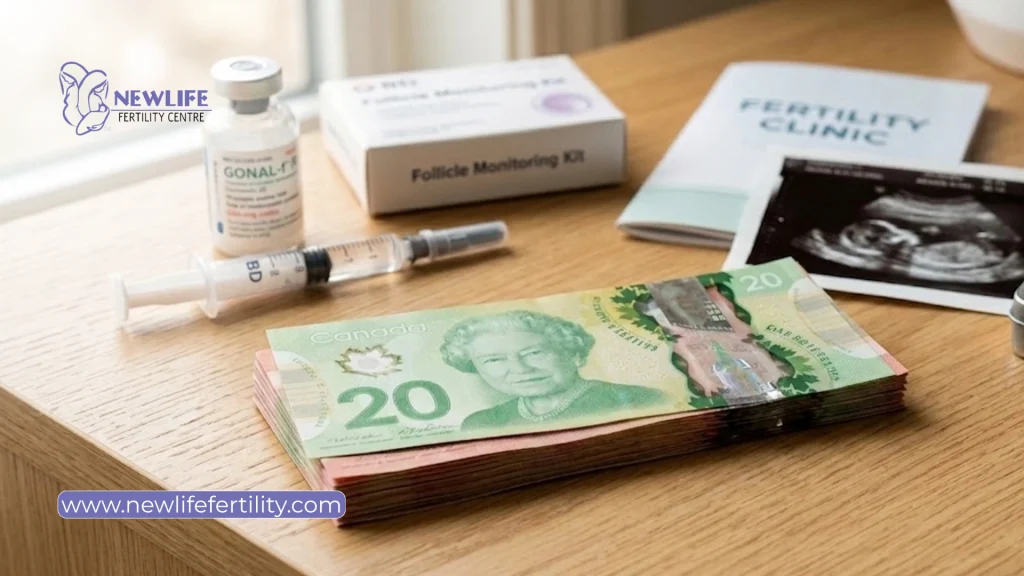
The amount you’ll pay out of pocket depends on the type of insurance coverage available to you. While most Canadian insurance plans do not cover the IVF procedure itself, some may cover fertility medications, diagnostic testing, or other treatment-related expenses.
The table below illustrates how insurance coverage can affect the overall cost of a reciprocal IVF cycle.
| Coverage scenario | Estimated out-of-pocket cost |
| No insurance coverage | CAD 20,000 to CAD 35,000+ |
| Partial medication coverage | CAD 15,000 to CAD 28,000 |
| Comprehensive fertility benefits | CAD 10,000 to CAD 20,000 |
These estimates are intended as a general guide and will vary based on your treatment plan, clinic fees, medication requirements, and insurance benefits.
If your employer offers fertility benefits or your insurance plan includes medication coverage, you may be able to reduce your overall treatment costs by several thousand dollars. Reviewing your benefits before starting treatment can help you better understand your financial responsibilities and identify potential savings opportunities.
Are there payment plans available for reciprocal IVF?

Yes, many fertility clinics and healthcare financing providers offer payment plans that can help make reciprocal IVF more manageable financially.
Depending on the clinic, you may be able to spread treatment costs over several months through in-house financing programs or third-party healthcare financing services. These options can reduce the need for a large upfront payment and help couples begin treatment sooner.
Before choosing a payment plan, it’s important to review:
- Interest rates and financing charges
- Monthly payment amounts
- Repayment terms and timelines
- Cancellation and refund policies
- Any additional fees or administrative charges
Some financing programs offer low-interest or promotional financing options, while others may have higher borrowing costs. Comparing multiple options and understanding the total repayment amount can help you choose the solution that best fits your budget.
If you’re considering reciprocal IVF, ask your fertility clinic about available financing programs and whether they partner with healthcare lenders that specialize in fertility treatment financing.
Grants and financial assistance for reciprocal IVF

While reciprocal IVF can be a significant financial investment, there may be programs available to help reduce some of the costs.
Fertility grants
Some fertility clinics, foundations, and nonprofit organizations offer grants to help individuals and couples pay for fertility treatment. These programs typically provide partial funding and often require an application process.
LGBTQ+ family-building grants
Certain organizations offer financial assistance specifically for LGBTQ+ individuals and couples pursuing parenthood. These grants are designed to support family-building journeys and may help offset a portion of treatment expenses.
Employer fertility benefits
An increasing number of employers now offer fertility benefits as part of their health and wellness packages. These benefits may help cover fertility medications, IVF treatment costs, or related services. Reviewing your employee benefits package or speaking with your HR department can help you understand what support is available.
Charitable assistance programs
Some charitable organizations and fertility-focused foundations provide financial assistance to eligible applicants. While funding is often limited and competitive, these programs can help reduce out-of-pocket expenses for qualifying families.
Although grants and financial assistance programs rarely cover the full cost of treatment, they can help make reciprocal IVF more affordable. Exploring all available funding opportunities before starting treatment may help reduce your overall financial burden.
How to make reciprocal IVF more affordable

Although reciprocal IVF can be expensive, there are several ways to reduce your out-of-pocket costs and make treatment more financially manageable.
Review your insurance coverage
Before starting treatment, contact your insurance provider to understand exactly what is covered. Fertility medications, diagnostic testing, bloodwork, and monitoring appointments may be included in some plans and could save you thousands of dollars.
Compare clinic pricing
Treatment costs can vary between fertility clinics. Request a detailed cost estimate and ask what services are included in the quoted price so you can make an informed comparison.
Ask about medication savings programs
Some clinics and pharmacies offer discount programs, manufacturer rebates, or financial assistance for fertility medications. These programs can help lower one of the largest expenses associated with reciprocal IVF.
Explore provincial funding options
Depending on where you live, you may qualify for provincial fertility funding or other financial assistance programs. Understanding your eligibility before beginning treatment may help reduce overall costs.
Check employer fertility benefits
Many employers now offer fertility benefits as part of their health plans. Reviewing your employee benefits package or speaking with your HR department can help you identify available coverage and reimbursement opportunities.
Consider financing options
If paying for treatment upfront is challenging, financing programs may help spread costs over time. Exploring payment plans before treatment begins can make it easier to budget and avoid financial stress during the process.
Taking these steps early can help you better understand your financial options and potentially reduce the overall cost of reciprocal IVF.
Is reciprocal IVF worth the cost?

Whether reciprocal IVF is worth the cost is a deeply personal decision that depends on your goals, priorities, and family-building journey.
Unlike other fertility treatments, reciprocal IVF allows both partners to participate directly in the process. One partner provides the eggs, while the other carries the pregnancy, creating a unique shared experience that many couples find meaningful.
For many same-sex female couples, the value of reciprocal IVF extends beyond the medical procedure itself. It offers an opportunity for both partners to play an active role in bringing their child into the world and to share in the experience of parenthood from the very beginning.
While the financial commitment can be significant, many couples feel the emotional connection, shared involvement, and ability to build a family together make the investment worthwhile.
Ultimately, the decision comes down to what matters most to you. Understanding the costs, available funding options, and potential benefits can help you determine whether reciprocal IVF is the right path for your family.
What does the cost of reciprocal IVF in Canada mean for your family-building journey?
By now, you should have a clearer understanding of how much reciprocal IVF costs in Canada, what expenses are involved, and what options may be available to help reduce the financial burden.
While reciprocal IVF can be a significant investment, it also offers something truly unique. It allows both partners to play an active role in creating and growing their family, making the journey deeply personal and meaningful for many couples.
The exact cost of treatment will depend on factors such as your fertility health, medication needs, donor sperm selection, insurance coverage, and whether you qualify for any provincial funding or financial assistance programs. That’s why the most accurate estimate will always come from a fertility specialist who can assess your individual situation and create a personalized treatment plan.
At NewLife Fertility, we understand that family-building decisions involve both emotional and financial considerations. Our experienced team is committed to providing transparent guidance, answering your questions, and helping you explore the options available to you every step of the way.
If you’re considering reciprocal IVF and would like a personalized assessment of your treatment options and expected costs, book your free consultation with NewLife Fertility today. We’re here to help you move forward with clarity, confidence, and a plan that’s tailored to your family’s goals.
Frequently asked questions about Reciprocal IVF cost in Canada
A single complete cycle typically costs between CAD 20,000 and CAD 35,000, depending on medications, donor sperm, clinic fees, and whether additional procedures like embryo freezing are involved.
The average out-of-pocket cost for Canadian couples is approximately CAD 23,000-CAD 28,000 per cycle, including medications and donor sperm.
With partial medication coverage, costs can drop to CAD 15,000-CAD 28,000. With comprehensive fertility benefits, some couples pay as little as CAD 10,000-CAD 20,000 out of pocket.
Yes. Because two partners are medically involved, reciprocal IVF typically costs CAD 5,000-CAD 10,000 more than a standard single-partner IVF cycle.
Most private insurance plans in Canada do not cover the IVF procedure itself but may cover medications, diagnostic testing, and monitoring. Coverage varies significantly by employer and plan.
In Ontario, OHIP may fund one IVF cycle for eligible patients. Same-sex couples should speak directly with their clinic to determine whether they qualify, as eligibility criteria are specific.
Yes. Fertility grants, LGBTQ+ family-building grants, and charitable programs exist to help couples manage costs. Availability and eligibility vary by organization.
Yes. Many clinics offer payment plans, and third-party healthcare financing companies work specifically with fertility patients. Always review interest rates, repayment terms, and total cost before committing.