Have you ever pictured the moment when a woman first sees those two pink lines on a pregnancy test?
Ask any mother, and she will tell you that instinct is filled with shyness, joy, a nervous glance, even a quiet dance of excitement. It’s a memory that stays forever, not just for her but for her partner and family too. Women are blessed with the unique power to carry life within them, yet for many, this gift doesn’t come easily.
There isn’t a single reason why pregnancy can be difficult. Today, we know infertility challenges can come from both men and women. Thankfully, medical science has advanced sufficiently to offer solutions, and one of the most effective is in vitro fertilization (IVF).
Doctors often recommend IVF when other fertility treatments don’t bring results. It’s commonly suggested in cases of blocked fallopian tubes, severe male infertility, or ovulation issues such as PCOS. IVF may also help women with endometriosis or couples who have struggled with unexplained infertility for years.
During this journey, people often turn to the internet, searching for answers to questions like, ‘What is the process of IVF?’ or ‘What is the IVF success rate?’ And that’s exactly where guidance matters.
As one of Canada’s trusted fertility clinics, we believe it is our responsibility to simplify this knowledge and help couples understand every step. In this guide, we’ll talk about Lupron with IVF, its benefits, how it supports treatment, and what couples can expect in terms of success rates and protocols.
Let’s dive into IVF and Lupron: from the basics to the protocol
Lupron is often used in IVF to help regulate hormones and prevent premature ovulation, ensuring the best timing for egg retrieval. It plays a key role in many treatment protocols, tailored to each patient’s fertility journey.
What is IVF?

In vitro fertilization (IVF) is a type of assisted reproductive technology that helps people facing infertility. It involves stimulating the ovaries to release eggs, fertilizing them with sperm in a lab, and then transferring embryos into the uterus.
IVF is often used when fallopian tubes are blocked, endometriosis affects fertility, ovarian function is low, or male infertility is present. The IVF process takes a few weeks and includes hormone injections, monitoring, and embryo transfer.
Some doctors use Lupron with IVF to control hormone levels and prevent premature ovulation. Many ask, “How does Lupron help with IVF?” It allows better timing and can improve outcomes. Research shows higher chances of IVF success with the Lupron protocol, though results vary by individual.
What is Lupron (Leuprolide acetate)?
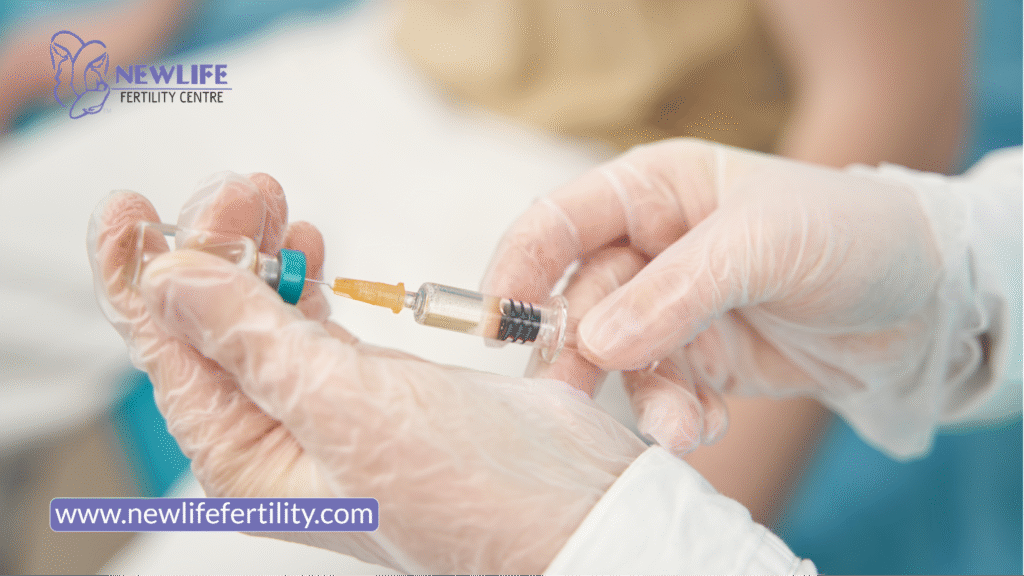
Lupron is an injectable fertility drug often used in IVF protocols, especially during the down-regulation phase. It belongs to a class of IVF medications called GnRH agonists, which temporarily pause the body’s natural hormone cycle. By doing this, Lupron stops the pituitary gland from signaling the ovaries to release eggs too early.
This controlled pause allows fertility specialists to use gonadotropins for stimulating the ovaries more uniformly, helping multiple follicles mature together. When doctors include Lupron with IVF, it helps manage timing and creates better conditions for egg retrieval. Dosage and timing vary depending on your treatment plan, so always follow your doctor’s or nurse’s instructions.
Lupron with IVF timeline explained.

Lupron is commonly prescribed to help prevent premature ovulation and to give fertility specialists more control over the treatment process. By regulating the cycle, Lupron creates the right conditions for ovarian stimulation and egg retrieval.
Most patients begin Lupron injections about a week before ovarian stimulation. In some cases, birth control pills are used beforehand to regulate the cycle and lower the risk of ovarian cysts. If prescribed, Lupron usually starts a few days before stopping birth control.
Once started, Lupron injections are taken daily and continued throughout the stimulation phase, though the dose is often reduced once stimulation begins. Patients typically stop Lupron 36 hours before egg retrieval or right before the hCG trigger shot, which prepares the eggs for final maturity. This careful timing supports better IVF success with the Lupron protocol.
Leuprolide acetate mechanism: how does Lupron help with IVF
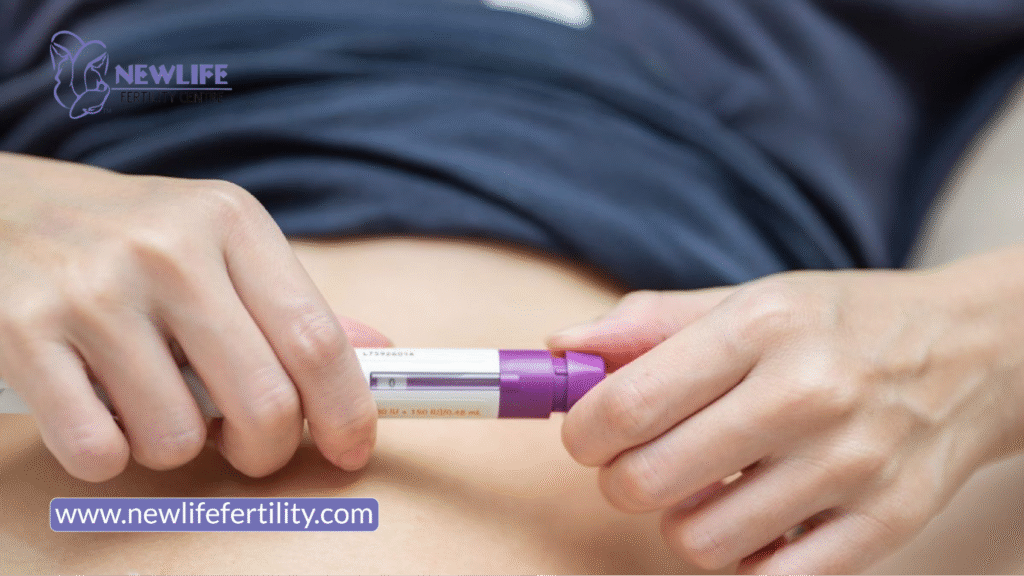
Lupron, also known as leuprolide acetate, works by targeting GnRH receptors in the brain. When Lupron first binds to these receptors, it causes the release of follicle-stimulating hormone (FSH) and luteinizing hormone (LH). This initial response creates a short “flare” effect, leading to a temporary rise in FSH, LH, and testosterone.
However, because Lupron has a strong affinity for these receptors, it stays bound and prevents further receptor activation. Over time, this blocks the pituitary gland from releasing new FSH and LH, which suppresses natural hormone fluctuations and ovulation.
This mechanism explains how Lupron helps with IVF. By first creating a flare and then suppressing hormone release, Lupron allows fertility specialists to control ovarian stimulation, reduce premature ovulation, and improve the chances of IVF success with the Lupron protocol.
Lupron works in IVF protocols.

Lupron functions differently depending on the IVF protocol used. In the antagonist (short) protocol, Lupron is often used as a trigger shot rather than for suppression. This is why many fertility specialists refer to it as an antagonist (short) protocol. In this approach, medications like GnRH antagonists (Cetrotide or Ganirelix) are used to suppress ovulation. According to the ASRM Fertility Medication guide, the IVF cycle is around 7–14 days shorter than the long protocol.
A major benefit of using Lupron is, it can reduce the risk of ovarian hyperstimulation syndrome (OHSS). While OHSS occurs in about 3–6% of IVF cycles when using traditional hCG triggers, said to an NCBI published study, Lupron as a trigger greatly minimizes this complication. Mild OHSS symptoms can affect up to 30% of women, but moderate to severe cases are far less common, as noted byCDC ART data. Because hCG remains active in the body for up to 10 days, it can worsen OHSS, whereas Lupron creates a short, sharp LH surge that matures eggs safely without overstimulating the ovaries.
This safety advantage makes Lupron highly valuable in IVF protocols, especially for women at higher risk of OHSS, such as those with PCOS or high AMH levels. By choosing this approach, many couples have reported improved outcomes and stronger chances of IVF success with the Lupron protocol.
Benefits of Lupron during frozen embryo transfer

Lupron is often used to improve outcomes in frozen embryo transfer (FET) cycles by regulating hormones and creating the best possible environment for implantation. For many patients, understanding how Lupron helps with IVF can make treatment decisions easier. By suppressing natural hormones, controlling cycle timing, and preparing the uterine lining, Lupron for frozen embryo transfer plays a vital role in boosting implantation chances.
How Lupron can help during IVF
Lupron plays a key role in improving IVF outcomes by regulating hormones, preventing premature ovulation, and optimizing the uterine environment for embryo transfer.
Cycle regulation
Lupron helps fertility specialists gain full control of the menstrual cycle. This ensures that the uterus is prepared at the right time for embryo transfer, which is especially important for patients with irregular cycles. Precise cycle regulation allows for better synchronization between the uterine lining and embryo development, improving IVF success with the Lupron protocol in FET cycles.
Prevention of premature ovulation
One of the biggest risks in IVF is premature ovulation. Lupron prevents the early release of LH and FSH, which could disrupt timing and lower success rates. By keeping ovulation under control, Lupron ensures the embryo is transferred when the uterus is most receptive. This step is key to maximizing IVF success with the Lupron protocol.
Endometrial preparation
For implantation to occur, the uterine lining must be receptive. Lupron with IVF creates a stable hormonal environment that allows the endometrium to develop optimally. According to the ASRM Fertility Medication Guide, proper endometrial preparation is one of the strongest benefits of adding Lupron to frozen embryo transfer protocols.
Improved embryo transfer timing
Timing is everything in FET. With the Lupron protocol IVF, doctors can align the embryo’s development stage with the uterine lining’s readiness. This precise synchronization directly improves frozen embryo transfer success rates with Lupron, especially in patients who have experienced failed transfers before.
Better outcomes in complex cases
Patients with hormonal imbalances, irregular cycles, or previous failed IVF attempts often benefit most. In these situations, Lupron for frozen embryo transfer provides more control, increases predictability, and supports higher success rates. Many clinics worldwide report stronger outcomes when Lupron is included as part of the IVF protocol.
Lupron protocols for frozen embryo transfer

Lupron is used in different protocols for frozen embryo transfer (FET) based on a patient’s medical history and fertility needs. The two main protocols include:
Long protocol
In this approach, Lupron is started in the luteal phase of the menstrual cycle, typically a few weeks before the FET cycle begins. It works by suppressing the natural hormone cycle, preventing premature ovulation, and allowing controlled preparation of the endometrial lining. Once suppression is confirmed, estrogen and progesterone are introduced to prepare the uterus for embryo transfer.
This protocol is widely used for patients who require precise cycle regulation for improved implantation chances. It is particularly beneficial for individuals with hormonal imbalances or irregular cycles, as it helps create a more predictable environment for embryo implantation. The long protocol is one of the most commonly used approaches in fertility treatments due to its effectiveness in optimizing uterine receptivity.
Microdose Lupron flare protocol
This protocol involves a lower dose of Lupron given at the start of the cycle, stimulating the ovaries rather than suppressing them completely. It is typically used in cases where ovarian response needs enhancement, such as in patients with diminished ovarian reserve or poor response to previous IVF cycles.
Although not as commonly used for FET, it can be beneficial in specific scenarios where hormonal support is required to improve endometrial receptivity. This approach allows for some natural hormone production, which can be useful in cases where excessive suppression may hinder ovarian function. While primarily used in fresh IVF cycles, it may sometimes be incorporated into modified FET protocols for improved hormonal balance.
Lupron side effects

Like many fertility medications, Lupron, used in IVF, can cause certain side effects. Most of these are temporary and manageable, but it is important for patients to know what to expect. The most common reactions are related to the injection site, such as mild redness, stinging, burning, or general discomfort after the shot.
In addition to injection site irritation, some patients may experience one or more of the following Lupron side effects during IVF treatment:
- Hot flashes
- Headaches
- Increased sweating or night sweats
- Fatigue or low energy
- Upset stomach (including nausea or diarrhea)
- Breast swelling or tenderness
- Mild acne or skin changes
For most patients, these Lupron side effects are short-lived and do not interfere with the overall treatment process. However, if symptoms feel severe or persistent, it’s always best to consult your fertility specialist. Your doctor may adjust the dose or recommend supportive care to keep you more comfortable during treatment.
IVF success with Lupron protocol: what the research shows

Several studies have demonstrated how using Lupron with IVF can improve outcomes, particularly for women with unexplained infertility or endometriosis markers. One of the most well-documented markers is BCL6 overexpression, which is linked to lower IVF success if left untreated.
According to the ASRM Fertility Medication Guide, Lupron (leuprolide acetate) is often prescribed in IVF to suppress hormones and improve the chances of successful ovarian stimulation.
When women who tested positive for BCL6 received treatment with Lupron (GnRH agonist suppression) or laparoscopy before IVF, their live birth rates were significantly higher compared to untreated cases. These findings were reported in a study published on PubMed.
Success rates with Lupron or laparoscopy for BCL6-positive patients
| Patient group | Total patients | Pregnancy rate | Live birth / ongoing pregnancy | Pregnant but lost | Not pregnant |
| BCL6 Positive (overall) | 143 | 79% (113) | 64% (92) | 15% (21) | 21% (30) |
| Treated with Lupron (GnRHa) | 103 | 81% (83) | 68% (70) | 13% (13) | 19% (20) |
| Treated with laparoscopy | 40 | 75% (30) | 55% (22) | 20% (8) | 25% (10) |
Success rates for untreated BCL6-negative patients
| Patient group | Total patients | Pregnancy rate | Live birth / ongoing pregnancy | Pregnant but lost | Not pregnant |
| BCL6 Negative (untreated) | 46 | 67% (31) | 52% (24) | 15% (7) | 33% (15) |
How NewLife Fertility can guide your IVF journey with Lupron
Lupron plays an important role in many IVF and frozen embryo transfer cycles, helping regulate hormones, prevent premature ovulation, and prepare the uterine lining for successful implantation. While it may not be necessary for every patient, understanding how Lupron helps with IVF can make treatment choices clearer and outcomes stronger.
At NewLife Fertility Centre, we specialize in creating personalized fertility plans that suit your unique needs. Whether you are exploring IVF, egg freezing, or advanced fertility treatments, our team is here to provide expert care, guidance, and hope at every step of your journey.
If you are considering IVF with Lupron or want to learn more about improving your chances of IVF success with a Lupron protocol, we invite you to schedule a free consultation with our fertility specialists. Together, we can help you take the next step toward building your family with confidence.
Contact NewLife Fertility Centre today to get started.