You open your clinic portal.
And suddenly, your frozen embryo transfer plan feels a little like opening a school bag that’s been packed way too full.
There are notebooks everywhere, random papers you forgot about, pens without caps, and somehow three different schedules stuffed inside.
That’s what FET medications can feel like at first.
Progesterone. Estrogen. Aspirin. Letrozole. Prednisone. Injections. Suppositories. Timings. Dosages. Refills.
And now your brain is doing this:
“Why do I need all of these?”
“What happens if I miss one?”
“Are injections really necessary?”
“Is my protocol even normal?”
Take a breath.
What you’re feeling right now is completely normal. Almost every person preparing for a frozen embryo transfer feels overwhelmed when they first see their medication plan.
You are not alone in this.
This guide is going to walk you through everything:
- what each medication does
- why your doctor prescribed it
- what to expect from injections
- possible side effects
- and whether FET can sometimes be done with fewer medications or even without them
By the time you finish reading, that overwhelming medication list is going to make a lot more sense.
Let’s go.
Why are medications used during frozen embryo transfer?

A frozen embryo transfer is not just about placing an embryo. It’s about placing it at exactly the right moment, into a uterine lining that is perfectly prepared to receive it.
That takes hormonal precision.
Your medications are doing five things:
→ Preparing and thickening your uterine lining so the embryo has a healthy place to implant.
→ Suppressing or triggering ovulation depending on your protocol.
→ Balancing your hormone levels so your body is in the right state.
→ Supporting implantation after the transfer.
→ Maintaining early pregnancy if it works.
Miss any one of these pieces, and the timing can fall apart.
That’s why the medications matter. They’re not there to make your life complicated. They’re there to give your embryo the best possible chance.
Do all frozen embryo transfer cycles require medication?

Actually, no.
This surprises a lot of people.
There are three main types of frozen embryo transfer cycles, and each one involves very different levels of medication.
Medicated FET cycles
Medicated FET cycles use hormones, usually estrogen and progesterone, to fully control your uterine lining and the timing of the transfer. Your natural cycle is essentially paused, and the medications take over the process. This is the most common approach used in many fertility clinics.
Natural FET cycles
It follows your body’s own ovulation. There is little to no estrogen or suppression medication involved. Your clinic monitors your cycle closely, tracks ovulation, and schedules the transfer based on your body’s natural timing. Medication use is minimal and often limited to progesterone support after ovulation.
Modified natural cycles
It falls somewhere in between. Your body may ovulate naturally or with the help of a small trigger shot, while certain medications are added for extra support and timing control.
So yes, some women do go through frozen embryo transfer with very little medication or even a mostly drug-free approach, depending on the following:
- how regularly they ovulate
- their medical history
- their clinic’s protocol
- and what gives them the best chance of implantation
“Which one is right for me?”
That’s something your fertility doctor will decide based on your specific situation.
There is no universal “best” protocol here. What works well for one person may not be the right fit for someone else.
Common medications used for frozen embryo transfer
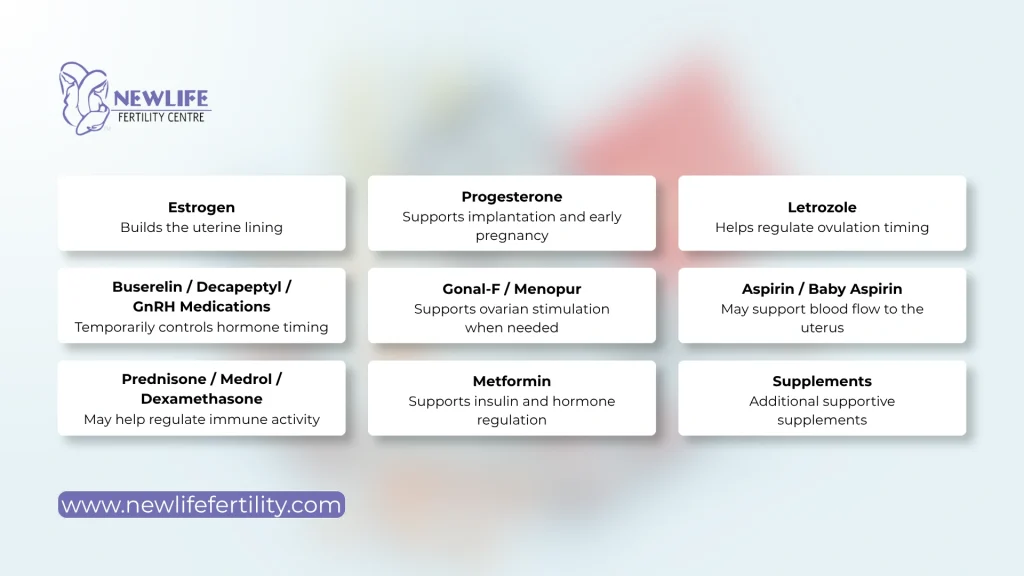
Now let’s get into the actual medications.
One by one. Plain English. No scary science.
Estrogen medications
Estrogen is usually the first medication you’ll start in a medicated FET cycle.
Its job? To thicken your uterine lining.
Think of estrogen as the builder. It lays down the foundation, creating a rich, receptive lining that the embryo will need for implantation. Your clinic will monitor lining thickness through ultrasounds during this phase, usually aiming for at least 7 to 8 mm.
Estrogen can come in a few different forms depending on your protocol:
→ Oral pills (like Estradiol) taken by mouth once or twice daily.
→ Patches worn on the skin and changed every few days.
→ Vaginal tablets or rings absorbed locally.
→ Estrogen injections, which are less common but sometimes used in hormone replacement FET protocols where oral absorption may not be reliable.
Common side effects include bloating, breast tenderness, headaches, and mood changes.
Most are annoying, but temporary and manageable.
Progesterone support
If estrogen is the builder, progesterone is the host.
Once your lining is ready, progesterone steps in to transform it into an environment that is receptive and ready for implantation. It also plays a major role in supporting early pregnancy if the transfer works.
This is arguably one of the most important medications in your entire FET cycle.
Progesterone also comes in different forms:
→ Vaginal suppositories or gel (such as Crinone or Utrogestan), inserted vaginally and absorbed directly into the uterine tissue. Messy? Yes. Effective? Also yes.
→ Intramuscular (IM) progesterone injections, usually given in the upper outer buttock muscle. These can feel uncomfortable, but they maintain very stable progesterone levels.
→ Oral micronized progesterone, used in some protocols though less commonly as the primary form.
“Do I really need the injections? Can’t I just use suppositories?”
This is one of the most common questions patients ask.
And honestly, it depends on your clinic’s protocol and your individual case. Some clinics use only vaginal progesterone. Others strongly prefer injections. Some combine both.
There is no universal “best” option. What matters most is that your progesterone levels are properly supported.
Common side effects include fatigue, bloating, breast tenderness, vaginal irritation, and emotional heaviness.
And yes, feeling emotionally overwhelmed during progesterone support is very common.
Hang in there.
Letrozole for frozen embryo transfer
Letrozole is an ovulation-stimulating medication commonly used in modified natural FET cycles.
Its role is to help your body ovulate on a more predictable schedule.
This is especially common for women with PCOS or irregular cycles where natural ovulation timing may be difficult to track reliably.
Letrozole works by temporarily lowering estrogen levels, which signals the brain to release hormones that stimulate ovulation.
Your clinic then monitors the response through ultrasound scans.
Common side effects are usually mild and may include:
- hot flashes
- mild headaches
- bloating
If your protocol includes Letrozole, it does not mean something is wrong.
It usually means your clinic is trying to support a more natural-style cycle while keeping timing controlled and predictable.
Buserelin, Decapeptyl, and GnRH medications
These are suppression medications.
Their job is to prevent your body from ovulating at the wrong time.
In some protocols, before estrogen begins, patients take medications like Buserelin or Decapeptyl to temporarily “quiet” the hormonal system.
This gives your clinic more control over:
- when your cycle begins
- when estrogen starts
- and when transfer timing happens
Some patients worry:
“Is this switching my ovaries off?”
Temporarily, yes. But only briefly, and it is reversible.
Once the next phase begins, your body responds to the hormones being provided through your FET medications.
Common side effects can feel similar to mild menopause symptoms:
- hot flashes
- mood changes
- sleep disruption
Not fun. But temporary.
Gonal-F and Menopur
Gonal-f and Menopur are gonadotropin medications commonly associated with IVF stimulation cycles.
In a standard frozen embryo transfer cycle, many patients will not need them.
But in some modified natural FET protocols, they may be used at low doses to gently stimulate follicle development or support ovarian activity.
If you see these medications in your protocol, it does not automatically mean you are repeating a full IVF stimulation cycle.
The role of these medications depends entirely on your clinic’s plan for your body and your ovulation pattern.
Aspirin and baby aspirin
Low-dose aspirin, usually around 75 to 100 mg, is sometimes included in FET protocols.
The idea is that it may help support blood flow to the uterus and improve implantation conditions.
Research results are mixed. Some studies suggest benefits, while others show limited differences.
So:
- Is it prescribed for everyone? No.
- Is it a miracle medication? Also no.
But because it is generally low-risk and inexpensive, many clinics use it as an additional supportive measure.
If your protocol includes aspirin, follow your clinic’s instructions carefully and usually take it with food to reduce stomach irritation.
Prednisone, Medrol, and dexamethasone
These are corticosteroid medications used in some FET protocols to help regulate immune activity around implantation.
Examples include:
- Prednisone
- Medrol
- Dexamethasone
The theory is that in certain patients, an overactive immune response may interfere with implantation.
Patients often hear “steroids” and immediately worry.
But the short-term doses used in fertility treatment are very different from long-term steroid therapy.
These medications are not prescribed casually, and not every clinic uses them routinely.
Their use is selective and sometimes debated within fertility medicine.
The important thing to know is this:
These medications are tools that may help in certain situations. They are not magical guarantees, but they also are not automatically dangerous when used appropriately under medical supervision.
Metformin for frozen embryo transfer
Metformin is commonly used in women with PCOS or insulin resistance.
It helps regulate insulin levels and may improve hormonal balance during fertility treatment.
If you were already taking Metformin before starting your FET cycle, your clinic may recommend continuing it throughout treatment.
Especially in PCOS patients, it is often used to support more stable hormone function and reduce certain treatment risks.
Supplements sometimes used during FET
Some clinics and patients also use supplements during frozen embryo transfer preparation.
Common examples include:
- CoQ10
- melatonin
- NAC (N-acetyl cysteine)
- L-arginine
These are usually taken with the goal of supporting:
- cellular energy
- blood flow
- oxidative stress balance
- hormone regulation
But it’s important to keep expectations realistic.
The evidence behind supplements in FET is mixed. Some have promising research, while others still have limited scientific support.
And most importantly:
Do not start supplements on your own without telling your clinic first.
Even “natural” supplements can interact with medications or affect your treatment protocol in ways you may not expect.
Do you need injections for frozen embryo transfer?
Let’s address this directly because it’s one of the most anxiety-inducing questions during an FET cycle.
The honest answer: not necessarily.
Many women go through a successful frozen embryo transfer using only oral medications and vaginal suppositories, with no injections at all.
Progesterone injections are the most commonly prescribed injection during FET cycles. And even then, some clinics prefer vaginal progesterone instead.
Other injections, such as:
- Buserelin
- Gonal-f
- trigger shots like Ovidrel
are usually only used in certain protocols or specific situations.
“But what if my clinic prescribes injections and I’m terrified of needles?”
First, you are definitely not the only person who feels that way.
A lot of patients begin IVF or FET feeling extremely anxious about injections.
The good news is:
- clinics usually teach you exactly how to do them
- nurses often guide patients step by step
- partners or family members frequently help
- many of the needles used for subcutaneous injections are much smaller than people expect
And while IM progesterone injections can feel more uncomfortable, they are usually very manageable with good technique, proper positioning, and support.
You really can get through this.
In fact, many people who were deeply afraid of injections before treatment later say:
“It was nowhere near as bad as I imagined.”
Medication protocol for frozen embryo transfer: A simple timeline
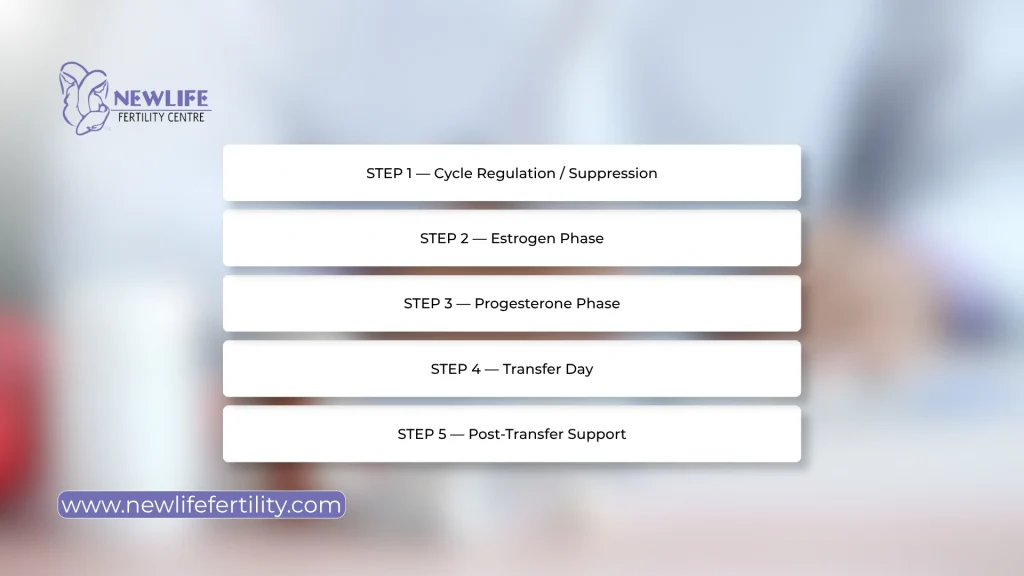
Here’s how a typical medicated FET cycle usually flows so you can understand how all the pieces fit together.
Before lining preparation
Some protocols begin with a short course of birth control pills to regulate your cycle, or a suppression medication like Buserelin to temporarily quiet your natural hormones.
Lining preparation phase
Estrogen begins here. You may take it as oral tablets, skin patches, or vaginal medication depending on your protocol.
Your clinic will monitor your uterine lining through ultrasound scans to see how well it is responding and thickening.
This phase usually lasts around 10 to 14 days.
Progesterone phase
Once your lining reaches the desired thickness, progesterone starts.
This is one of the most timing-sensitive parts of the entire cycle because progesterone opens your implantation window, the short period when the uterus is most receptive to the embryo.
Your embryo transfer is carefully scheduled around this timing.
Transfer day
The embryo is transferred into the uterus.
After transfer, you usually continue taking both estrogen and progesterone medications.
After the transfer
Most medications continue for another 10 to 14 days until your pregnancy test.
And if the test is positive, many clinics continue hormone support throughout the first trimester until the placenta is developed enough to take over hormone production naturally.
“Wait, I still need medications after a positive test?”
Yes.
And honestly, this surprises many people.
After a frozen embryo transfer, your body may not immediately produce enough progesterone on its own to support the early pregnancy.
The medications continue doing that job until the placenta becomes strong enough to take over naturally.
That’s why stopping medications too early can be risky and should only happen under your clinic’s guidance.
What are the side effects of frozen embryo transfer medications?

Let’s be honest about what you might feel during an FET cycle.
Bloating and puffiness: Very common with estrogen medications. Many women feel swollen or heavier during the lining preparation phase.
Headaches: These can happen during suppression medications or early estrogen use, especially while your hormones are shifting.
Mood swings and emotional sensitivity: This one can be especially difficult because the medications and the emotional pressure of IVF tend to hit at the same time.
Breast tenderness: Extremely common with both estrogen and progesterone support.
Fatigue: Progesterone, in particular, can make many people feel sleepy, sluggish, or emotionally heavy.
Injection site soreness: If you are taking IM progesterone injections, redness, bruising, soreness, or small lumps around the injection area are all common. Warm compresses and rotating sides usually help.
Here’s the important thing to remember:
Most of the physical symptoms you feel during a frozen embryo transfer cycle are medication-related, not signs that something is going wrong.
That does not make them less uncomfortable.
But it does mean your body is responding to the hormones being used to support implantation and early pregnancy conditions.
What happens if you miss a medication dose?

First: don’t panic.
Missing one dose does not automatically mean your cycle is ruined. But it is important to act quickly and communicate with your clinic.
→ Call or message your fertility clinic as soon as possible. Do not wait until your next appointment.
→ Do not take a double dose to “catch up” unless your clinic specifically tells you to.
→ Be honest about what medication you missed and exactly when it happened.
Timing matters most with progesterone support.
Because progesterone helps open and maintain your implantation window, long delays or missed doses can be more important than missing something like low-dose aspirin.
Your clinic will guide you based on:
- which medication was missed
- how late the dose was
- and where you are in your FET cycle
And honestly, clinics deal with this more often than you think.
You are not the first person to accidentally miss a dose, take something late, or get confused by the schedule.
The most important thing is communicating with your medical team quickly so they can help you adjust safely and appropriately.
Assisted hatching and embryo glue during frozen embryo transfer
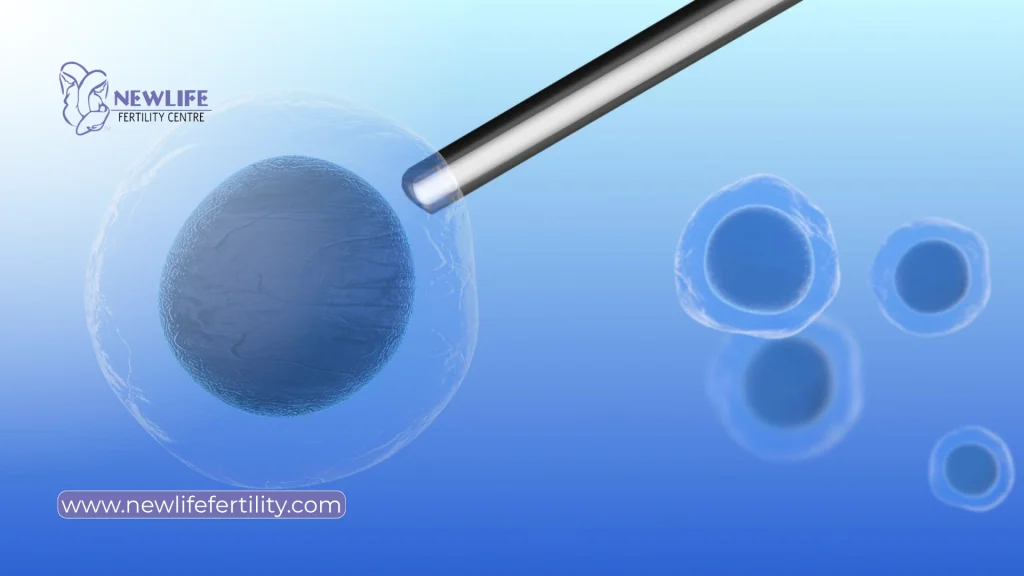
Beyond medications, your clinic may also mention two optional add-ons during your FET cycle: assisted hatching and embryo glue.
What is assisted hatching?
Before an embryo can implant, it needs to “hatch” out of its outer shell called the zona pellucida.
In some situations, especially:
- with older embryos
- in older maternal age groups
- or in women with repeated implantation failure
the shell may be thicker or harder than ideal.
Assisted hatching is a laboratory procedure where the embryologist uses a precise laser to create a tiny opening in that outer shell, helping the embryo hatch more easily before implantation.
It sounds dramatic, but the process is very controlled and carefully performed by embryology specialists.
Is assisted hatching recommended for everyone?
No.
Your clinic will usually decide based on:
- embryo quality
- age
- previous IVF history
- and implantation history
It is a supportive technique, not something every patient automatically needs.
What is embryo glue?
Despite the name, it is not actual glue.
Embryo glue is a special transfer medium, basically a solution the embryo is placed in shortly before transfer.
It contains a substance called hyaluronan, which naturally exists in the uterus and may help support embryo attachment to the uterine lining.
The idea is to create a more supportive implantation environment during transfer.
Some studies suggest embryo glue may slightly improve implantation or pregnancy rates in certain patients, but the evidence is still considered promising rather than definitive.
So if your clinic offers embryo glue:
- it may be worth discussing
- but it should not be viewed as a guaranteed success booster
Think of it as a supportive add-on, not a magic solution.
Natural vs. medicated frozen embryo transfer
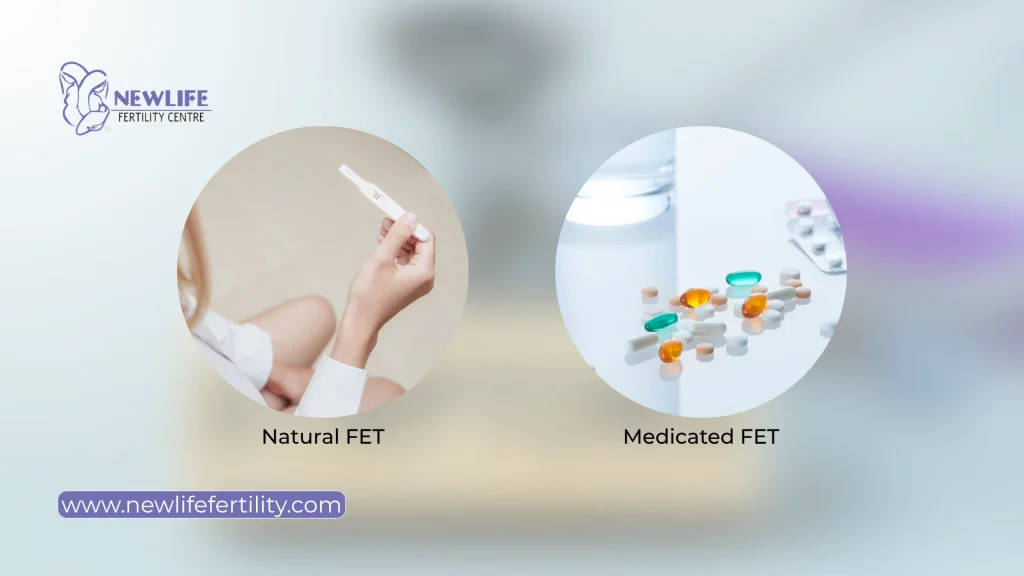
Here’s a simple side-by-side way to understand the difference.
Natural FET
- Uses fewer medications
- Follows your body’s own ovulation
- Requires close monitoring of your natural cycle
- Often works best for women who ovulate regularly
Medicated FET
- Uses more hormone support and control
- Can work even if you do not ovulate naturally
- Offers more scheduling flexibility for the clinic and patient
- Is the more commonly used approach in many fertility clinics
Neither approach is automatically better than the other.
Your doctor will usually recommend a protocol based on:
- your menstrual cycle history
- how regularly you ovulate
- your hormone patterns
- embryo timing
- and your clinic’s experience with different protocols
A lot of patients wonder:
“My friend had a natural FET with barely any medications. Why am I taking so many?”
Because your protocol is designed for your body, not someone else’s.
Different bodies.
Different fertility histories.
Different clinic approaches.
And different does not mean wrong.
Are all FET medication protocols the same?

Absolutely not.
This is something that confuses and worries a lot of people, especially when they start comparing their protocol to someone else’s online.
One clinic may use estrogen patches. Another may prefer estrogen pills.
One clinic may prescribe low-dose aspirin routinely. Another may rarely use it.
Some clinics regularly include medications like Medrol. Others may avoid corticosteroids completely.
There is no single “correct” frozen embryo transfer medication protocol that every fertility clinic follows.
Protocols are usually built around:
- clinical experience
- published research
- patient history
- hormone patterns
- and the clinic’s own treatment philosophy
So if your protocol looks different from what you saw in a forum or social media group, that is usually normal, not a red flag.
The CCRM Fertility frozen embryo transfer protocol, for example, is well known in the fertility world, but even that is not copied exactly by every clinic.
Every fertility center has its own evidence-based approach.
The most important thing is understanding why your specific medications were chosen for you.
And if you ever feel unsure or overwhelmed, ask questions.
Good fertility clinics expect patients to ask questions, and they should be willing to explain your protocol clearly.
What are your frozen embryo transfer medications really telling you?
Here’s the thing nobody tells you when you first open that medication list.
Every medication on it is a signal, not of how “complicated” your situation is, but of how carefully your clinic is trying to support your cycle.
Progesterone is not there to make your mornings harder.
Estrogen is not there to make you bloated for no reason.
The injections, the suppositories, the strict timing, all of it exists for one purpose:
To give your embryo the best possible conditions for implantation and early pregnancy.
That does not mean the process feels easy.
The side effects are real.
The emotional weight is real.
And the fear of doing something wrong, missing a dose, misunderstanding instructions, or comparing your protocol to someone else’s online is very real too.
But here’s what is also true.
You are doing more right than you probably realize.
You are asking questions.
You are showing up for appointments.
You are following a plan during one of the most emotionally exhausting experiences a person can go through.
And behind every medication, scan, and timing decision is a fertility team trying to give your transfer the strongest possible chance.
Your medications are not the obstacle.
They are part of the strategy.
So if something feels confusing, ask your clinic.
If a side effect worries you, ask your clinic.
And if you want someone to walk through your frozen embryo transfer medications, injections, or protocol in a way that actually makes sense for your specific situation, NewLife Fertility is here to help.
We support patients at every stage of the FET journey, from first-time IVF patients trying to understand a medication schedule to those navigating repeat cycles and more complex treatment plans.
No question is too small.
No concern is unimportant.
You can book your free consultation with NewLife Fertility today and get personalized guidance, clarity, and support for your next step forward.
Frequently asked questions about frozen embryo transfer medications
The most common medications used during frozen embryo transfer include estrogen to thicken the uterine lining and progesterone to support implantation and early pregnancy. Some protocols may also include medications like low-dose aspirin, Prednisone, Letrozole, Buserelin, or Metformin depending on your medical history and clinic approach.
Not always. Many women complete successful frozen embryo transfer cycles using only oral medications and vaginal progesterone. Progesterone injections are common in some clinics, but not every protocol requires them. Your doctor will recommend injections only if they fit your treatment plan and hormone support needs.
Yes. Some women go through a natural frozen embryo transfer cycle with very little medication or no hormone replacement at all. In these cases, the transfer is timed around the body’s natural ovulation cycle. Natural FET usually works best for women who ovulate regularly and have predictable menstrual cycles.
Progesterone is one of the most important medications during frozen embryo transfer because it prepares the uterine lining for implantation. It changes the lining from a growth phase into a receptive phase where the embryo can attach successfully. Progesterone also helps support early pregnancy until the placenta takes over hormone production later in the first trimester.
Letrozole is often used in modified natural FET cycles to help stimulate ovulation in a more predictable way. It is especially common in women with irregular ovulation or PCOS. The medication helps the clinic better control transfer timing while still allowing the cycle to remain closer to natural ovulation.
First, try not to panic. Missing one dose does not automatically ruin your cycle. Contact your clinic as soon as possible and tell them exactly what medication was missed and when. Do not double-dose unless your fertility team specifically tells you to. Progesterone timing is usually more critical than medications like aspirin, so quick communication with your clinic matters.
Embryo glue is a special hyaluronan-based transfer medium used by some fertility clinics during embryo transfer. Some studies suggest it may slightly improve implantation rates in certain patients, although the evidence is still not fully conclusive. It is considered a supportive add-on rather than a guaranteed way to improve success rates.