Thinking about IVF in Canada can bring a storm of emotions, hope, fear, excitement, and uncertainty all at once.
For some, beginning the IVF process feels like the very first step toward parenthood; for others, IVF treatment comes after months or years of trying naturally, or even after previous failed IVF cycles.
Couples, single parents, and LGBTQ+ families alike turn to IVF with the same dream: holding a baby in their arms.
But along with the dream comes many questions:
What is the cost of IVF in Canada?
What are the IVF success rates?
How long does the treatment take?
These aren’t just numbers or facts, they’re decisions that shape someone’s journey to becoming a parent.
And in those moments of doubt, it helps to remember that you’re not walking this road alone. Many others have faced the same questions, the same worries, and have shared their experiences openly to guide and support those just starting out.
That’s why hearing real voices matters. On platforms like Reddit, people openly share their raw IVF experiences, their struggles, fears, tiny victories, and even heartbreaks.
Reading these stories shows that IVF isn’t just a medical procedure; it’s an emotional journey shared by thousands of families worldwide. And it’s these voices that remind anyone starting this process: you are not alone.

These voices remind us that behind every medical term and procedure, there’s a real human story of couples, single mothers, and families-to-be searching for answers and holding onto hope. That’s why understanding the IVF process step by step matters so much.
What is IVF and why is it used?

In vitro fertilization (IVF) is one of the most widely known forms of assisted reproductive technology (ART). In simple terms, it’s a medical process where eggs are collected from the ovaries and then fertilized with sperm in a laboratory, and then transferred back into the uterus with the hope of achieving a pregnancy.
Couples or individuals may consider IVF for many reasons:
- Blocked or damaged fallopian tubes
- Low sperm count or poor sperm motility
- Unexplained infertility
- Age-related fertility decline
- Single parents or same-sex couples wishing to have a child
Though the science behind IVF is complex, its purpose is profoundly simple and deeply for humans to give hope and create a path to parenthood when natural conception hasn’t been possible.
IVF process explained: step by step guide
Understanding the IVF procedure can feel overwhelming at first, but breaking it down into steps makes it much easier to follow.
Let me share what in vitro fertilization process step by step typically looks like:
Initial consultation and fertility testing

The IVF journey begins with a deep consultation at a fertility clinic. This is where you meet your fertility specialist, share your medical history, and talk openly about your goals, concerns, and past experiences with conception.
To create a personalized plan, doctors usually recommend a series of fertility tests, which may include:
- Blood tests to check hormone levels like AMH, FSH, and LH that indicate ovarian reserve.
- Ultrasound scans to examine the ovaries, uterus, and antral follicle count.
- Semen analysis to assess sperm count, motility, and shape.
- Other screenings (genetic, infectious disease, or thyroid tests) if needed.
This stage is not just about medical reports, it’s also a chance for patients (whether couples, single parents, or same-sex partners) to ask questions and feel heard.
Many people find relief in knowing they are no longer navigating infertility alone, but instead have a team guiding them toward the right treatment path.
Ovarian stimulation and monitoring
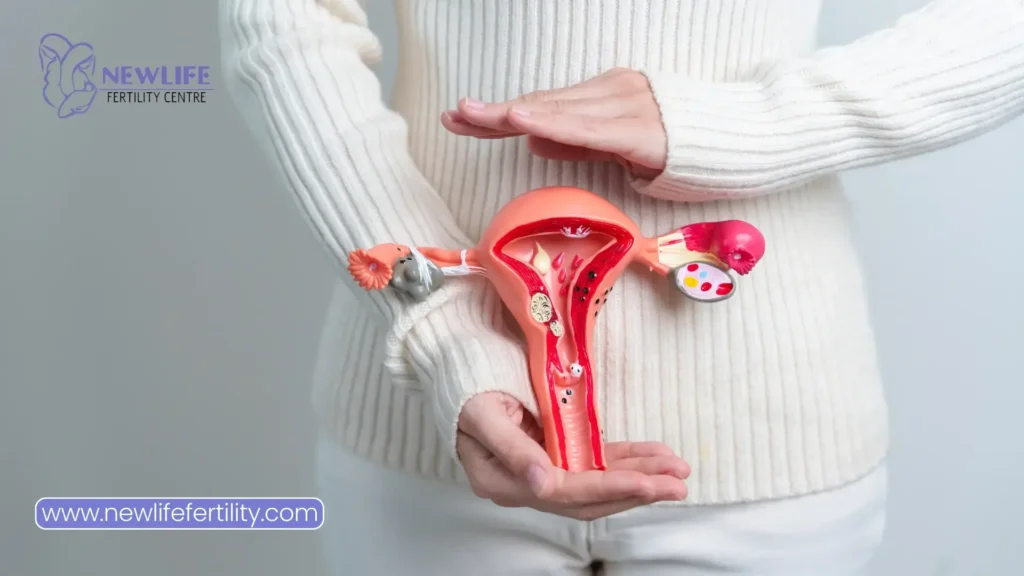
The IVF journey begins with an in-depth consultation at a fertility clinic. This is where you meet your fertility specialist, share your medical history, and talk openly about your goals, concerns, and past experiences with conception.
To create a personalized plan, doctors usually recommend a series of fertility tests, which may include:
- Blood tests are done to check hormone levels such as Anti-Müllerian Hormone (AMH), Follicle-Stimulating Hormone (FSH), and Luteinizing Hormone (LH), which together help assess ovarian reserve and overall reproductive health.
- Ultrasound scans to examine the ovaries, uterus, and antral follicle count.
- Semen analysis to assess sperm count, motility, and shape.
- Other screenings (genetic, infectious disease, or thyroid tests) if needed.
This stage is a chance for patients (whether couples, single parents, or same-sex partners) to ask questions and feel heard. Many people find relief in knowing they are no longer navigating infertility alone, but instead have a team guiding them toward the right treatment path.
Egg retrieval procedure
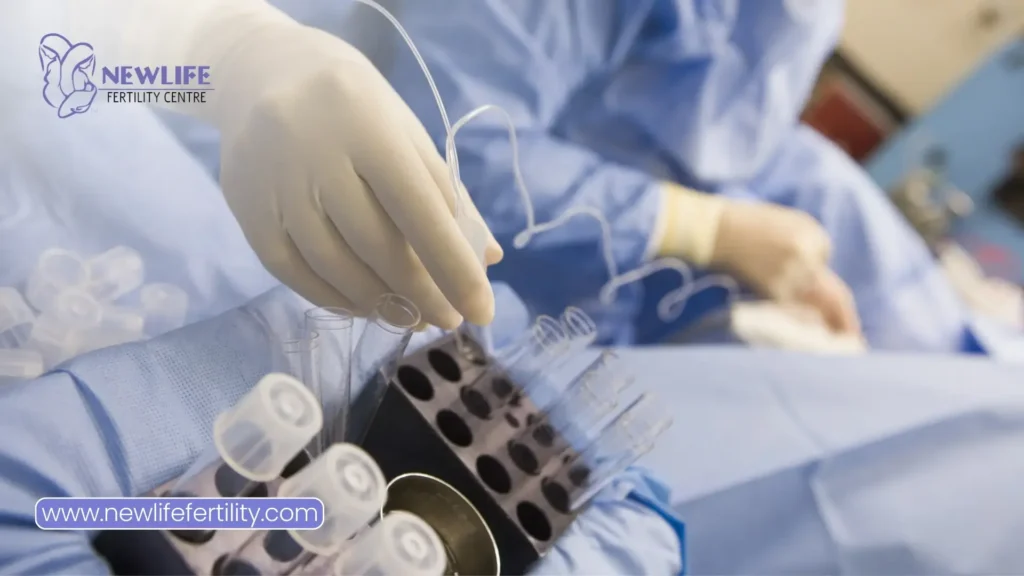
Egg retrieval procedure mainly starts when the follicles are mature, the next step is retrieving the eggs. It’s a short procedure, usually taking about 20–30 minutes, and you can go home the same day without needing to stay in the hospital.
Here’s how it works:
- Trigger shot: A final hormone injection is given about 36 hours before retrieval to help the eggs fully mature.
- Procedure: Under light sedation, a thin needle guided by ultrasound is used to collect eggs from the ovaries.
- Recovery: Patients usually rest for a few hours at the clinic and can return home the same day.
While the procedure is generally painless due to anesthesia, some women experience mild cramping or spotting afterward. The collected eggs are then handed to the embryology team for the next crucial step of fertilization.
Sperm collection and preparation

On the same day as egg retrieval, a sperm sample is collected.
- Collection: Usually, the male partner provides a semen sample through masturbation at a fertility clinic. In certain cases, sperm may be retrieved surgically by using methods like TESA (Testicular Sperm Aspiration) PESA (Percutaneous Epididymal Sperm Aspiration) or donor sperm may be used.
- Preparation: In the laboratory, the sperm is ‘washed’ to separate the healthiest and most motile ones which increases the chances of successful fertilization.
This ensures only the strongest sperm are used for the fertilization process.
Fertilization process in the lab

Once healthy eggs and prepared sperm are ready, the next stage begins in the lab:
- Fertilization: Eggs are combined with sperm in a special culture dish. In some cases, ICSI (Intracytoplasmic Sperm Injection) is used, where a single sperm is directly injected into an egg.
- Monitoring growth: Over the next 3–5 days, embryologists carefully monitor the embryos as they divide and grow.
- Embryo selection: The healthiest and best-quality embryos are chosen for transfer, while others may be frozen for future cycles.
This stage is often the most hopeful yet nerve-wracking for couples, as it determines the success of the next step.
Embryo development and selection
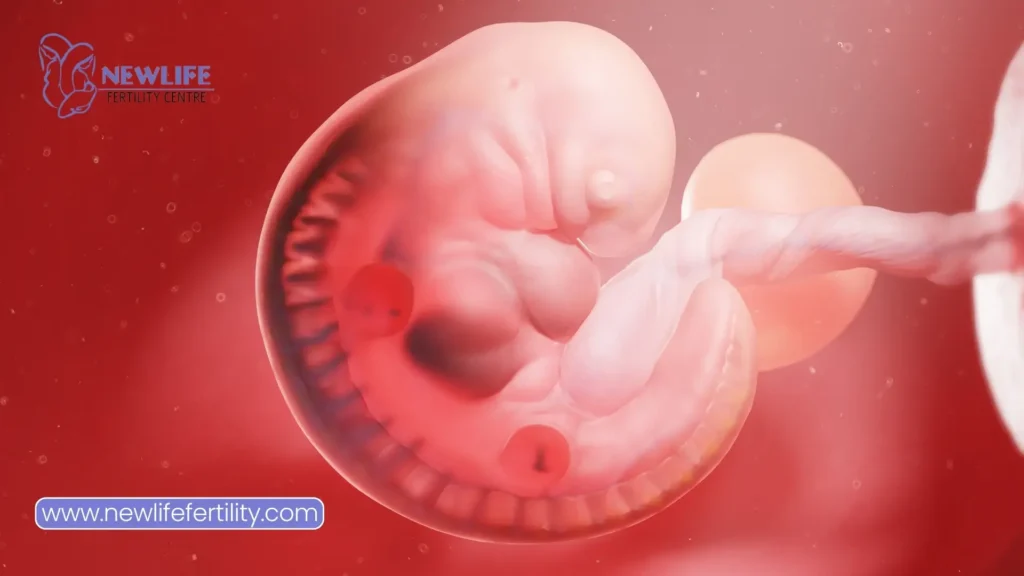
After fertilization, the embryos begin to grow in a controlled laboratory environment:
- Early cell division: Within the first few days, fertilized eggs (zygotes) start dividing into multiple cells.
- Monitoring growth: Embryologists observe the embryos daily, assessing their health and quality.
- Blastocyst stage: By day 5 or 6, embryos ideally reach the blastocyst stage, which has the highest chance of implantation.
- Selection for transfer: The best-quality embryos are selected for transfer, while additional healthy embryos may be frozen for future use.
This step is critical because embryo quality directly impacts the chances of a successful pregnancy.
Embryo transfer into the uterus

- Timing: Usually done on day 3 or day 5 after fertilization, depending on embryo development.
- Procedure: A thin catheter is gently inserted through the cervix to place the selected embryo(s) into the uterus.
- Painless process: The procedure is quick, minimally invasive, and typically does not require anesthesia.
- Rest & recovery: Patients can usually resume normal activities shortly after, though doctors may recommend light rest.
This is often the most anticipated step, as it marks the moment when the possibility of pregnancy truly begins.
Pregnancy testing and follow-up

- Pregnancy test: About 10–14 days after the embryo transfer, a blood test (β-hCG) is done to confirm whether implantation has occurred.
- Follow-up ultrasounds: If positive, an ultrasound is scheduled to check for a heartbeat and confirm a healthy pregnancy.
- Next steps: If IVF is unsuccessful, your doctor may discuss trying again, using frozen embryos, or adjusting the treatment plan.
This step brings either the joy of success or the resilience to continue the journey with renewed guidance and support.
After walking through the IVF process step by step, one of the first questions most people ask is 👇
What are my chances of success?
This is a natural concern because IVF is not just a medical procedure it’s an emotional and financial investment too.
While no clinic can promise a 100% outcome, knowing the general success rates and what factors influence them can help you set realistic expectations and feel more in control of your journey.
What are the success rates of IVF?

- Age factor: Success rates vary significantly depending on age. Women under 35 see more live birth rates of around compared to those over 40.
- Egg and sperm quality: Healthy eggs and sperm greatly improve the chances of fertilization and healthy embryo development.
- Underlying fertility issues: Conditions like endometriosis, PCOS, or low ovarian reserve can impact success.
- Clinic expertise: The experience of the fertility specialists and the technology used at the clinic also matter.
While success isn’t guaranteed, advances in fertility treatments have given many individuals and couples the chance to build families, even after years of struggle.
After understanding the success rates, it’s equally important to know that IVF, like any medical procedure, comes with certain risks and side effects. Being aware of these possibilities doesn’t mean you should feel discouraged, it simply helps you make informed choices and feel prepared for each step.
IVF cost in Canada: What to expect?

While risks and side effects are important to keep in mind, another big factor that many individuals and couples consider before starting treatment is the cost of IVF.
Understanding the financial side can help you plan realistically and avoid surprises along the way.
- Average cost per cycle: An IVF cycle in Canada typically ranges between $10,000 and $15,000 CAD.
- Medications: Fertility drugs are often billed separately and can add an additional $5,000–$7,000 CAD per cycle.
- Additional procedures: Services like genetic testing (PGT), embryo freezing, or donor eggs/sperm may increase the overall cost.
Insurance and provincial support: Some provinces, like Ontario, offer partial funding for one IVF cycle under certain eligibility criteria. However, most costs are usually out-of-pocket.
Planning ahead financially and asking your clinic about available packages, payment plans, or coverage options can ease some of the pressure. And for the detailed information you can check out our another blog.
Because every family’s journey deserves a chance
Every embryo transferred, every test, and every doctor’s appointment is more than just a medical step, it’s a step closer to the dream of holding your child. In this blog, we’ve explored what IVF is, the step-by-step process, the success rates, the risks and side effects, and what the cost looks like in Canada. While the science behind IVF can feel overwhelming,
Its purpose remains deeply human: to give families who cannot conceive naturally the chance to experience the greatest joy of all the arrival of a child to love, nurture, and call their own.
For many, the longing isn’t just for a baby, it’s for the warmth of tiny hands wrapped around your finger, the sound of laughter filling your home, and the pure happiness that comes with watching little feet run across the floor.
IVF exists for those who thought this dream might never be possible for couples, single parents, and anyone who simply wishes to hold their own child one day.
At NewLife Fertility, you’ll find not only advanced medical expertise but also compassion, guidance, and support that walk hand-in-hand with you throughout this journey. Because every family’s journey deserves a chance and with the right care, that chance can become your reality.
Take the first step toward building your family with confidence.
Book a free consultation today and let’s create a new life together.
FAQs
IVF can help many families have a baby, but the result depends on things like age and health. Some people succeed in the first try, while others may need more than one. Every journey is different, and your doctor will guide you with the best plan for your situation.
IVF is not usually painful, though some parts can feel uncomfortable. Injections may cause mild bloating or mood changes. Egg collection is done with medicine so you don’t feel pain. More than the body, IVF can sometimes be hard emotionally, so support from family and doctors helps a lot.
IVF in Canada can be costly, and the price may change based on medicines, tests, and extra steps like embryo freezing. Some help may be available, but most costs are private. Many clinics offer flexible payment plans to make it easier for families to manage.
Yes, IVF can still work for women over 35 or 40, but chances may be lower than those who are below 35. Sometimes doctors suggest donor eggs to improve success. Many women in their late 30s and 40s have still had healthy babies through IVF with the right medical care and support.
IVF is generally safe but may cause mild bloating, cramps, or mood changes. Rarely, stronger side effects can happen, but doctors watch closely to prevent them. Another possible risk is twins or triplets if more than one embryo is used. Most side effects are temporary and well managed.